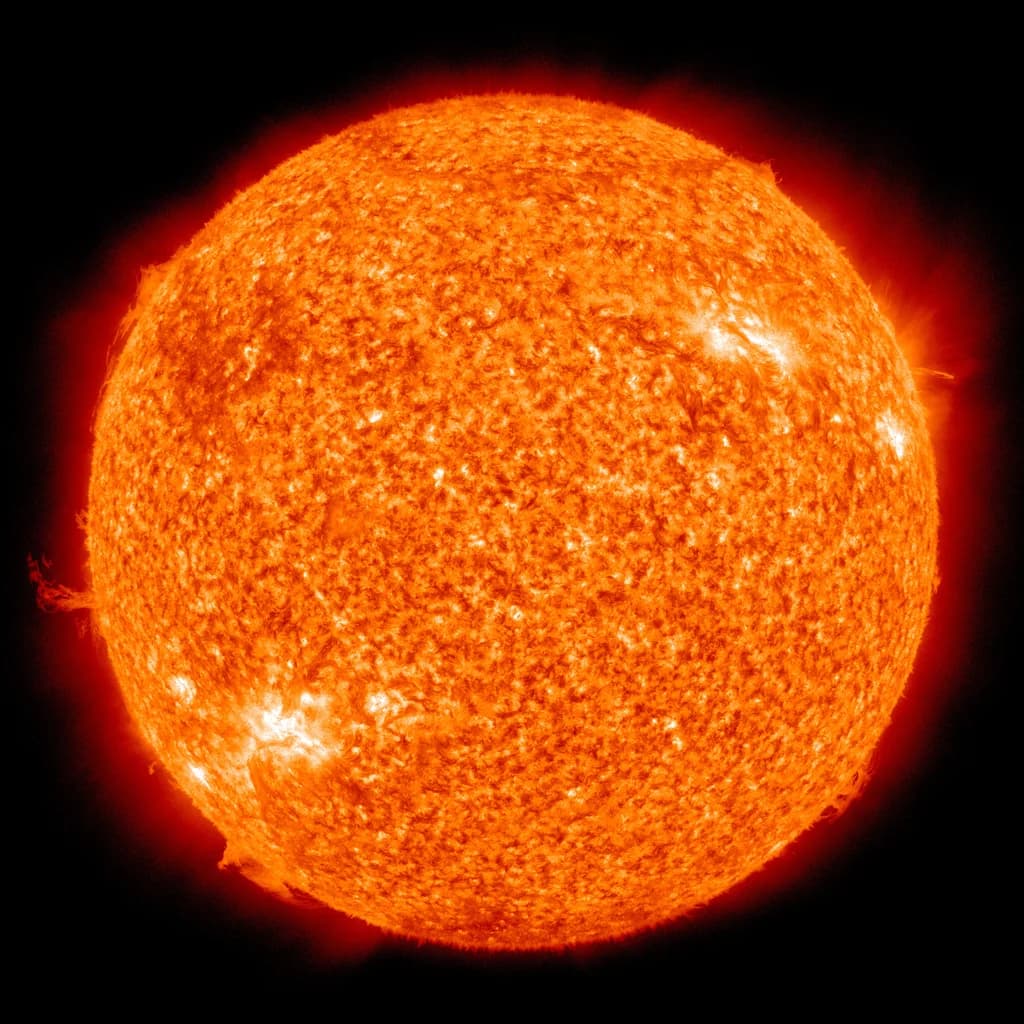
01Size1.39 million kmDist150 million kmTemp5,800 K (≈ 5,500 °C)
The Sun
A self-sustaining fusion engine at the heart of our system.
StarCosmos
Loading…
Topics
Where stars are born and where they go to die.
Overview
A nebula is a vast cloud of gas and dust drifting through interstellar space. Some are nurseries where new stars are condensing under gravity. Others are graveyards — the puffed-out remains of stars that finished burning. They are the loudest, prettiest objects in deep-sky astrophotography, and the slowest-moving cosmic events humans can directly observe.
Astronomers usually sort nebulae into four kinds. Emission nebulae glow because hot young stars ionise their gas — the Orion Nebula is the classic example. Reflection nebulae merely scatter light from nearby stars, with no light of their own. Planetary nebulae are the shed outer layers of dying Sun-like stars — the Ring Nebula and the Cat's Eye are famous examples (the misleading name comes from their round, planet-like appearance through small 18th-century telescopes). Supernova remnants are the violent debris of dying massive stars — the Crab Nebula was created by a supernova observed from Earth in 1054 CE.
Most stars form inside cold, dense molecular clouds. Gravity collapses pockets of gas into protostars; nearby young stars then heat and ionise the leftover gas, lighting up the region. The Pillars of Creation in the Eagle Nebula — that Hubble image you've seen — are a stellar nursery in progress. Our Sun was almost certainly born in a similar nursery; its siblings have long since drifted apart across the galaxy.
When a Sun-like star runs out of hydrogen fuel, it expands into a red giant, then sheds its outer atmosphere into space. The exposed core — a hot white dwarf — illuminates that shed gas from the inside, producing a planetary nebula. In about five billion years, this is what will happen to the Sun. The phase lasts only tens of thousands of years before the gas dissipates.
When a star above eight solar masses dies, its outer layers explode at thousands of kilometres per second, leaving a shock wave of hot gas that lights up for tens of thousands of years. The Crab Nebula still expands at about 1,500 km/s, and a rapidly spinning neutron star — the Crab Pulsar — sits at its centre, the collapsed core of the original star.