
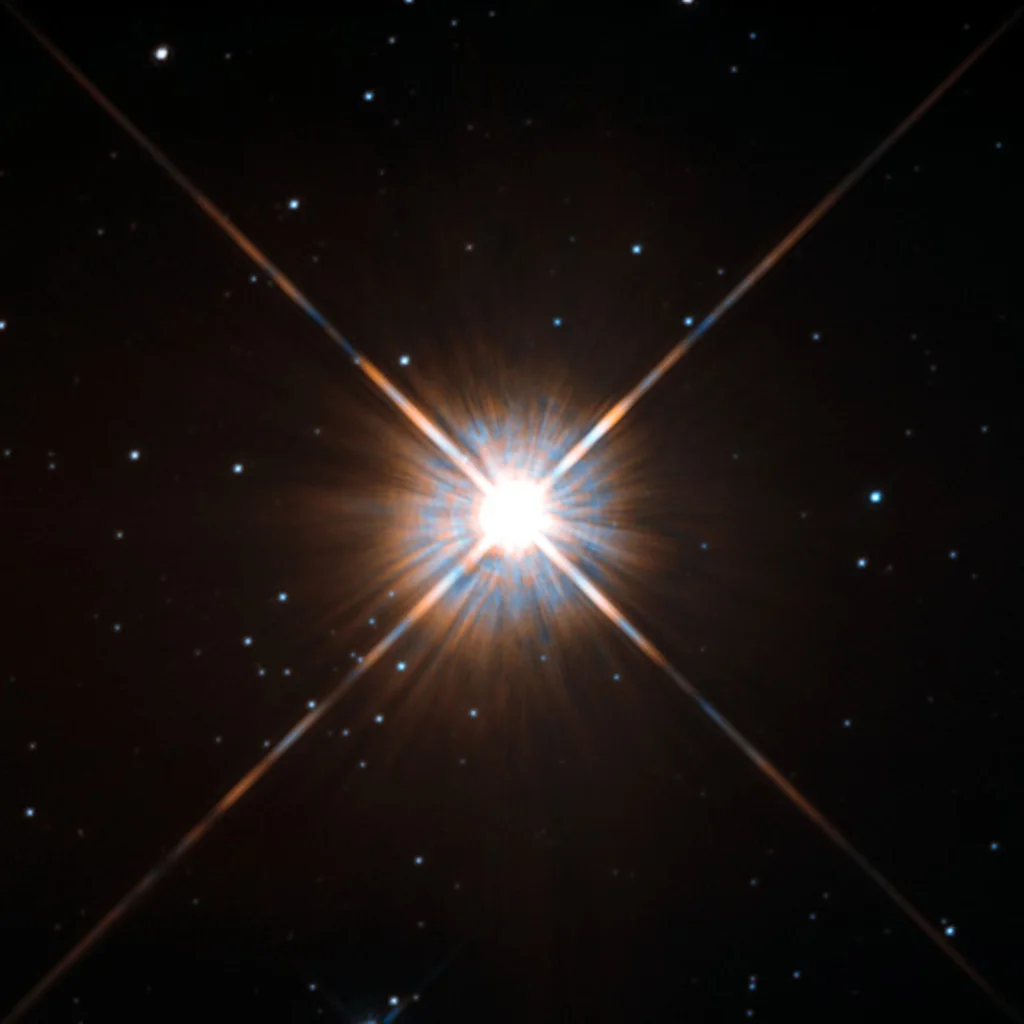
01Size214,000 kmDist4.24 lyTemp3,000 K (≈ 2,700 °C)
Proxima Centauri
The closest known star to the Sun — and still impossibly far.
StarRed dwarfCosmos
Loading…
NASA / SDO
The Sun Moon Distance from Earth
The Sun is roughly 389× farther from Earth than Moon.
Picture this
If the Sun were a basketball, Earth would be a peppercorn 26 metres away — and Pluto would be a dust mote a kilometre off.
If you scale the distance
Light from the Sun reaches Earth in 8 minutes 20 seconds. At airline speeds, the journey would take 19 years. If you scale that 150-million-kilometre gap down to a single metre, Earth itself shrinks to less than a tenth of a millimetre — about the width of a human hair.
By weight
The Sun holds 99.86% of all the mass in our Solar System. Every planet, moon, asteroid and comet combined is dust by comparison.
The Sun fuses 600 million tonnes of hydrogen into helium every second. The light reaching you right now took 8 minutes to cross the gap — but it took roughly 100,000 years to fight its way out from the Sun's dense core. Yet a cubic metre of that core releases only about 280 watts — less heat than the same volume of your own body. The Sun shines because it is enormous, not because its fusion is fierce.
Glossary
Did you know?
Our Sun is often called an average star, yet it outshines roughly nine in ten stars in the Milky Way — most are dim red dwarfs. The largest red supergiants are around a thousand times wider, and the brightest blue stars pump out the light of millions of Suns.
Last updated 2026-11-18
You are here
Scale
A self-sustaining fusion engine at the heart of our system.
Size
1.39 million km
Tap a dot to preview it. Use the Open stop link to read its full page. Stops are arranged from smallest on the left to largest on the right.
The closest known star to the Sun — and still impossibly far.
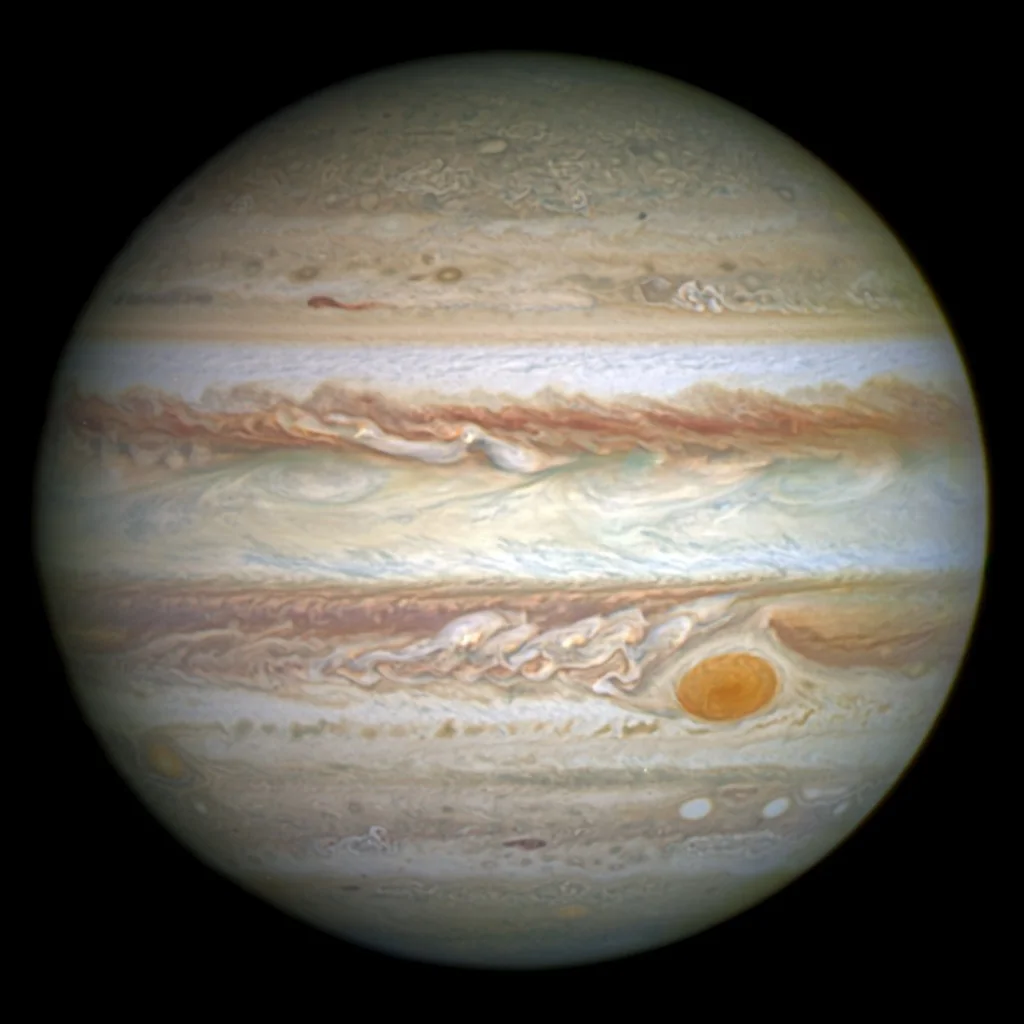
The Solar System's largest planet — heavier than all the others combined.
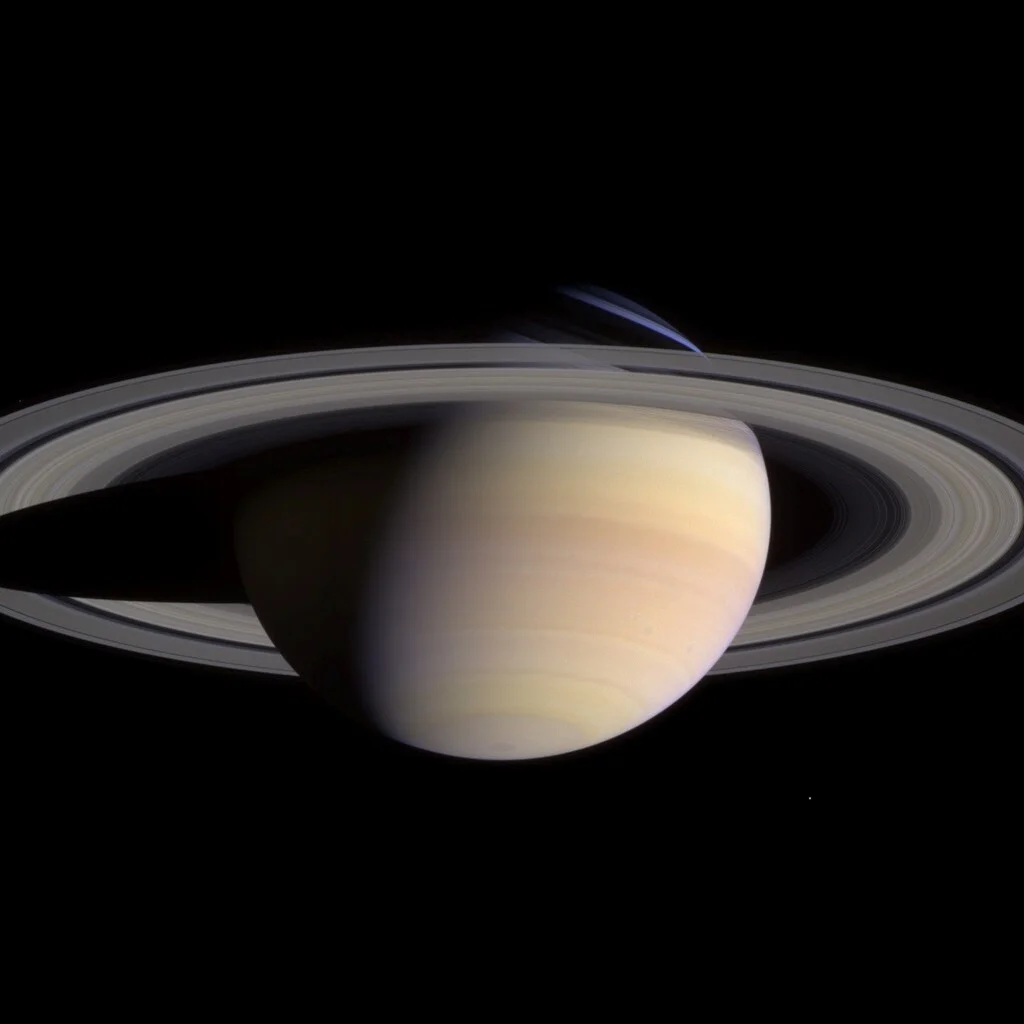
The Solar System's signature image — a gas giant with rings.