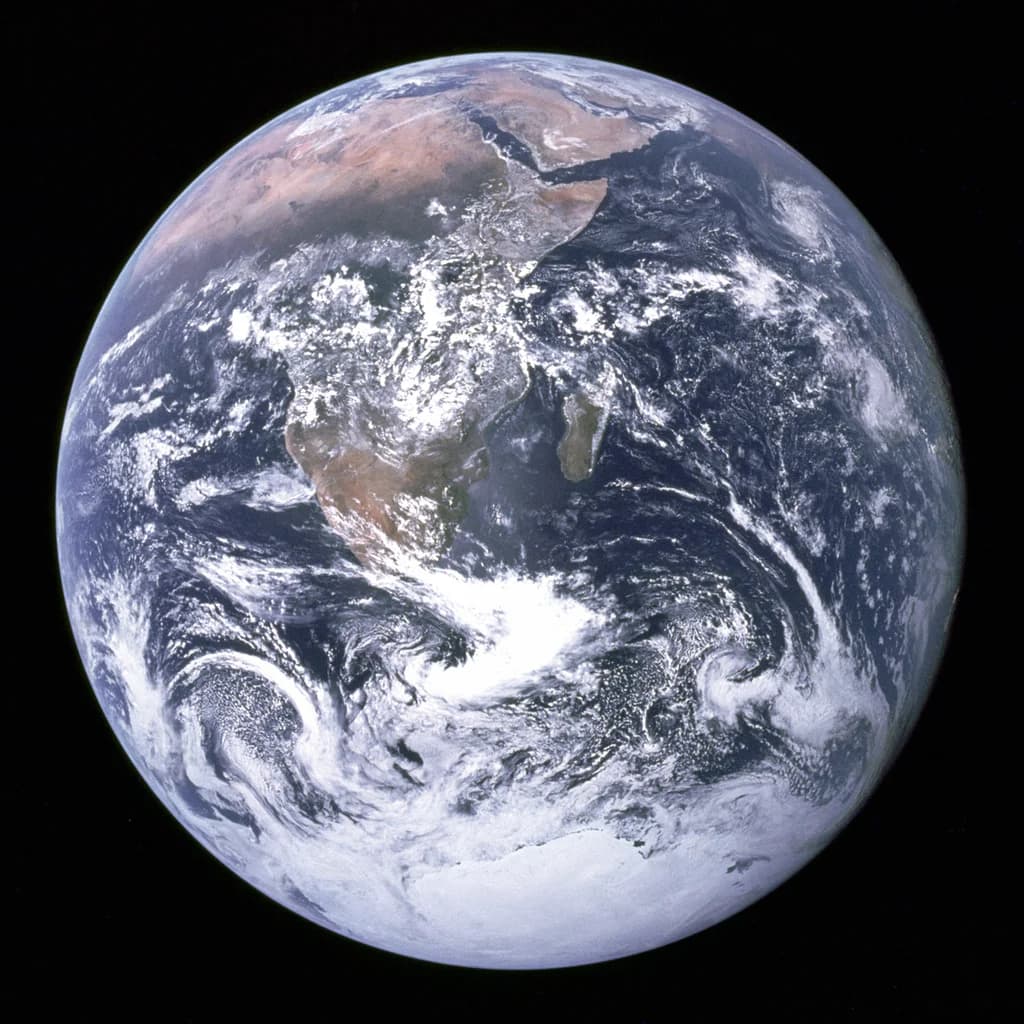
01Size12,742 kmTemp288 K (15 °C)
Earth
Our reference grain of sand.
PlanetCosmos
Loading…
Topics
Worlds bound to a star.
Overview
A planet is a body massive enough to be rounded by its own gravity, orbiting a star, and clearing the neighbourhood around its orbit. The third clause — added by the International Astronomical Union in 2006 — is what reclassified Pluto. By that definition our Solar System has eight planets; by older definitions it had more.
Our Solar System has four small rocky "terrestrial" planets close to the Sun — Mercury, Venus, Earth, Mars — and four large gaseous outer ones: Jupiter and Saturn (gas giants), Uranus and Neptune (ice giants, with proportionally more water, ammonia and methane). Beyond Neptune lies the Kuiper Belt and a population of icy bodies, including five recognised dwarf planets.
Since the first confirmed exoplanet around a Sun-like star in 1995, more than 5,800 have been catalogued. Many do not resemble anything in our system: "hot Jupiters" that orbit closer than Mercury, "super-Earths" between Earth and Neptune in size with no equivalent here, "rogue planets" wandering free without a star at all. Most stars in the galaxy probably have planets.
The line between large planet and small star is blurry. Brown dwarfs — failed stars massive enough to fuse deuterium but not hydrogen — occupy that grey zone. Jupiter would need to grow about 80 times more massive to ignite hydrogen fusion and become a true star. Our Solar System came close to being a binary system.
A planet capable of liquid water at its surface needs a stable orbit in the "habitable zone" around its star, a substantial atmosphere, a magnetic field to deflect stellar radiation, and probably plate tectonics to recycle nutrients. Earth has all four. We have so far found no other world that demonstrably does — though several look intriguing.
Our reference grain of sand.
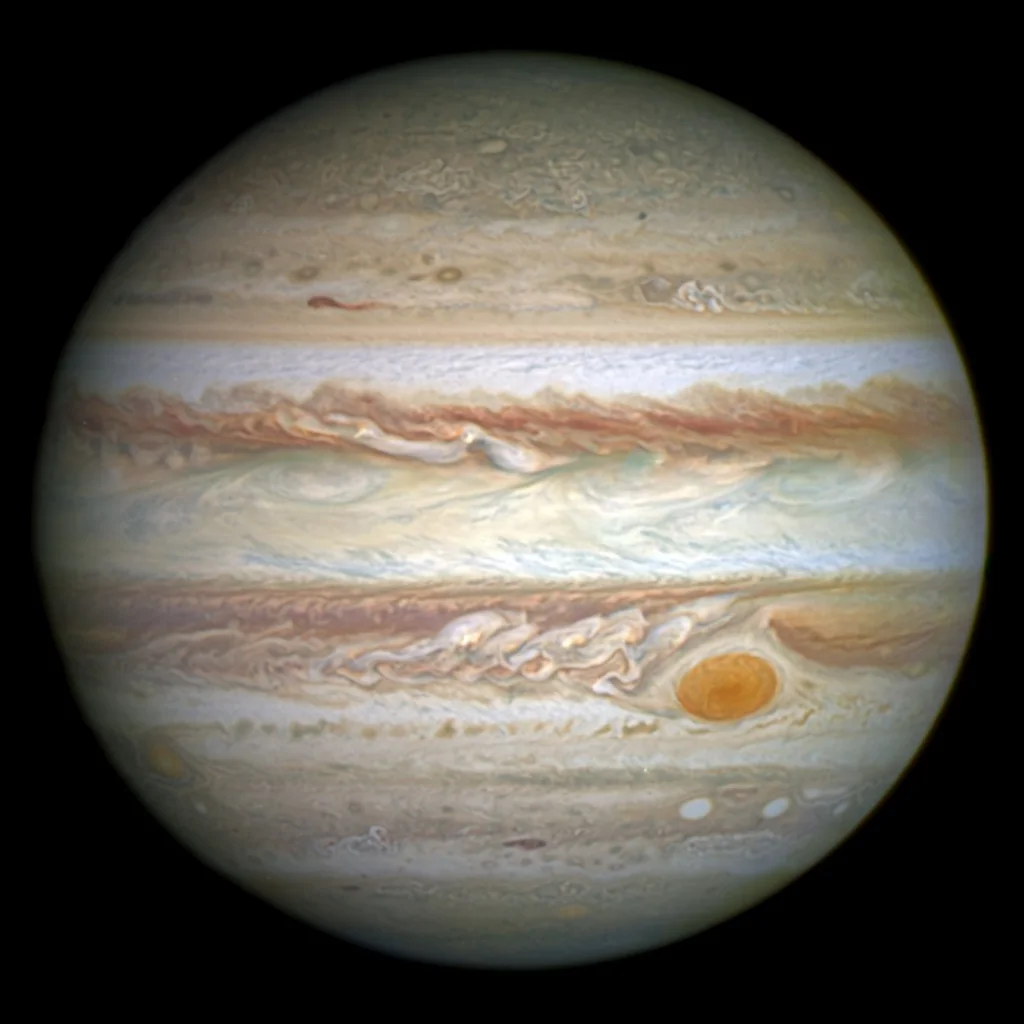
The Solar System's largest planet — a failed star, almost.
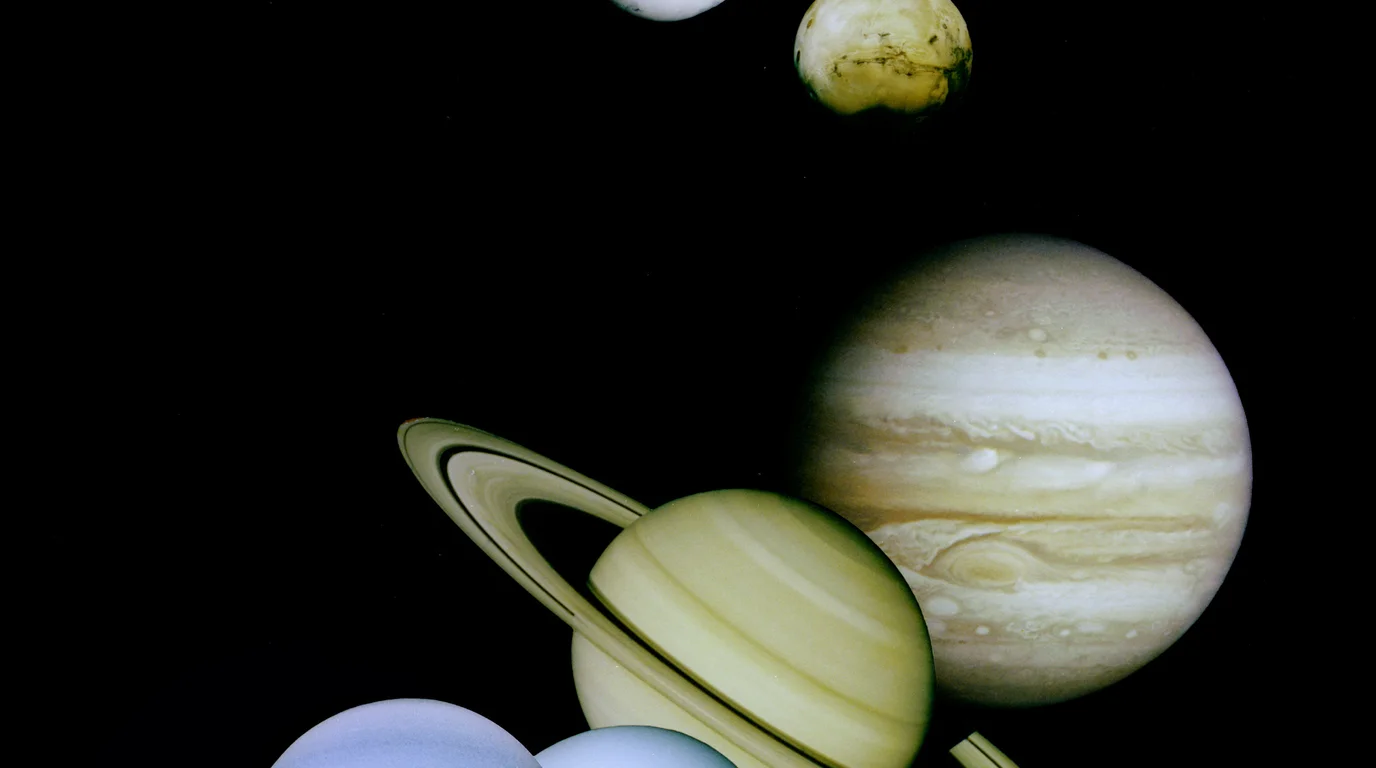
One star and everything held in its gravity.