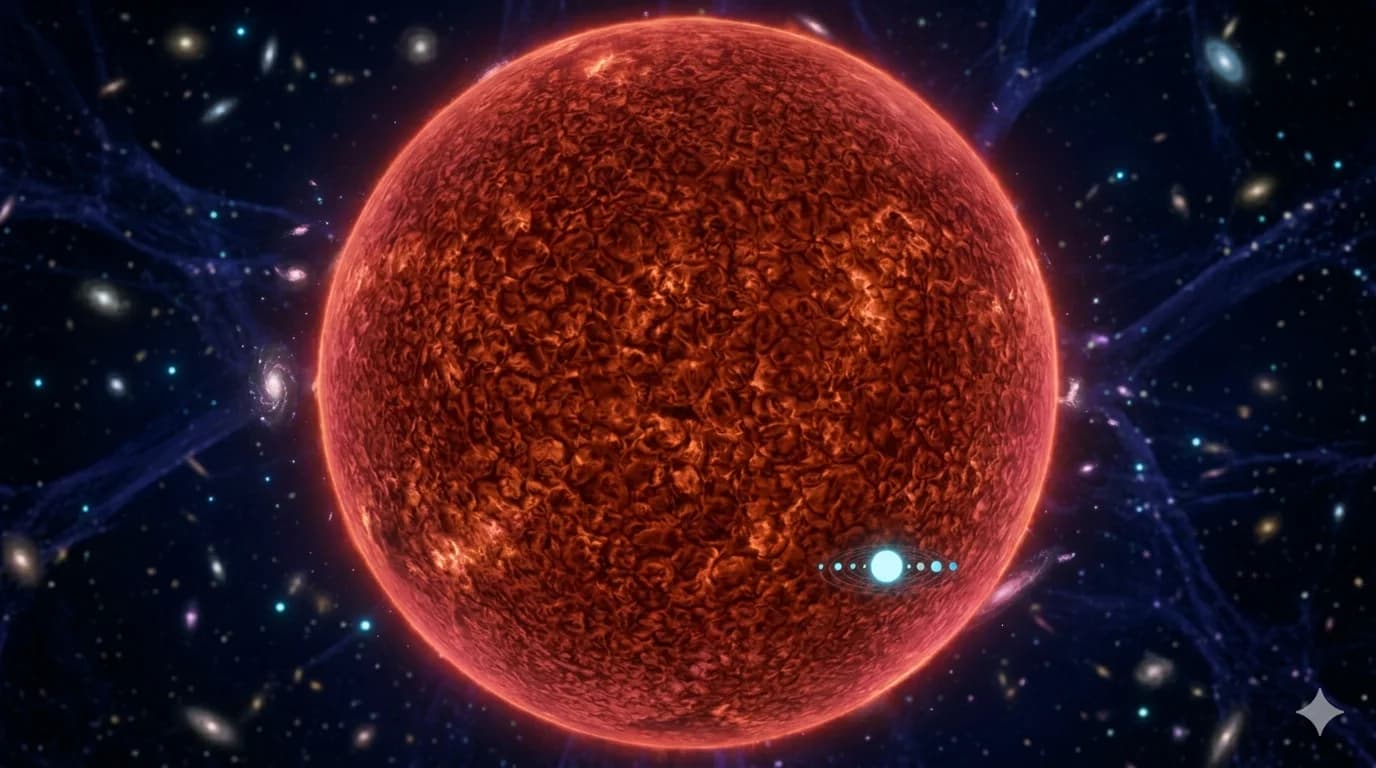
01Size2.40 billion kmDist5,211 lyTemp3,400 K (≈ 3,100 °C)
UY Scuti
If it replaced the Sun, it would swallow Jupiter.
StarHypergiantCosmos
Loading…
NASA / JPL
The Solar System Proxima Centauri Distance from Earth
2.68×
closer to Earth
Distance from Earth
1.59 ly
The Solar System is roughly 2.68× closer to Earth than Proxima Centauri.
Picture this
Shrink the Solar System to fit on a basketball court, and Earth would be smaller than a grain of sand near the centre — completely invisible to the naked eye.
By weight
The Sun holds 99.86% of the Solar System's entire mass. Pile every planet, moon, asteroid, and comet together and you get just 0.14% — and most of that is Jupiter.
Eight planets, five dwarf planets, more than 200 moons, and millions of asteroids and comets — all bound to one yellow star. The planetary part is roughly 12 billion km wide. The Sun's gravity, though, reaches out a hundred thousand times further, into a faint shell of icy bodies called the Oort cloud. Voyager 1, our farthest probe, has been travelling for 49 years and still isn't past it.
Glossary
Did you know?
Pluto isn't the last word: beyond the Kuiper Belt sits the Oort Cloud, a roughly spherical shell of icy bodies that may extend halfway to the nearest star. Voyager 1, our farthest probe, won't reach its inner edge for another 300 years and won't clear its outer edge for tens of thousands more.
Last updated 2026-10-04
You are here
Scale
One star and everything held in its gravity.
Size
15.0 billion km
Tap a dot to preview it. Use the Open stop link to read its full page. Stops are arranged from smallest on the left to largest on the right.
If it replaced the Sun, it would swallow Jupiter.
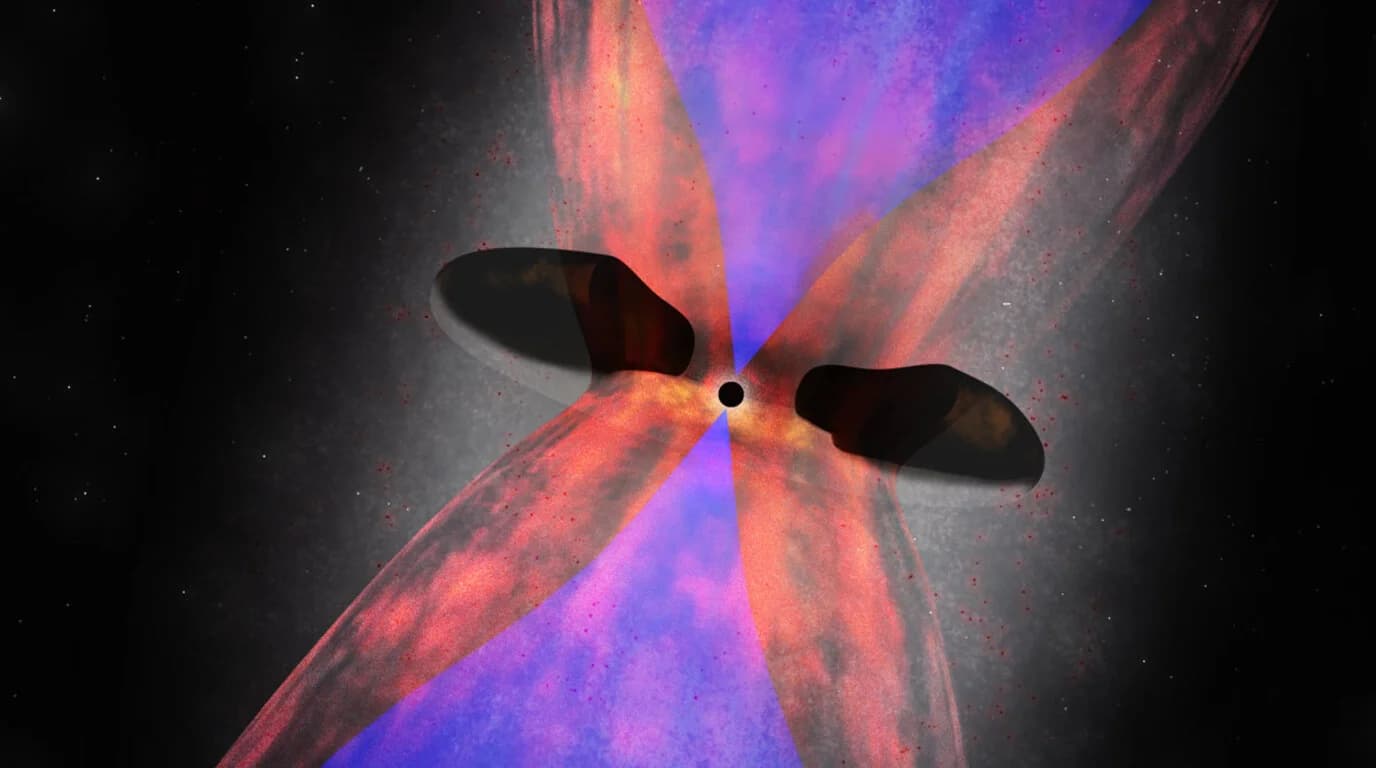
At the heart of the Phoenix Cluster — among the most massive known black holes.
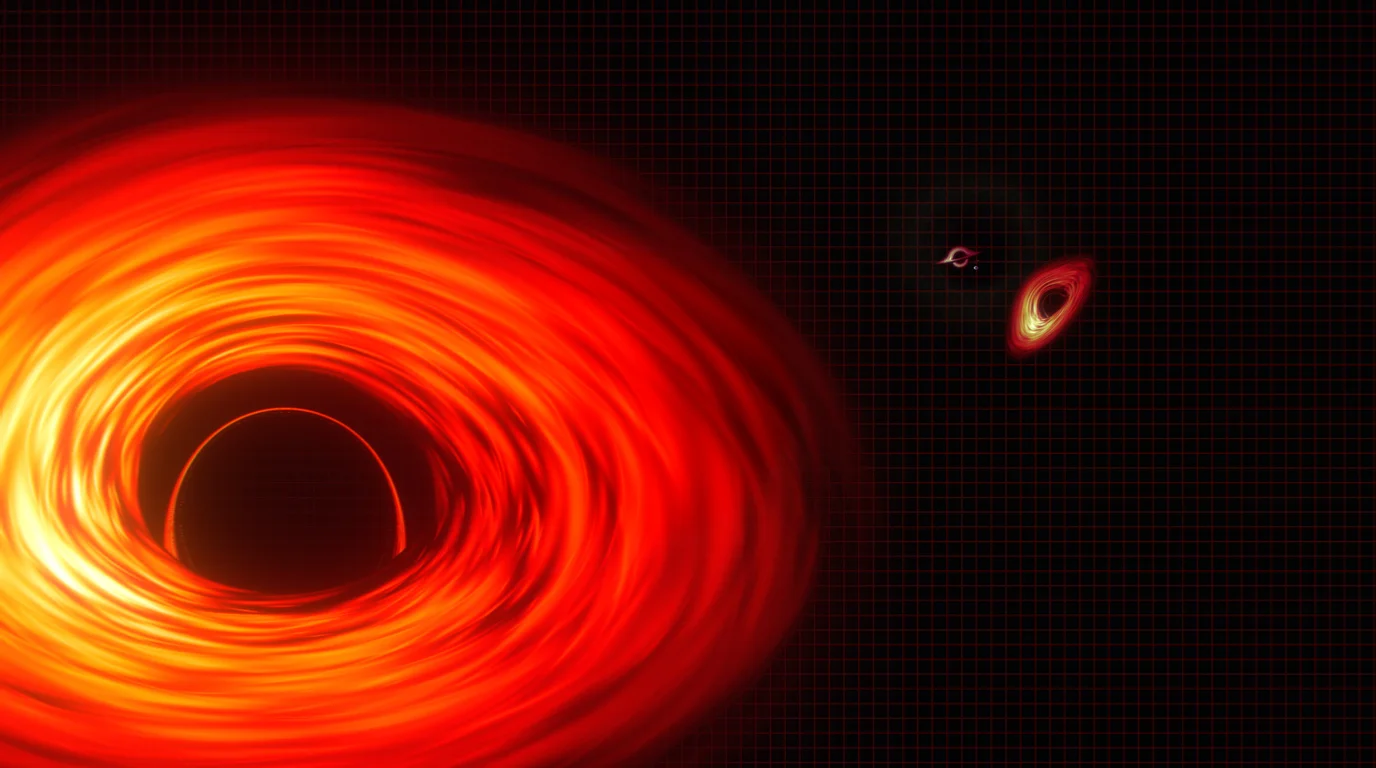
An ultramassive quasar — one of the largest black holes ever measured.