
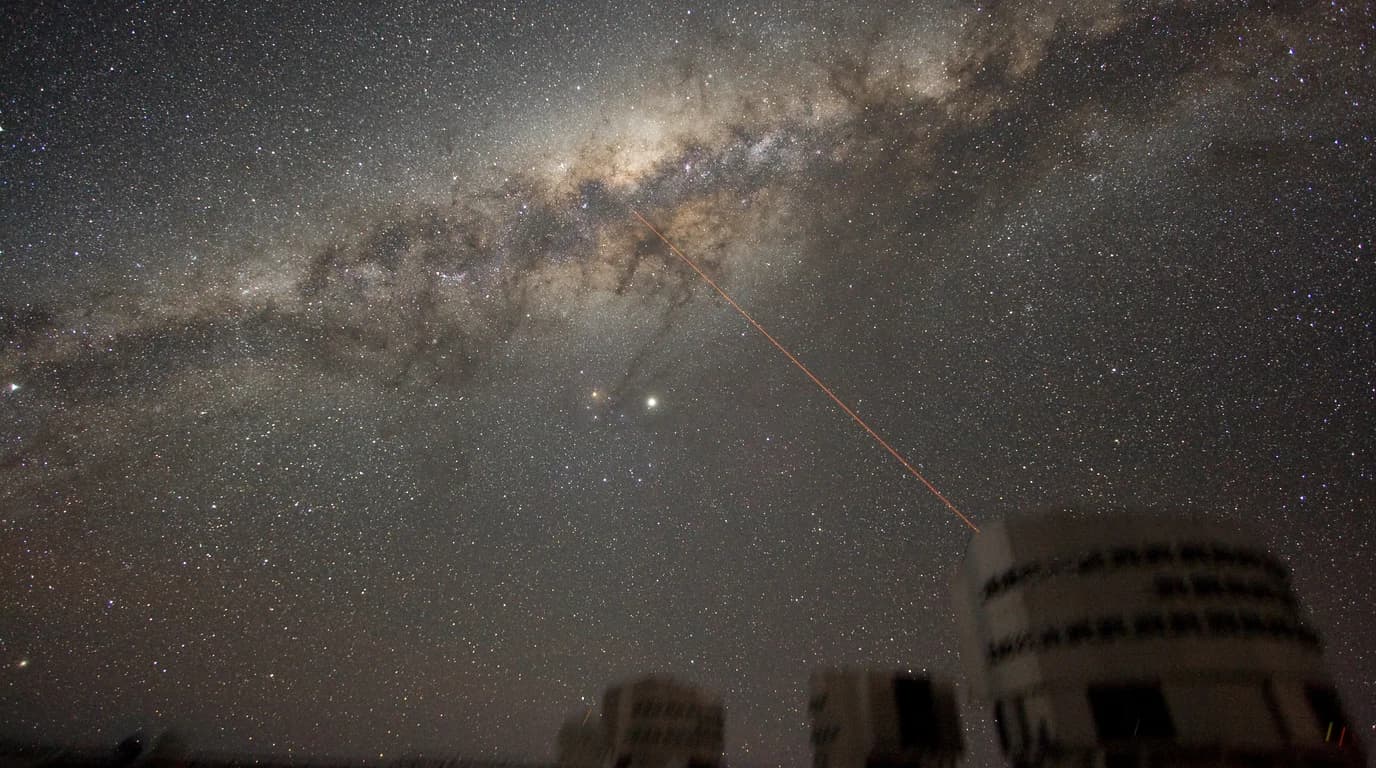
01Size105,700 lyDist52,850 ly
Milky Way
A spiral of roughly 200 billion stars — including ours.
GalaxyCosmos
Loading…
Our nearest large galactic neighbour — and our future collision partner.
Adam Evans (CC BY 2.0)
Andromeda Galactic centre Distance from Earth
Distance from Earth
26,002 ly
96.3×
farther from Earth
Distance from Earth
2.51 million ly
Andromeda is roughly 96.3× farther from Earth than Galactic centre.
Picture this
Andromeda already covers about six full moons in our night sky — yet its light has travelled 2.5 million years to reach us. You're seeing it as it was before our ancestors walked upright.
If you scale the distance
If you could fly to Andromeda at the speed of light, the trip out and back would take five million years — longer than the entire age of the human genus on Earth. Slow it down to the fastest spacecraft we have ever built and the journey balloons to roughly twenty billion years, longer than the current age of the universe.
By weight
Andromeda likely outweighs the Milky Way, with a dark-matter halo holding several trillion solar masses of unseen mass.
Andromeda is a spiral galaxy about 2.5 million light-years away — close enough to see with the naked eye on a dark night, as a faint smudge in the constellation of the same name. It holds something like a trillion stars, more than the Milky Way. The two galaxies are drifting toward each other at 110 km/s, and will eventually merge into a single elliptical galaxy that astronomers have nicknamed Milkomeda.
Did you know?
Andromeda is one of the few galaxies actually moving toward us. Cosmic expansion is normally winning, but our gravitational bond with Andromeda is winning here.
Last updated 2026-10-04
You are here
Scale
Our nearest large galactic neighbour — and our future collision partner.
Size
211,400 ly
Tap a dot to preview it. Use the Open stop link to read its full page. Stops are arranged from smallest on the left to largest on the right.
A spiral of roughly 200 billion stars — including ours.
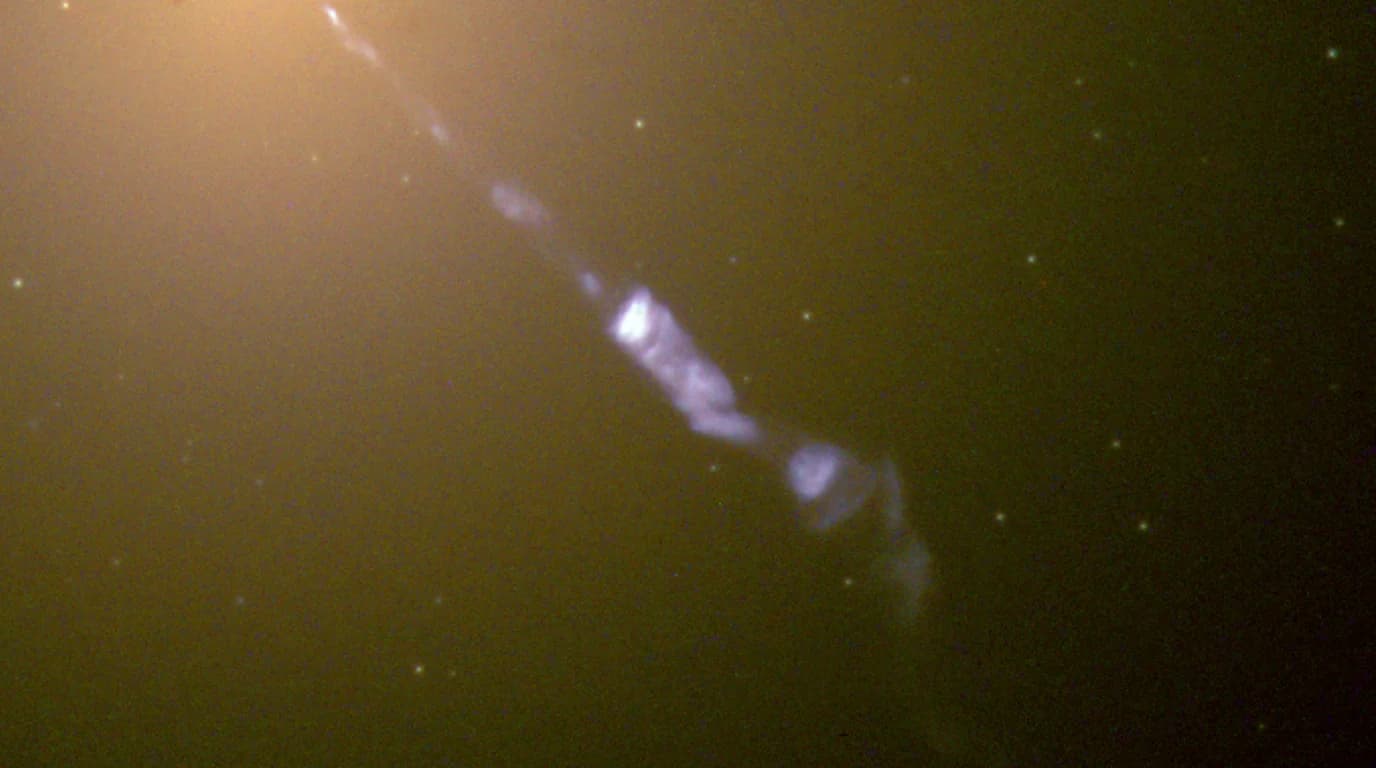
Our local galaxy cluster — one of thousands in the universe.
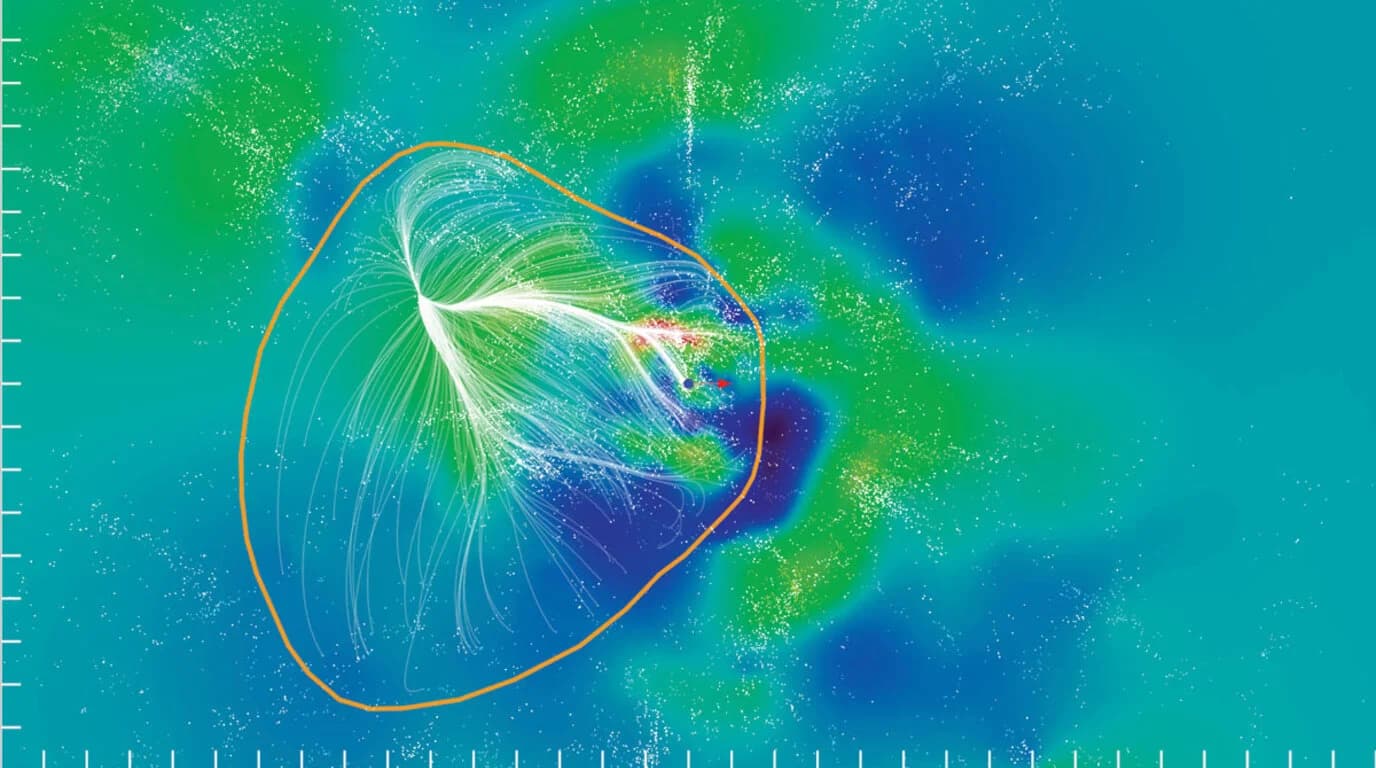
The supercluster of galaxy clusters our Milky Way lives inside.