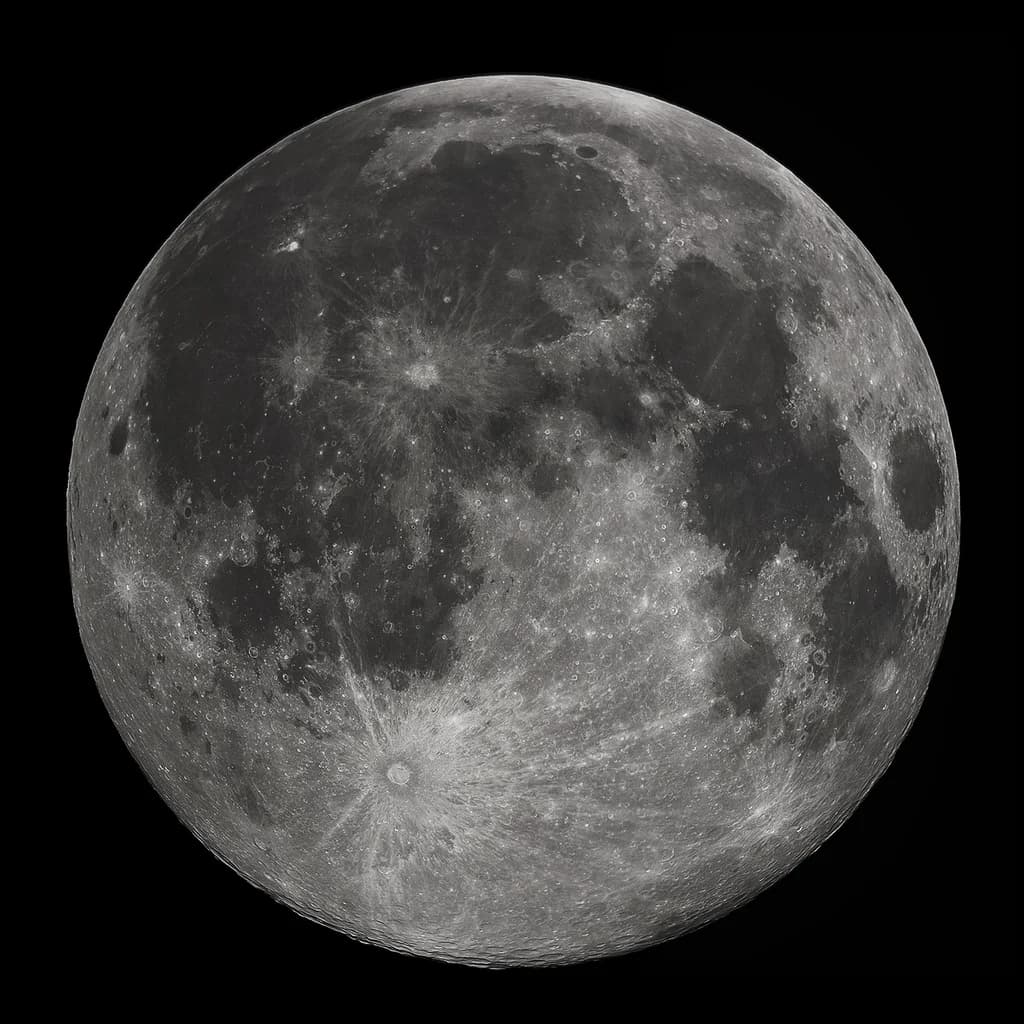
01Size3,475 kmDist384,400 kmTemp250 K (-23 °C)
The Moon
Earth's only natural satellite — locked to us forever.
SatelliteCosmos
Loading…
Topics
The natural satellites of the planets.
Overview
A moon — also called a natural satellite — is any body that orbits a planet, dwarf planet, or other small Solar System body. Our Solar System has hundreds of confirmed moons, ranging from boulder-sized objects to worlds larger than Mercury. Some have atmospheres, subsurface oceans, or active volcanism. A few are among the most likely places to find life beyond Earth.
Our Moon is large for a moon orbiting a small planet — about a quarter of Earth's diameter. It formed about 4.5 billion years ago, almost certainly when a Mars-sized body collided with the young Earth, and the debris from that impact coalesced. The Moon stabilises Earth's axial tilt and drives our tides; it's slowly drifting away from us at about 3.8 cm per year.
The four largest moons in the Solar System — Ganymede, Titan, Callisto and Io — are all bigger than Earth's Moon, and Ganymede is even larger than the planet Mercury. Ganymede (a moon of Jupiter) is the biggest moon in the Solar System. Titan (a moon of Saturn) has a thick nitrogen atmosphere and rivers of liquid methane. Europa (Jupiter) hides a vast salty ocean beneath an icy shell — one of the most promising places to search for life elsewhere in the Solar System.
Jupiter has 95 confirmed moons, Saturn has 146 confirmed, and the numbers keep climbing as small telescopes find tiny captured asteroids. Most of these are rocky bodies a few kilometres across in irregular orbits — almost certainly debris from earlier collisions, not moons that formed alongside the planet.
Moons around planets in other star systems — exomoons — are theoretically expected almost everywhere, but none has yet been definitively confirmed. They are far harder to detect than exoplanets: a moon shows up only as a tiny periodic wobble inside another tiny periodic wobble. A handful of candidates exist, including a possible Neptune-sized exomoon around the gas giant Kepler-1625b.
Earth's only natural satellite — locked to us forever.
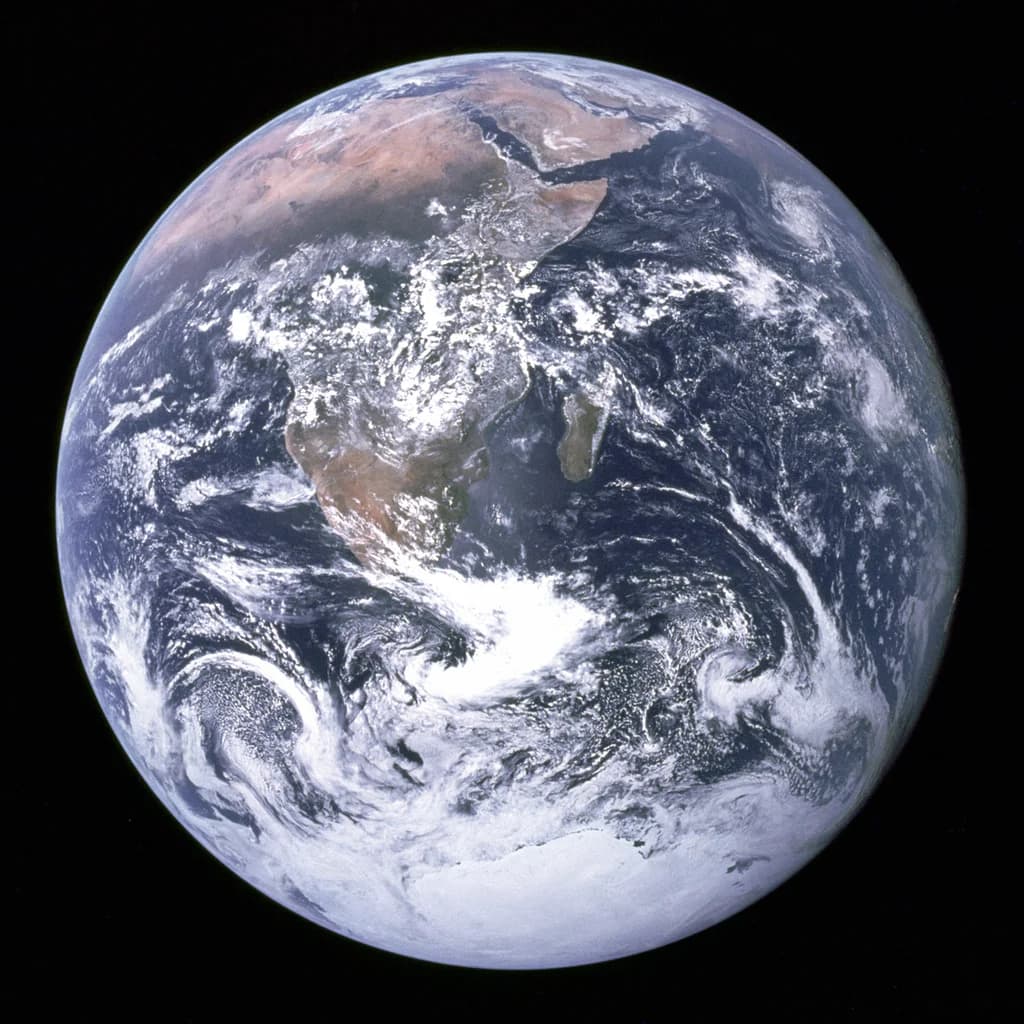
Our reference grain of sand.
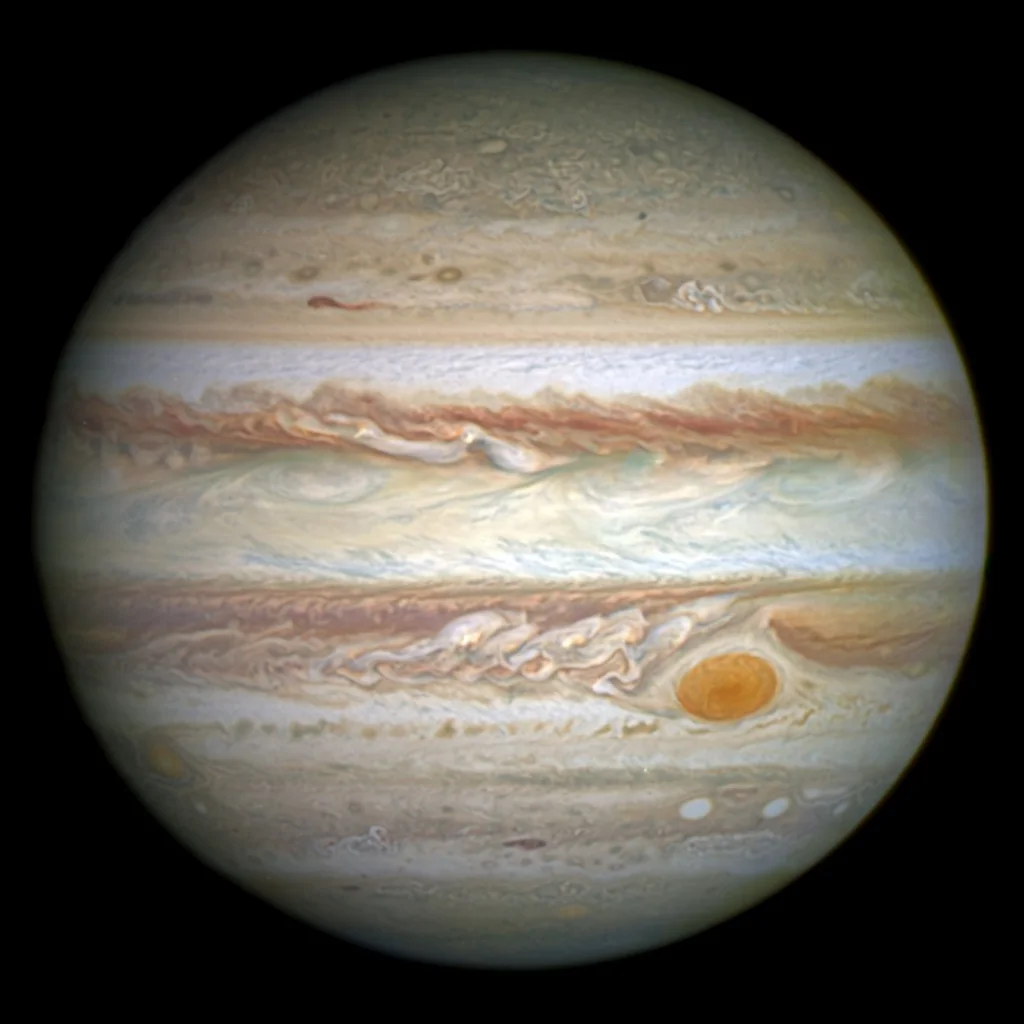
The Solar System's largest planet — a failed star, almost.
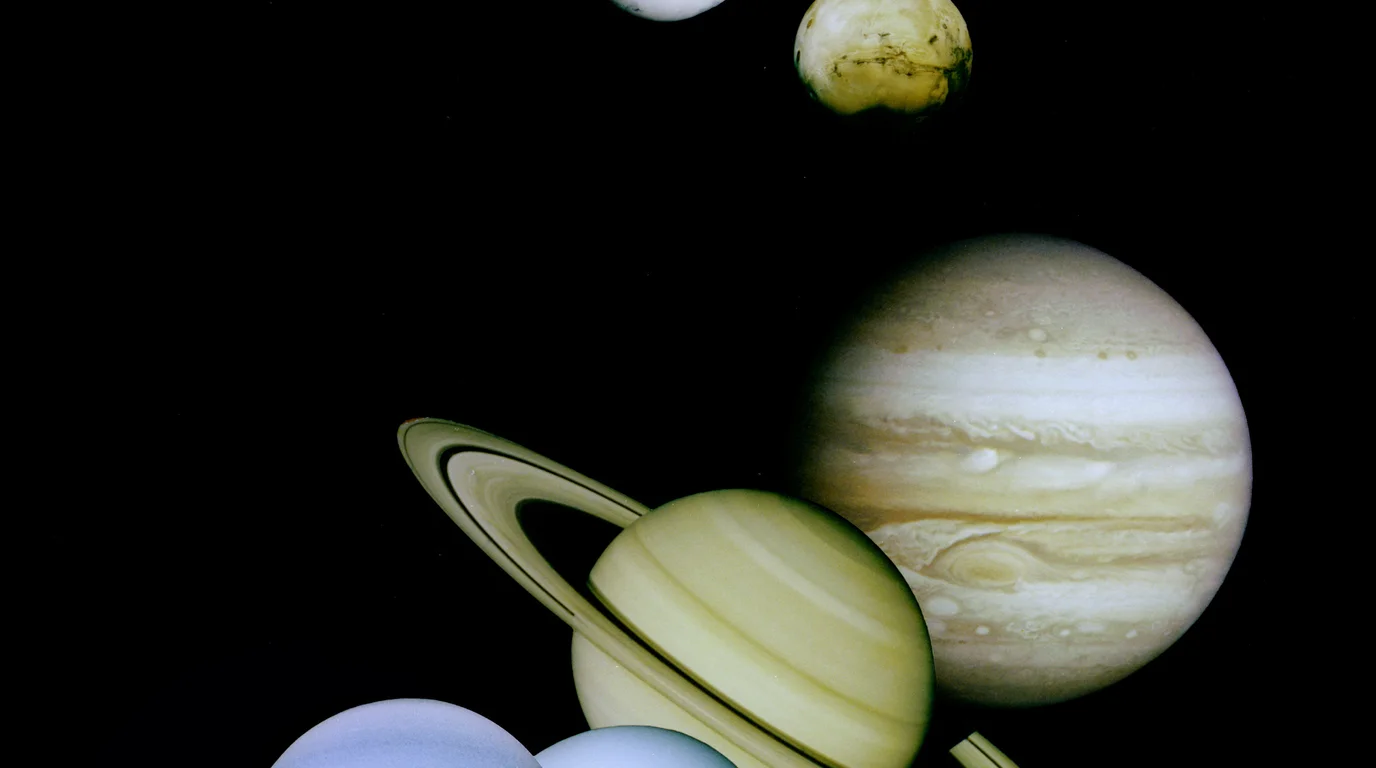
One star and everything held in its gravity.