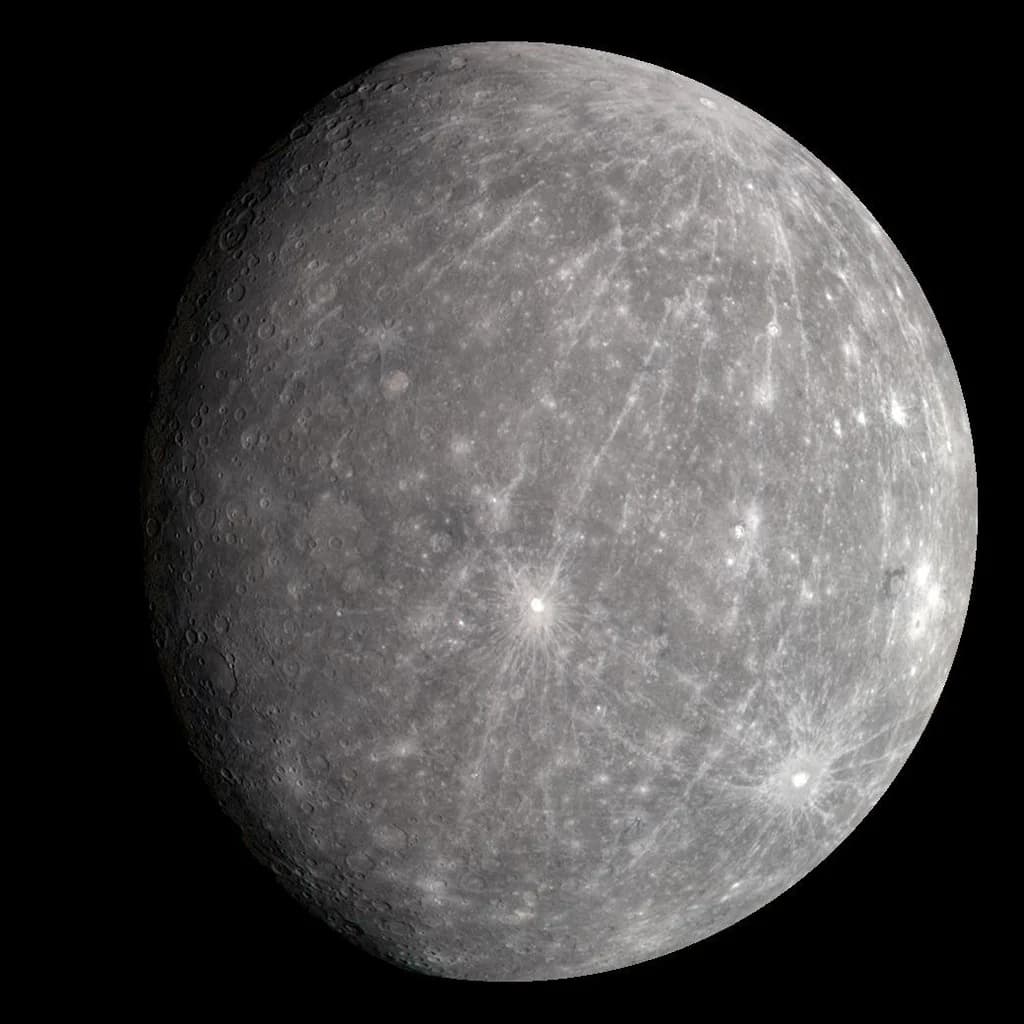
01Size4,879 kmDist155 million kmTemp440 K (167 °C)
Mercury
The innermost planet — a cratered world of impossible extremes.
PlanetCosmos
Loading…
Gregory H. Revera (CC BY-SA 3.0)
The Moon Earth
Drawn to true scale.
The Moon Sun Distance from Earth
The Moon is roughly 389× closer to Earth than Sun.
Picture this
The Moon is drifting away from Earth at about 3.8 cm a year — roughly the rate your fingernails grow. Hundreds of millions of years ago, total solar eclipses lasted much longer; in another billion years, they'll stop happening at all.
If you scale the distance
If you could drive a car non-stop at 100 km/h, reaching the Moon would take about 160 days. Walking at average human pace, you'd arrive in roughly nine years. The Apollo astronauts made the trip in three days each way — and that has been the human distance record for over fifty years.
By weight
The Moon weighs about 1/81 of Earth — roughly the same ratio as a tennis ball to an adult human. It's the largest moon in the Solar System relative to its host planet.
The Moon is the fifth-largest moon in the Solar System and the only place beyond Earth that humans have walked on. It is tidally locked, which is why the same side always faces us; the far side was first photographed by a Soviet probe in 1959. Its surface is a fossil record of the violent early Solar System — every crater is a story that Earth itself has long since erased through weather and tectonics.
Glossary
Did you know?
The Apollo astronauts left mirrors on the Moon. Laser pulses fired from observatories on Earth still bounce off them today, letting us measure the Earth–Moon distance to within millimetres.
Last updated 2026-10-04
You are here
Scale
Earth's only natural satellite — locked to us forever.
Size
3,475 km
Tap a dot to preview it. Use the Open stop link to read its full page. Stops are arranged from smallest on the left to largest on the right.
The innermost planet — a cratered world of impossible extremes.
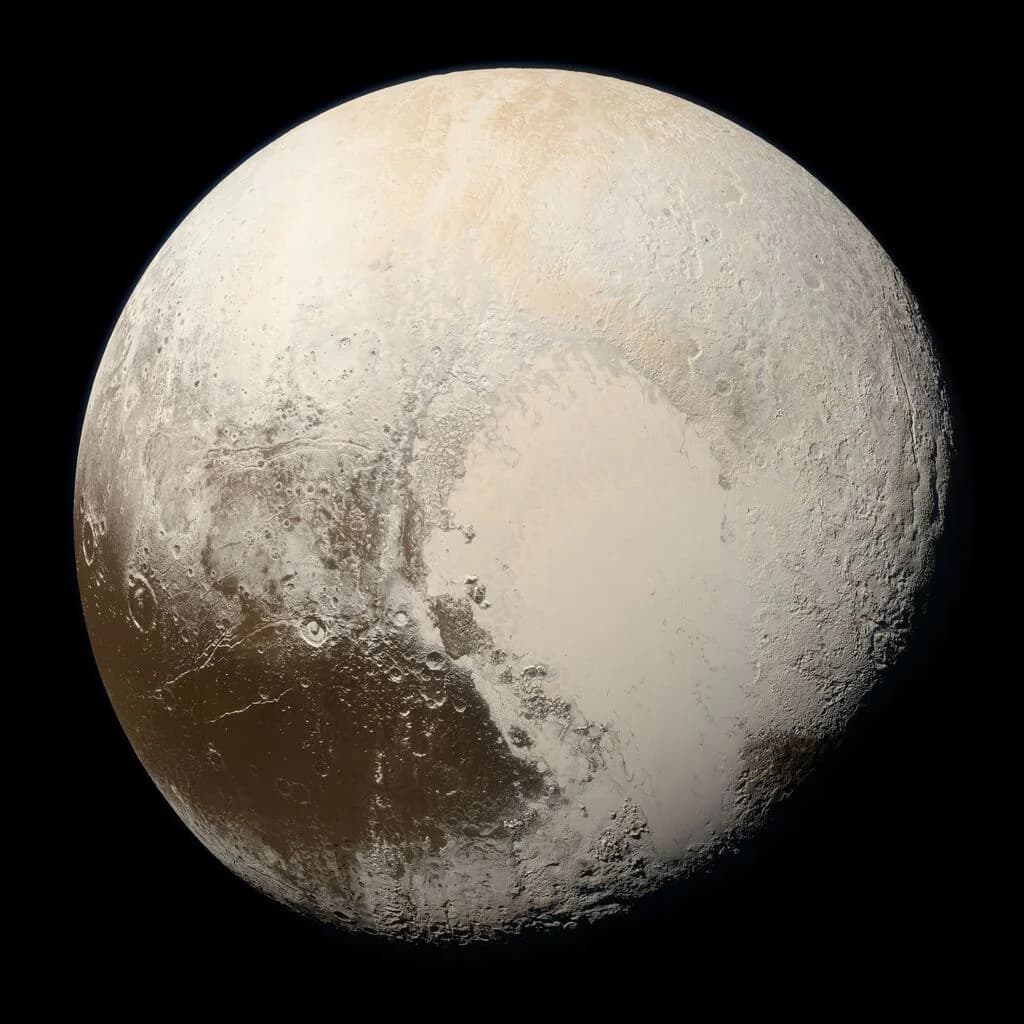
The dwarf planet that taught the Solar System has an outer layer we'd missed.
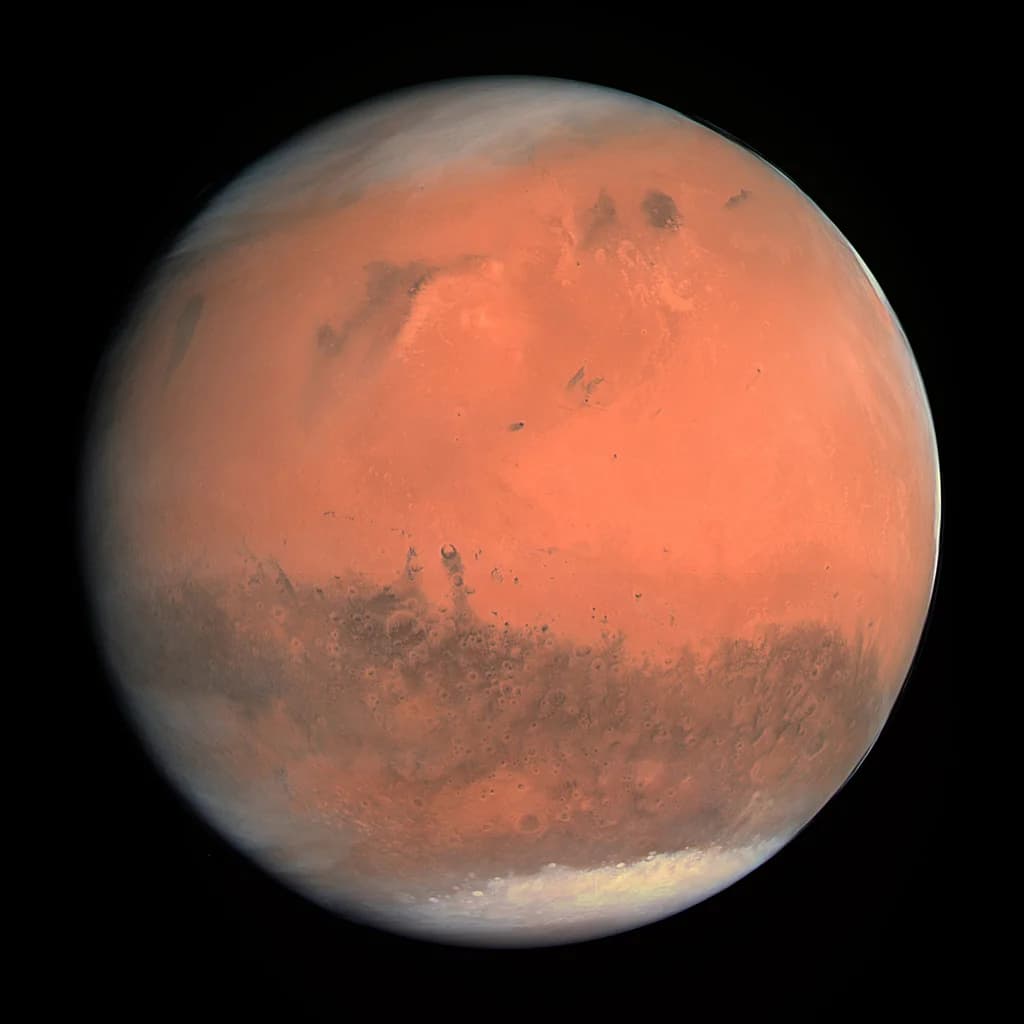
Earth's red neighbour — and our best shot at a second home.