
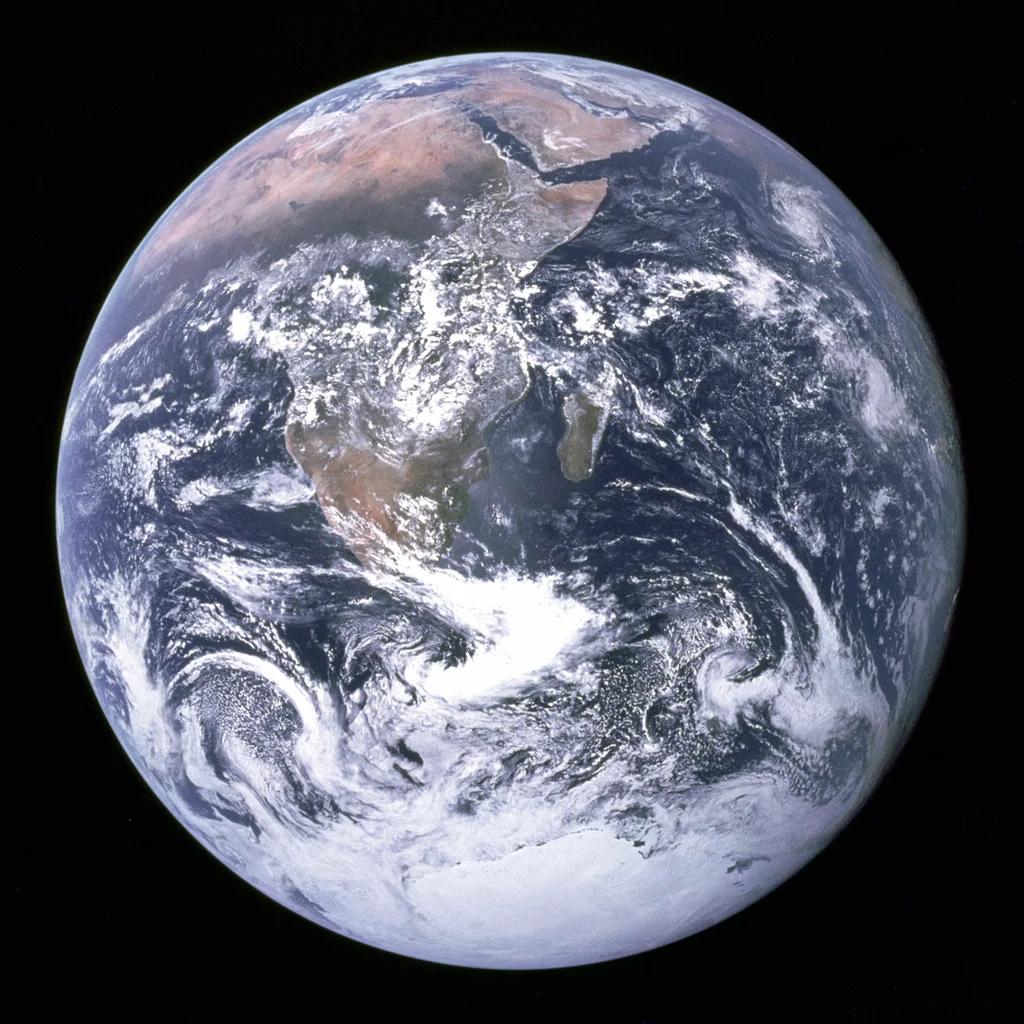
01Size12,742 kmTemp288 K (15 °C)
Earth
Our home planet — and this journey's reference grain of sand.
PlanetCosmos
Loading…
Topics
The observable universe is about 93 billion light-years across. The universe as a whole may have no edge at all.
Overview
Short answer: the part we can see — the observable universe — is a sphere about 93 billion light-years in diameter, centred on us. That is roughly 8.8 × 10²⁶ metres, or about 70 billion billion Earths laid side by side. The universe as a whole is larger than that, possibly far larger, and it may be infinite. Nobody knows, and with current physics we may never be able to find out. Below: why the number is 93 billion and not 13.8 billion, what the cosmic horizon actually is, what might lie beyond it, and how to picture a size this large.
This is the most common point of confusion. The universe is about 13.8 billion years old, so it seems no light could have travelled more than 13.8 billion light-years — which would make the visible universe 27.6 billion light-years across. But space has been expanding the whole time that light was in flight. The oldest light we can detect, the cosmic microwave background, was released about 380,000 years after the Big Bang by hot gas that was then only about 42 million light-years from the matter that would one day become our galaxy. Since then the expansion has stretched that gap roughly 1,100 times: the gas that emitted the light we see today is now about 46 billion light-years away. Double that radius and you get a diameter of about 93 billion light-years. No speed limit was broken. The light always moved at light speed through space; it is the space behind it that kept growing.
The observable universe has no physical boundary. Its edge is a horizon, like the horizon at sea: a limit set by where you stand and by how long light has had to travel. An observer in a galaxy 10 billion light-years from us has their own observable universe, centred on them and only partly overlapping ours. That is also why we appear to sit at the centre — everyone does. The Big Bang did not happen at one spot we could point to; it happened everywhere at once, and every location sees the expansion the same way. Galaxies more than about 14 billion light-years away are currently receding faster than light, which relativity allows because nothing is moving through space faster than light — the distance between us is growing. And because the expansion is accelerating, light that distant galaxies emit today will never reach us if they are now more than roughly 16 billion light-years away. The part of the cosmos we could ever contact is, in effect, slowly shrinking.
Beyond our horizon there is almost certainly more of the same — galaxies, clusters and the cosmic web — because nothing we observe hints at any change near the edge of our view. How much more is unknown. Measurements of the cosmic microwave background by ESA's Planck satellite show that space is flat to within a fraction of a percent (a curvature parameter of 0.0007 ± 0.0019, consistent with zero). A perfectly flat universe with the simplest possible shape would be infinite. A very slightly curved one could close back on itself like the surface of a ball — finite, yet with no edge anywhere. Even in that case, one statistical analysis of the data (Vardanyan, Trotta and Silk, 2011) concluded that the whole universe would have to be several times larger in volume than everything we can observe. Truth-status, honestly labelled: the 93-billion-light-year figure for the observable part is established theory, reliable to within a few percent. The size of everything is an open question — infinite is possible, finite but enormous is possible, and no current experiment can tell the two apart.
A single number this big means little on its own, so climb to it in steps. Earth is 12,742 km across. The Sun is about 109 Earths wide and 150 million km away. A light-year is about 9.46 trillion km, and the nearest star, Proxima Centauri, is 4.24 light-years off. The Milky Way spans roughly 100,000 light-years and holds 100 to 400 billion stars. Andromeda, the nearest large galaxy, lies 2.5 million light-years away. Laniakea, the supercluster we live in, is about 500 million light-years across. The observable universe, at 93 billion light-years, is about 930,000 Milky Ways wide, or nearly 190 Laniakeas, and contains hundreds of billions of galaxies — some estimates run as high as 2 trillion. Now shrink everything by the same factor, using this site's reference scale where Earth is a 0.5 mm grain of sand: the Sun becomes a 5.4 cm ball about 5.9 metres away, the Milky Way stretches about 40 million kilometres, and the entire observable universe is roughly 3.6 light-years across — almost as wide as the real distance from here to Proxima Centauri.
"The universe is 13.8 billion light-years across." No — 13.8 billion is its age in years. Because of expansion, the observable part is about 93 billion light-years wide. "The Big Bang was an explosion from a centre." It was not an explosion into pre-existing space; space itself began expanding everywhere, so there is no centre and no point it expanded from. "The universe is expanding into something." Expansion means that distances between widely separated galaxies grow; it doesn't require any outside space to grow into. "Everything is expanding, including us." Gravitationally bound systems — atoms, people, planets, the Solar System, the Milky Way, even our Local Group of galaxies — do not expand. The stretching only wins out on the scales between groups and clusters of galaxies. "Nothing can recede faster than light." Relativity limits motion through space, not the growth of space itself; most galaxies in the observable universe are, today, receding from us faster than light. "We can see the whole universe." We see only what light has had time to bring us. The observable universe is a bubble around us, not the whole thing.
Our home planet — and this journey's reference grain of sand.
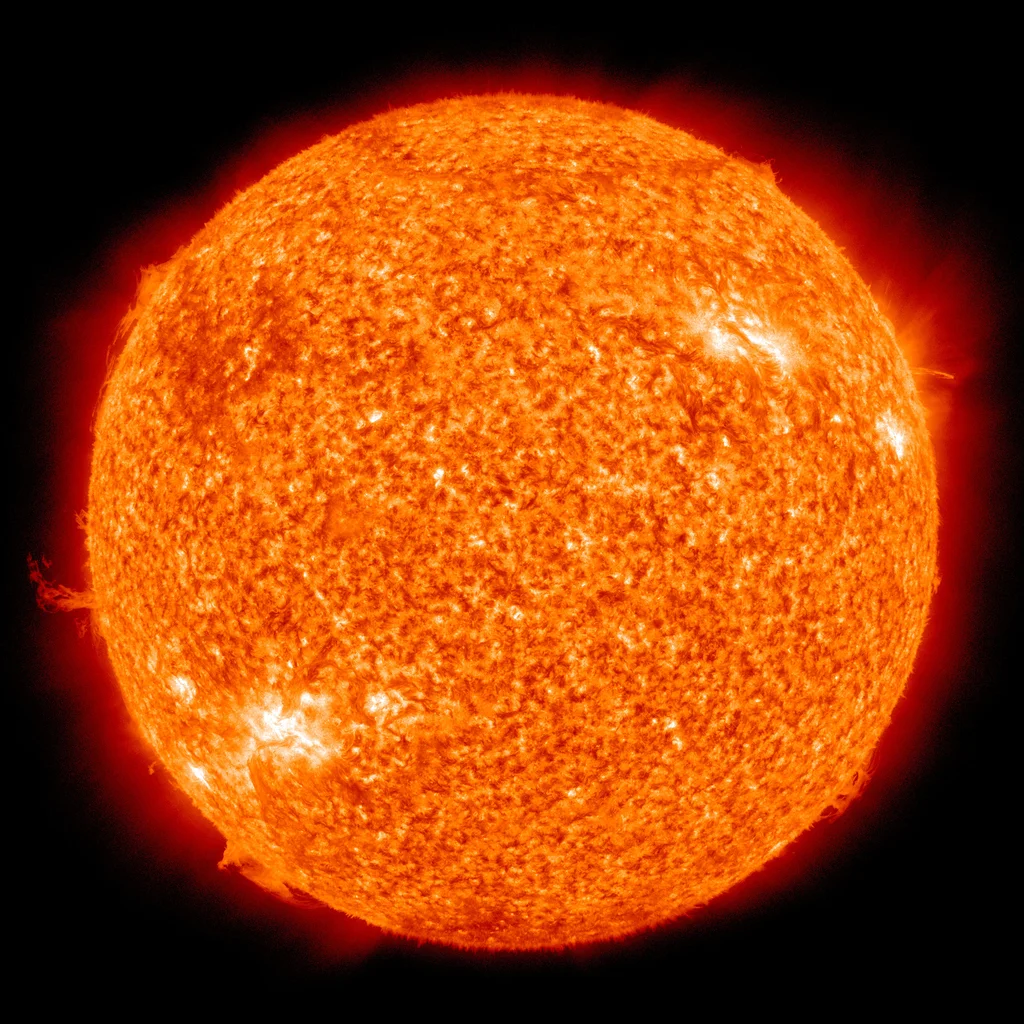
A self-sustaining fusion engine at the heart of our system.
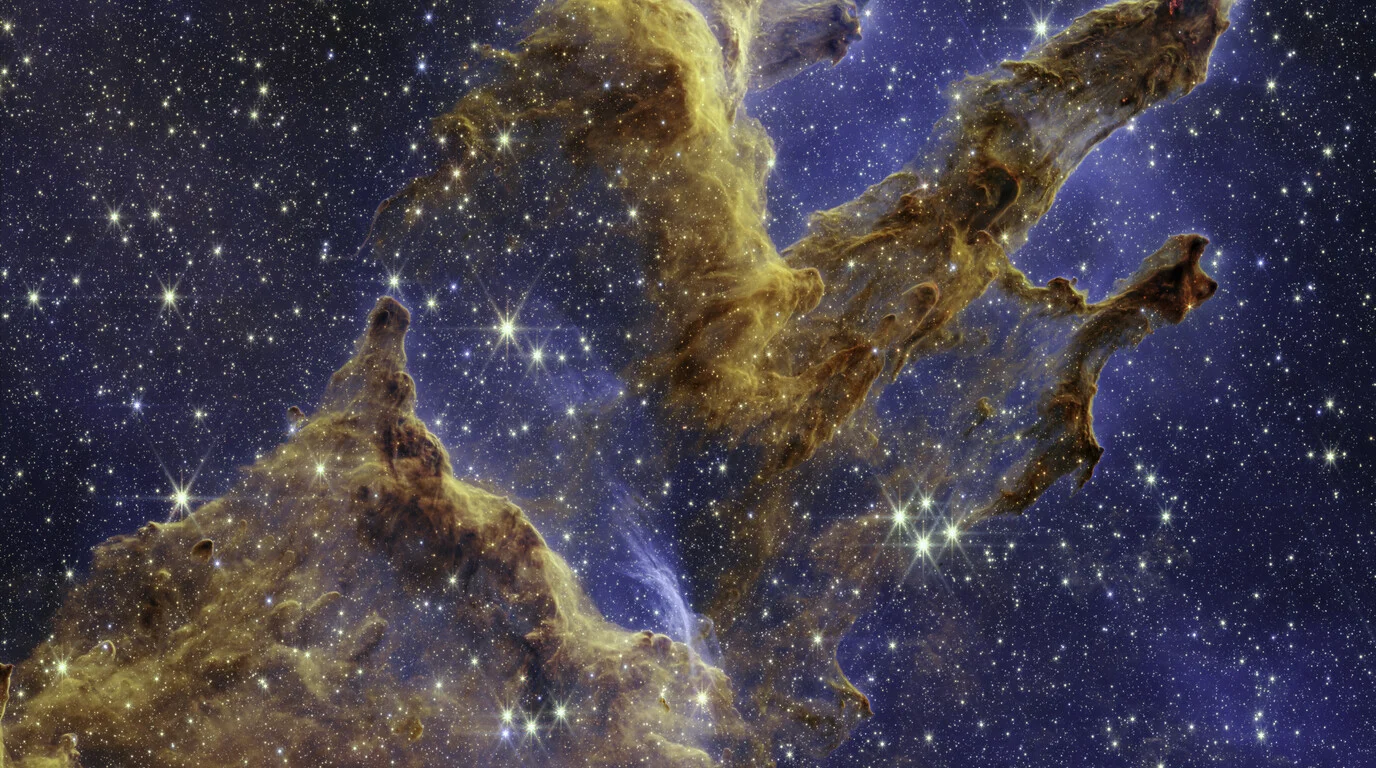
The distance a single beam of light covers in one year.
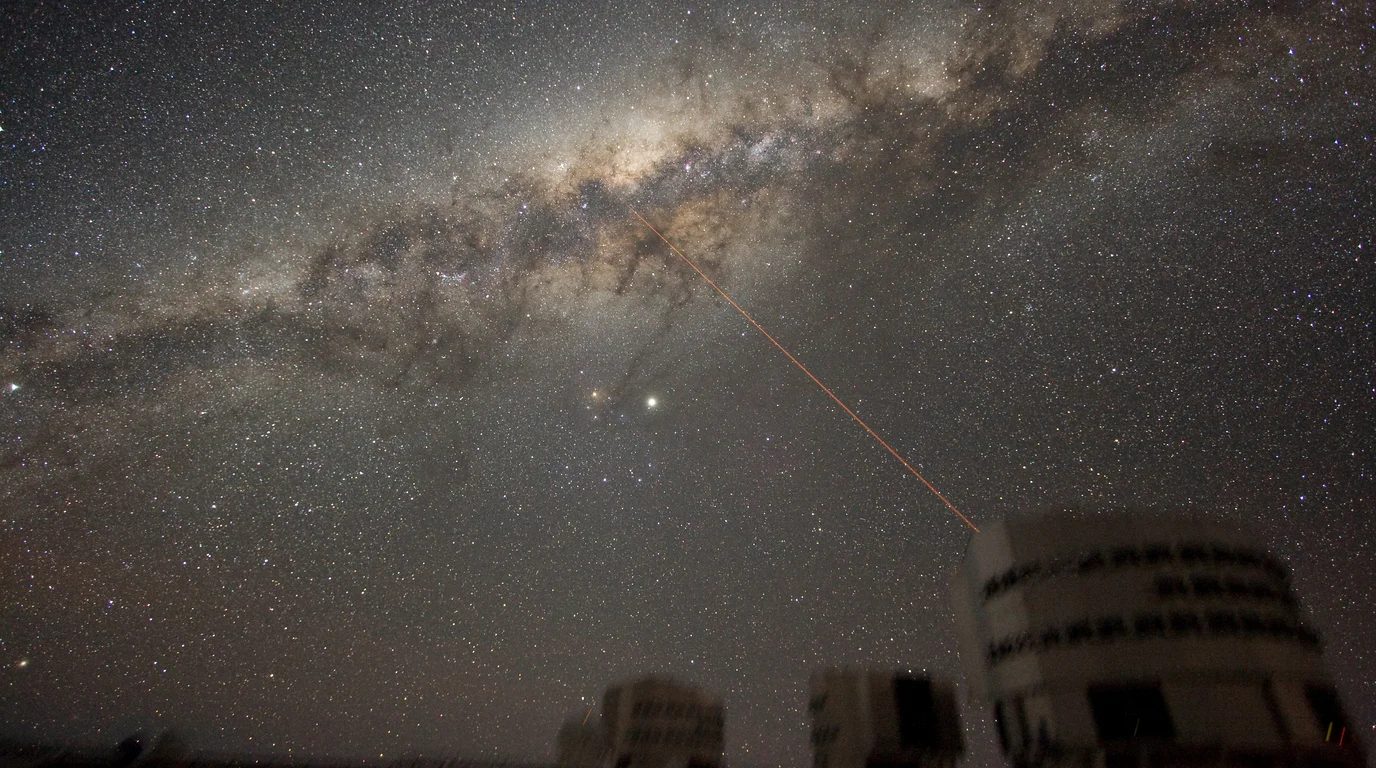
A barred spiral of hundreds of billions of stars — including ours.
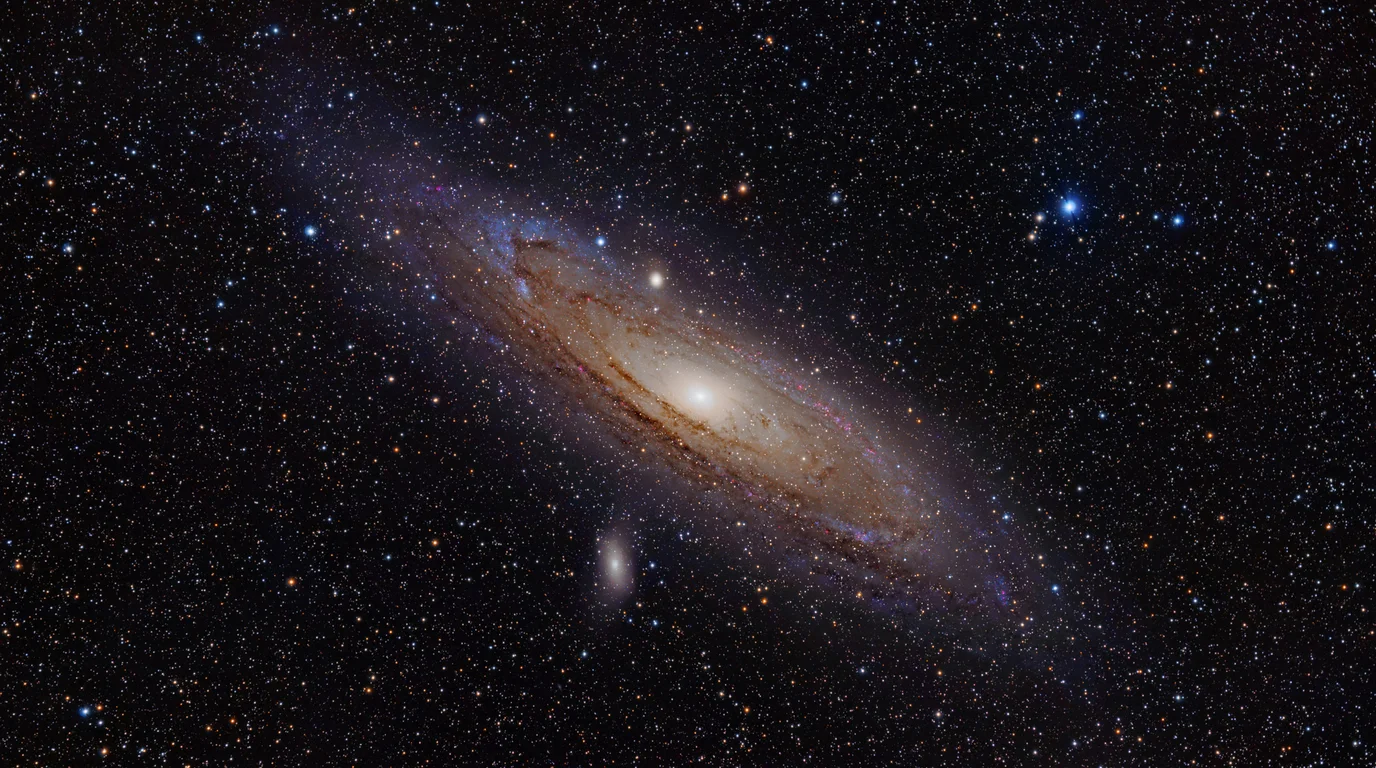
Our nearest large galactic neighbour — and a possible future collision partner.
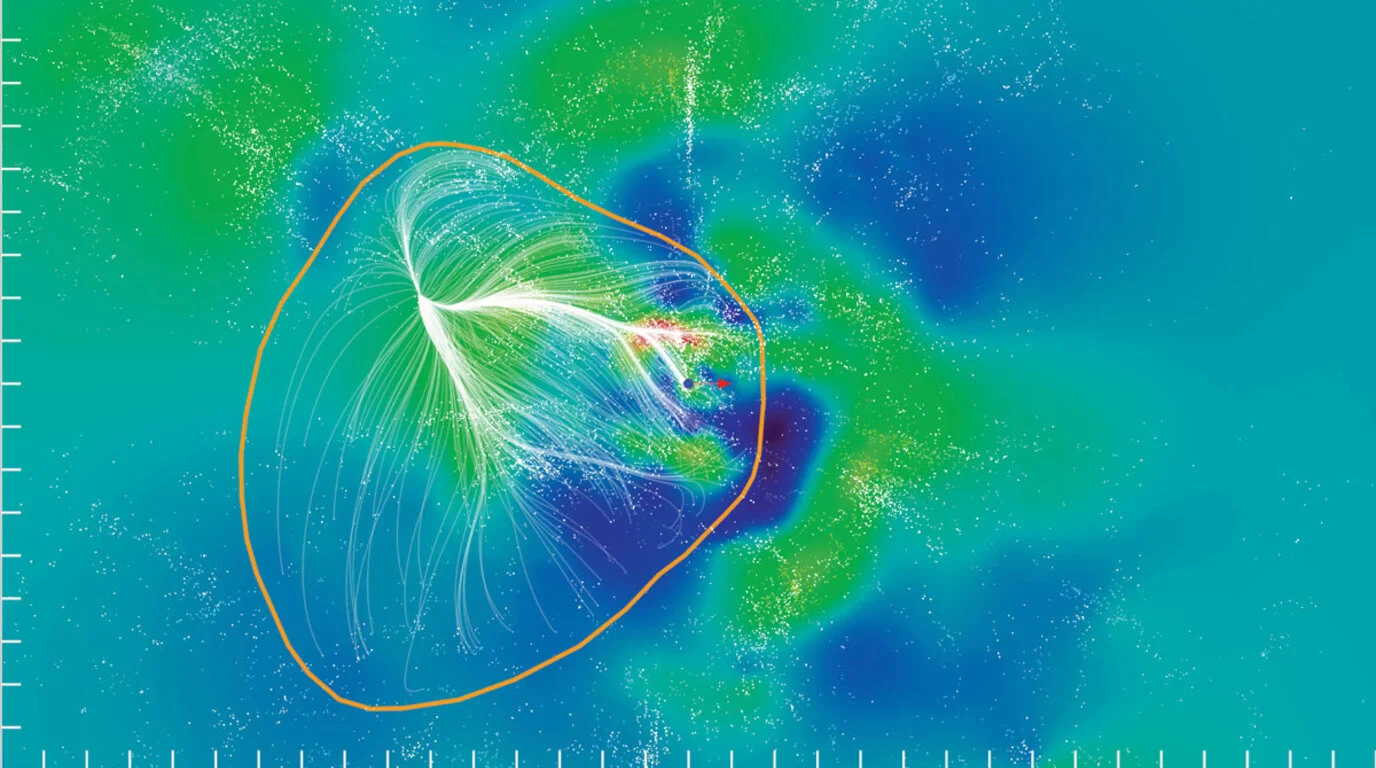
The supercluster of galaxy clusters our Milky Way lives inside.
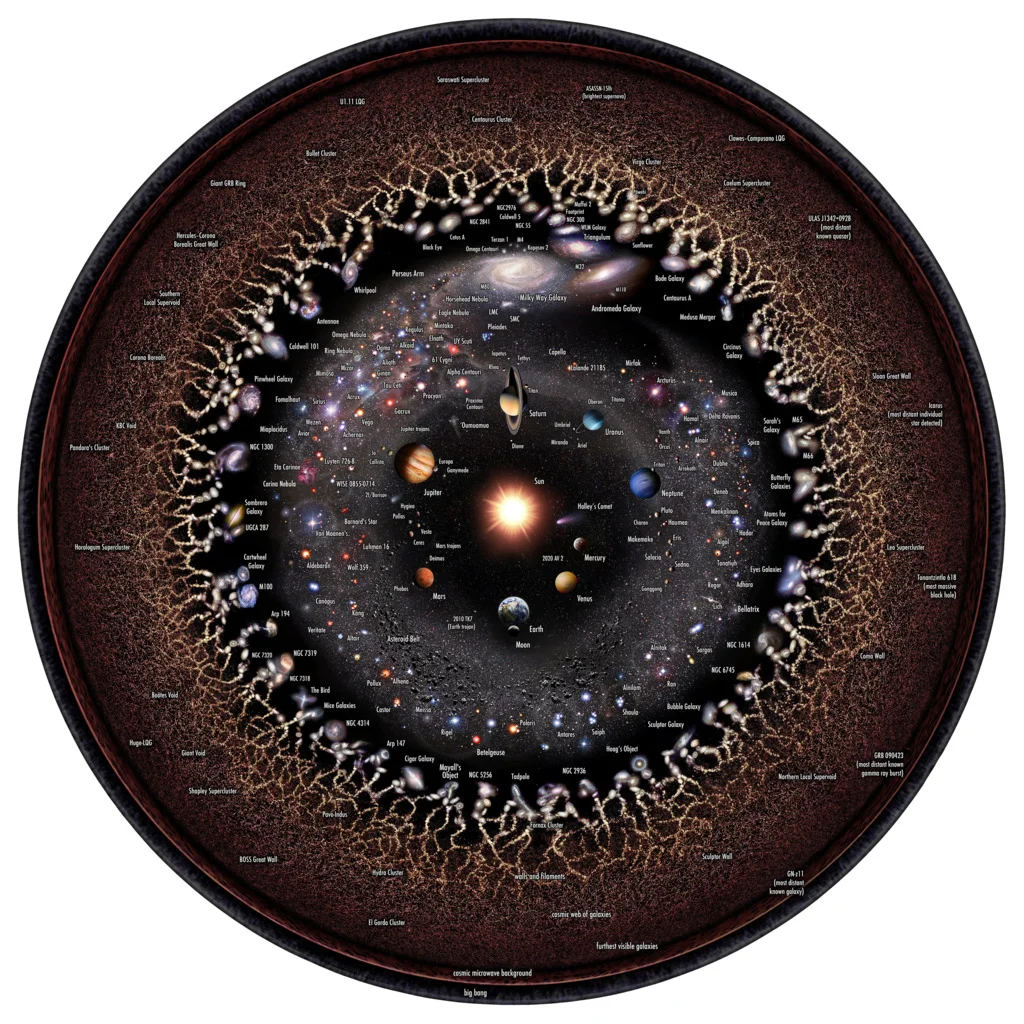
The 93-billion-light-year sphere we can, in principle, see.
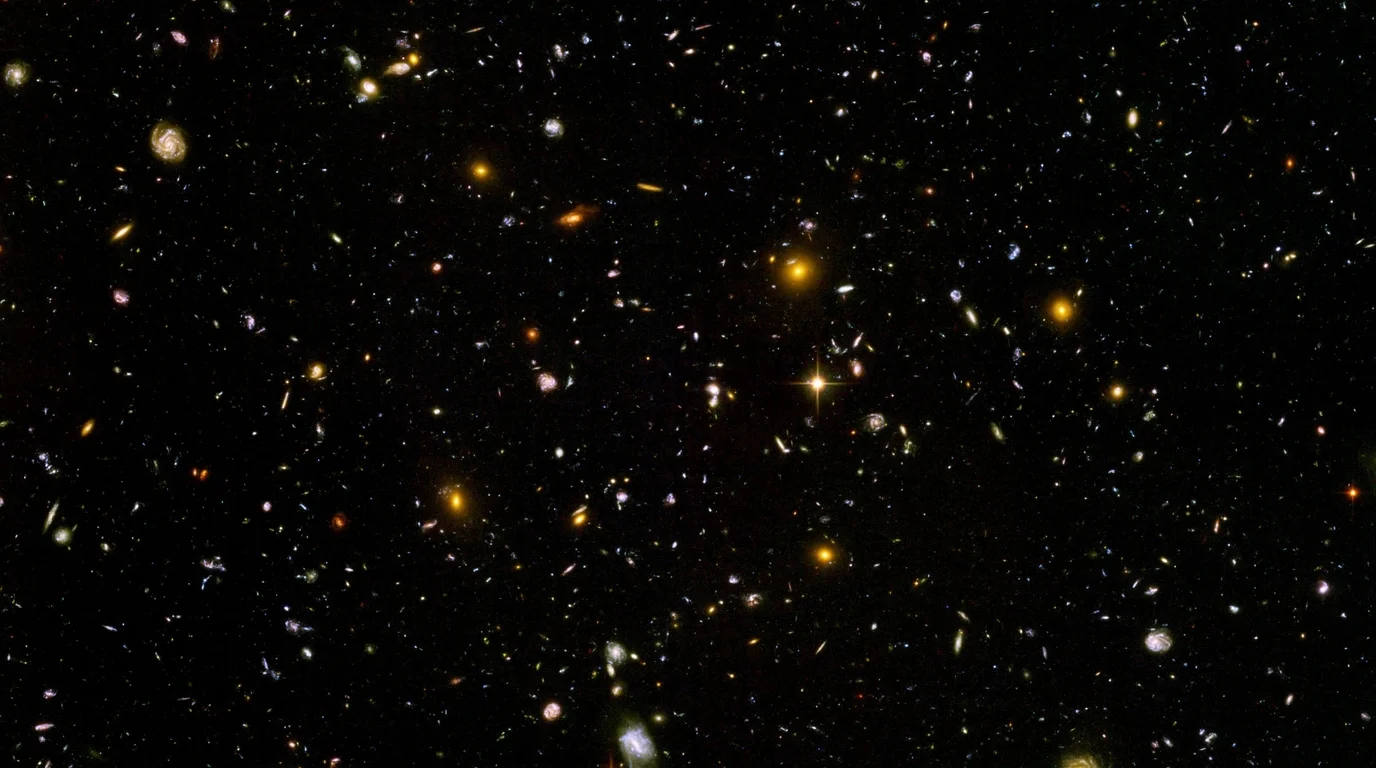
Whatever is pulling the universe apart, faster and faster.