
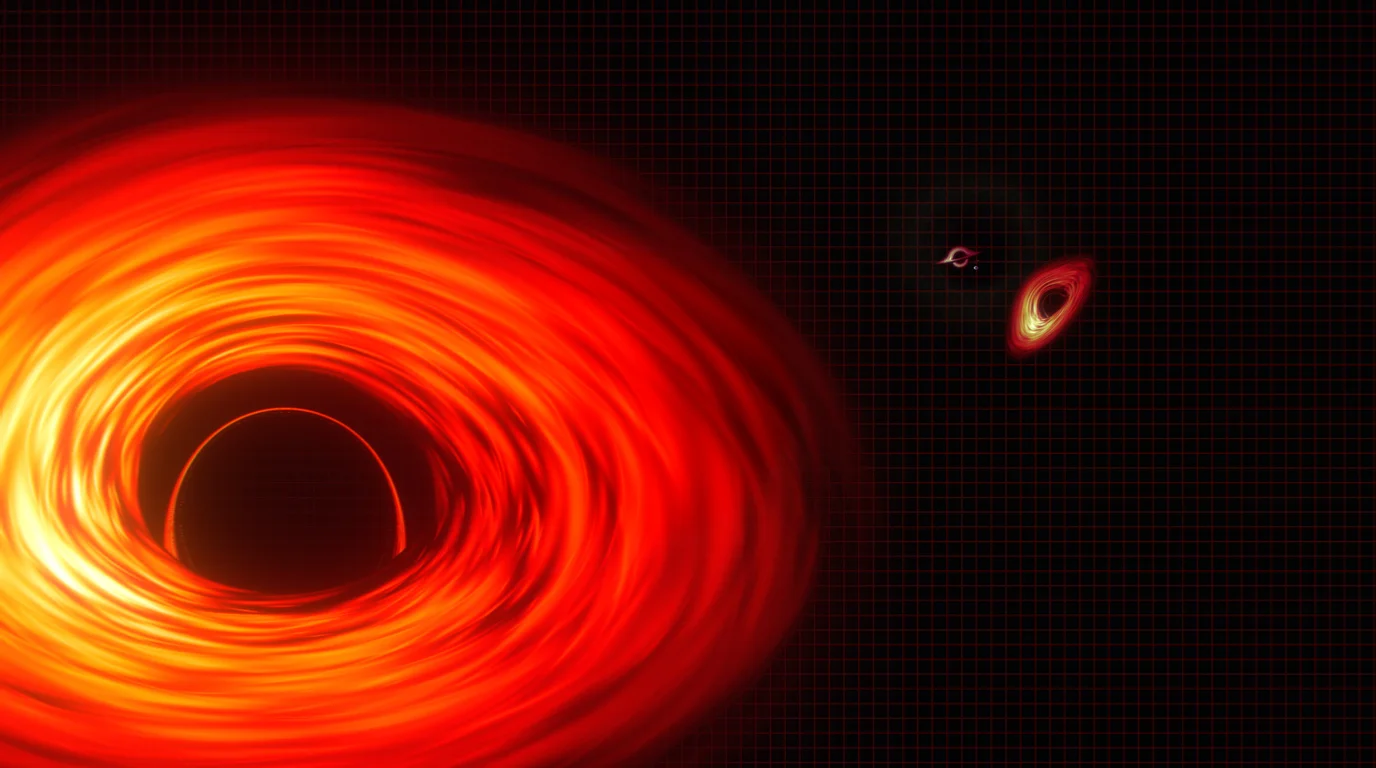
01Size195 billion kmDist10.4 billion ly
TON 618
An ultramassive quasar — one of the largest black holes ever measured.
Black holeQuasarCosmos
Loading…
The distance a single beam of light covers in one year.
NASA / ESA / CSA / STScI — JWST Pillars of Creation
Picture this
The distance light travels in a year. Even Voyager — the farthest space probe humans have ever flown — would need over 17,000 years to cover it.
A light-year is a unit of distance, not time. At roughly 300,000 km per second, light covers about 9.46 trillion kilometres in a year — about 63,241 astronomical units. Proxima Centauri, the nearest star to the Sun, lies 4.24 light-years away. Even at the Voyager probes' speed, reaching it would take more than 70,000 years.
Glossary
Did you know?
Galaxies hold hundreds of billions of stars, yet typical pairs of stars are several light-years apart. By volume, a galaxy is almost entirely empty space.
Last updated 2026-10-04
You are here
Scale
The distance a single beam of light covers in one year.
Size
1.00 ly
Tap a dot to preview it. Use the Open stop link to read its full page. Stops are arranged from smallest on the left to largest on the right.
An ultramassive quasar — one of the largest black holes ever measured.
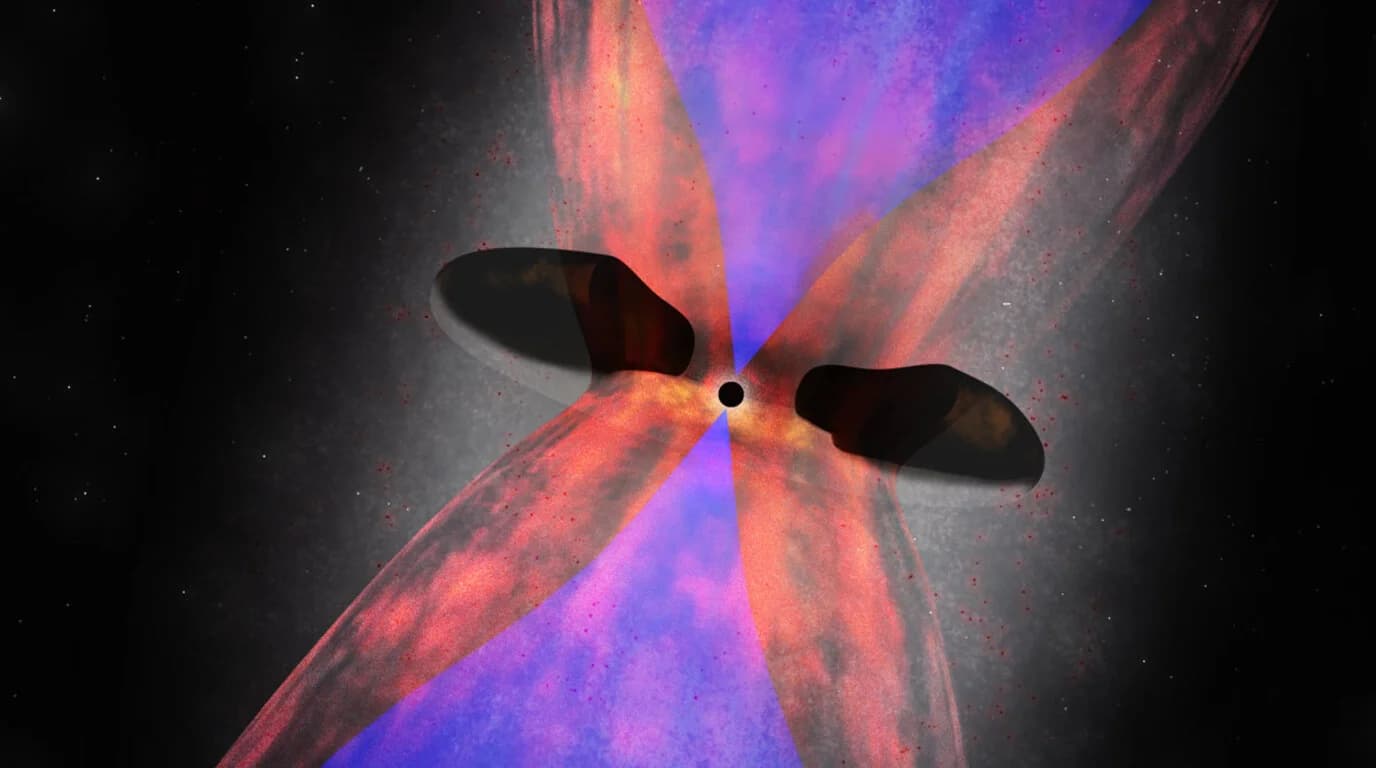
At the heart of the Phoenix Cluster — among the most massive known black holes.
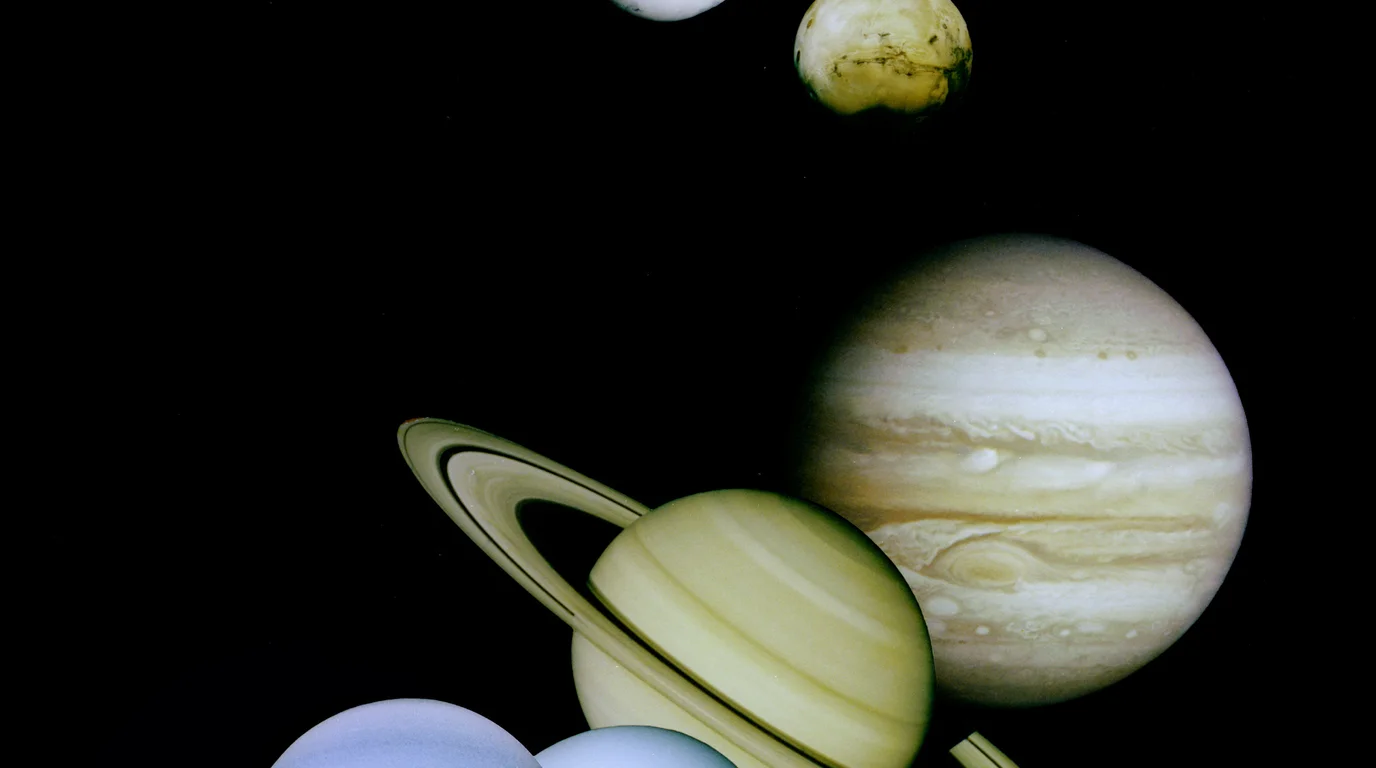
One star and everything held in its gravity.