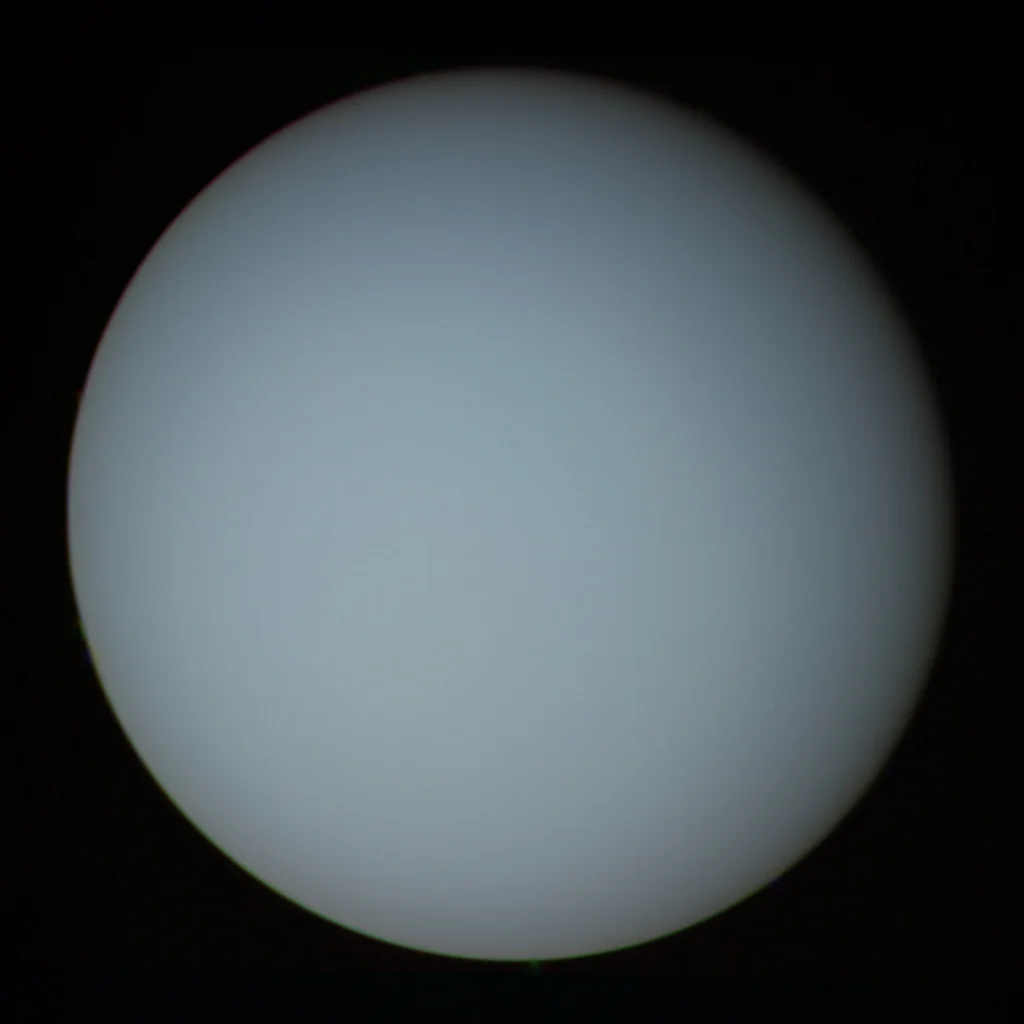
01Size50,724 kmDist2.87 billion kmTemp76 K (-197 °C)
Uranus
An ice giant tipped on its side.
PlanetGas giantCosmos
Loading…
A storm-blue ice giant on the edge of the planetary realm.
NASA / JPL / Voyager 2
Neptune Earth
Drawn to true scale.
Neptune Sun Distance from Earth
30.1×
farther from Earth
Distance from Earth
4.50 billion km
Neptune is roughly 30.1× farther from Earth than Sun.
Picture this
Neptune was the first planet discovered by mathematics rather than observation: irregularities in Uranus's orbit pointed to an unseen pull. Astronomers calculated where it should be, pointed their telescope, and saw it on the first try.
If you scale the distance
Sunlight takes 4 hours and 10 minutes to reach Neptune. From Earth, it's 4.5 billion km — the most distant of the eight planets, and one of the loneliest worlds we have ever photographed.
Neptune is the eighth and farthest planet, an ice giant similar in composition to Uranus but with a far more dramatic atmosphere. Voyager 2 imaged supersonic winds — the fastest in the Solar System, over 2,100 km/h — and a vast oval storm called the Great Dark Spot that has since faded and reformed elsewhere. It takes 165 Earth years for Neptune to orbit the Sun once, meaning the planet has barely completed one full orbit since it was discovered in 1846.
Glossary
Did you know?
Neptune's winds blow at over 2,100 km/h — faster than the speed of sound at sea level on Earth. Why a planet this cold has the system's strongest weather is still not fully understood.
Last updated 2026-10-04
You are here
Scale
A storm-blue ice giant on the edge of the planetary realm.
Size
49,244 km
Tap a dot to preview it. Use the Open stop link to read its full page. Stops are arranged from smallest on the left to largest on the right.
An ice giant tipped on its side.
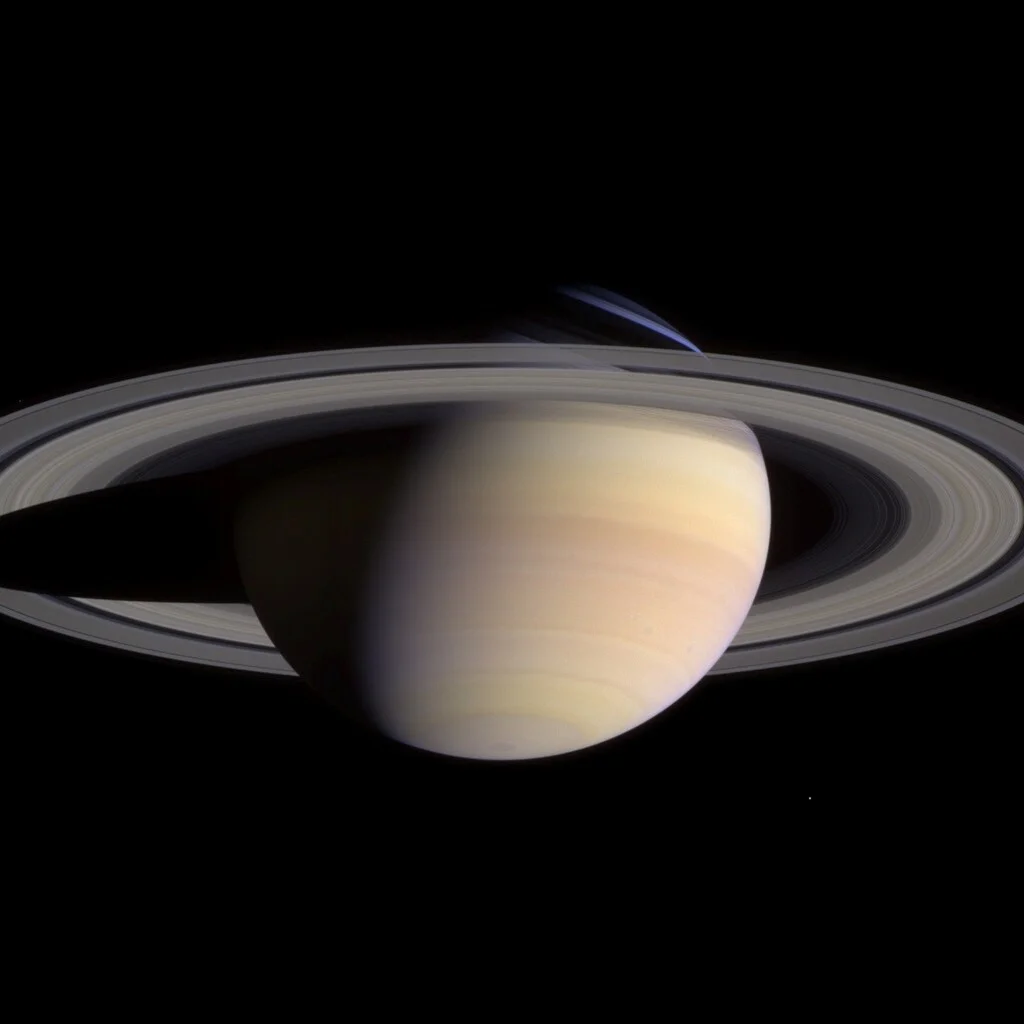
The Solar System's signature image — a gas giant with rings.
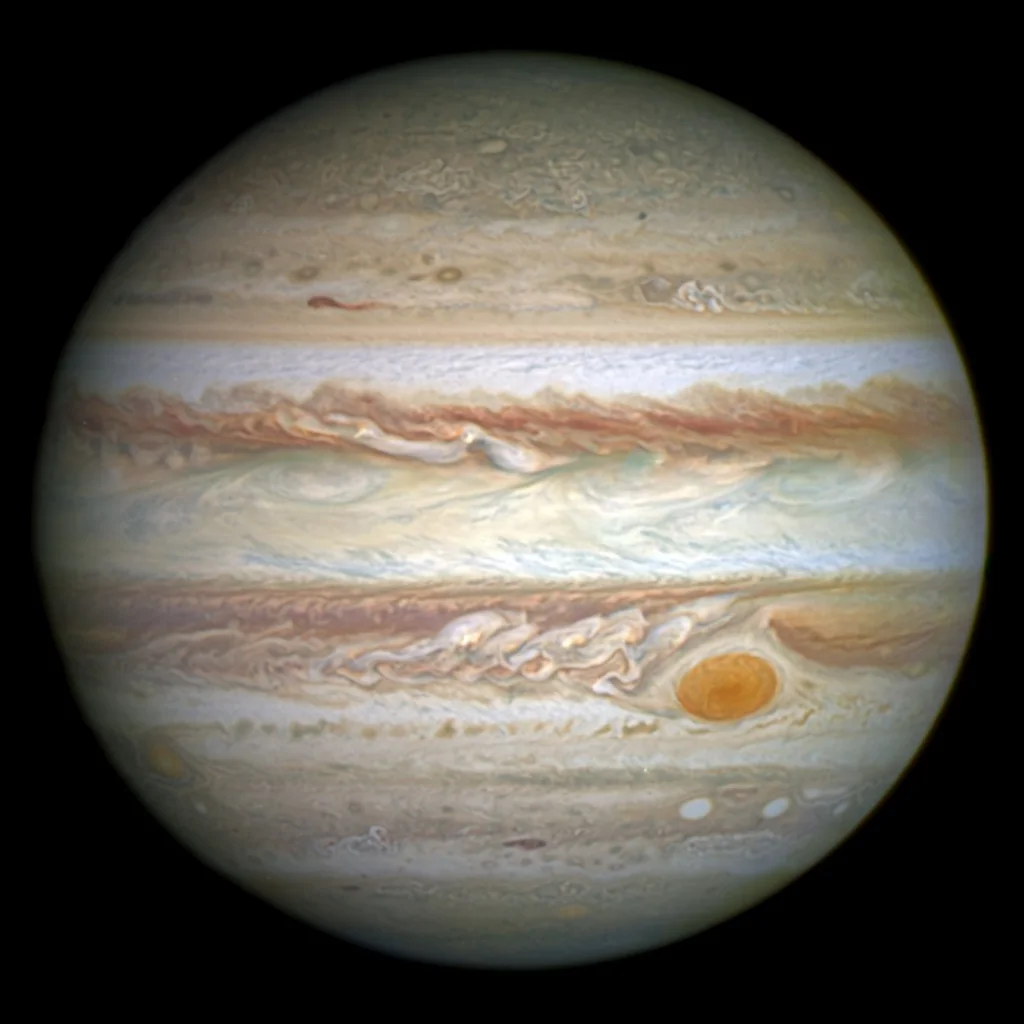
The Solar System's largest planet — a failed star, almost.