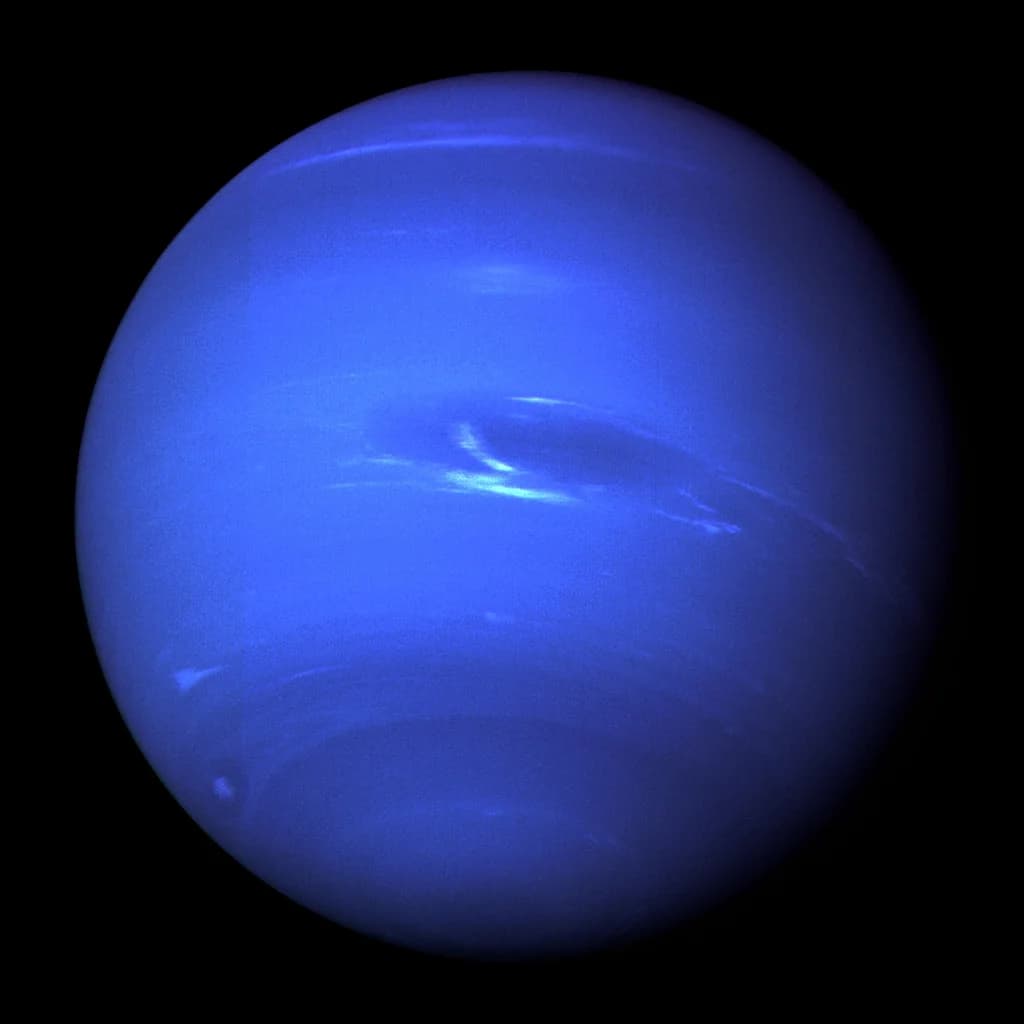
01Size49,244 kmDist4.50 billion kmTemp72 K (-201 °C)
Neptune
A storm-blue ice giant on the edge of the planetary realm.
PlanetGas giantCosmos
Loading…
NASA / JPL / Voyager 2
Uranus Earth
Drawn to true scale.
Uranus Sun Distance from Earth
Uranus is roughly 19.2× farther from Earth than Sun.
Picture this
Voyager 2 flew past Uranus in 1986 and saw a featureless ball — partly because it was the side of the planet in mid-day, partly because Uranus is genuinely calmer than its giant siblings. We have never sent another probe.
If you scale the distance
Sunlight takes 2 hours 40 minutes to reach Uranus. From Earth, it's about 2.9 billion km — so far that the planet wasn't even recognised as a planet until 1781, when William Herschel spotted it through a telescope and at first mistook it for a comet.
Uranus is the seventh planet from the Sun and the third-largest by diameter. Unlike the other gas giants, much of its interior is made of "ices" — water, methane, and ammonia under extreme pressure — and trace methane in its atmosphere gives it its pale blue-green colour. Most strangely, its rotation axis is tilted 98 degrees, so it spins almost on its side. Each of its 84-Earth-year orbit, one pole gets a 21-year day while the other endures a 21-year night.
Glossary
Did you know?
Uranus is the only planet in the Solar System tilted on its side. Some astronomers think it happened from a massive collision early in its history — the angle locked in for billions of years.
Last updated 2026-10-04
You are here
Scale
An ice giant tipped on its side.
Size
50,724 km
Tap a dot to preview it. Use the Open stop link to read its full page. Stops are arranged from smallest on the left to largest on the right.
A storm-blue ice giant on the edge of the planetary realm.
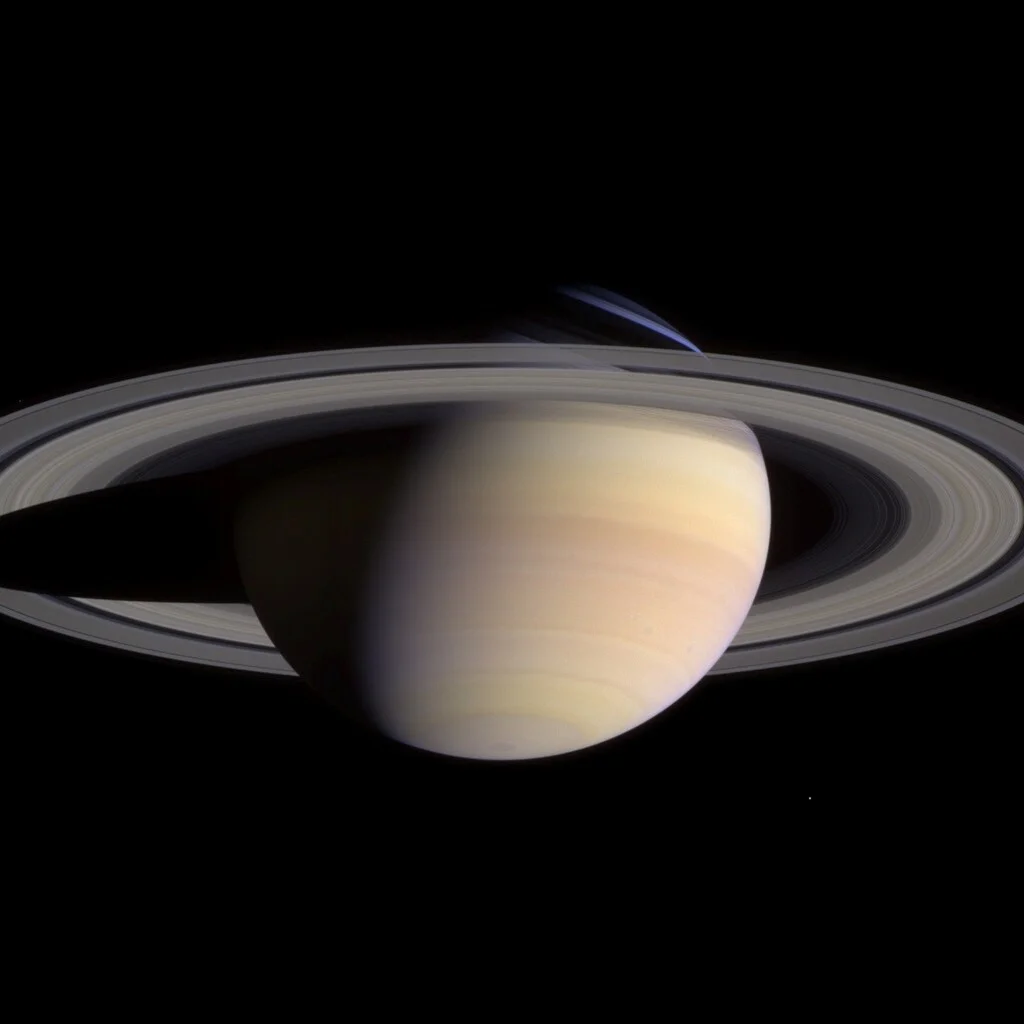
The Solar System's signature image — a gas giant with rings.
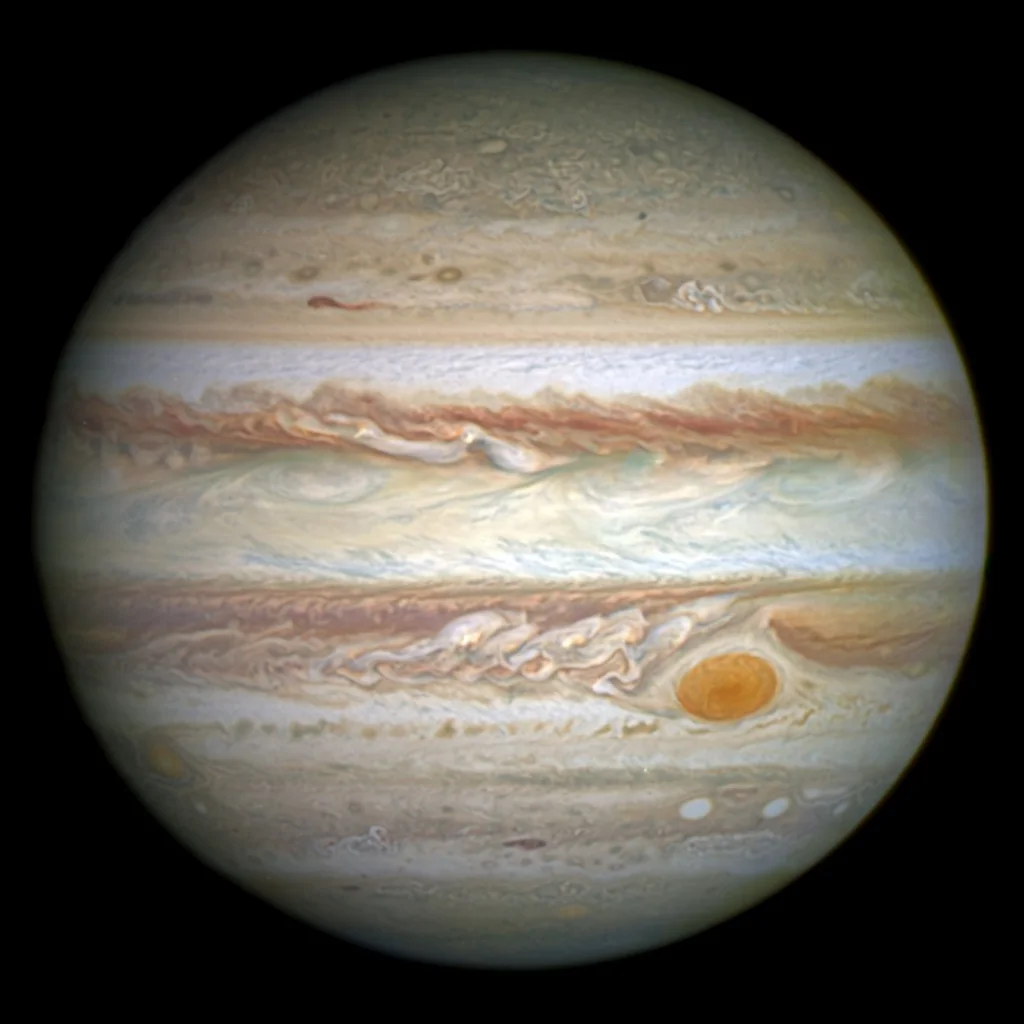
The Solar System's largest planet — a failed star, almost.