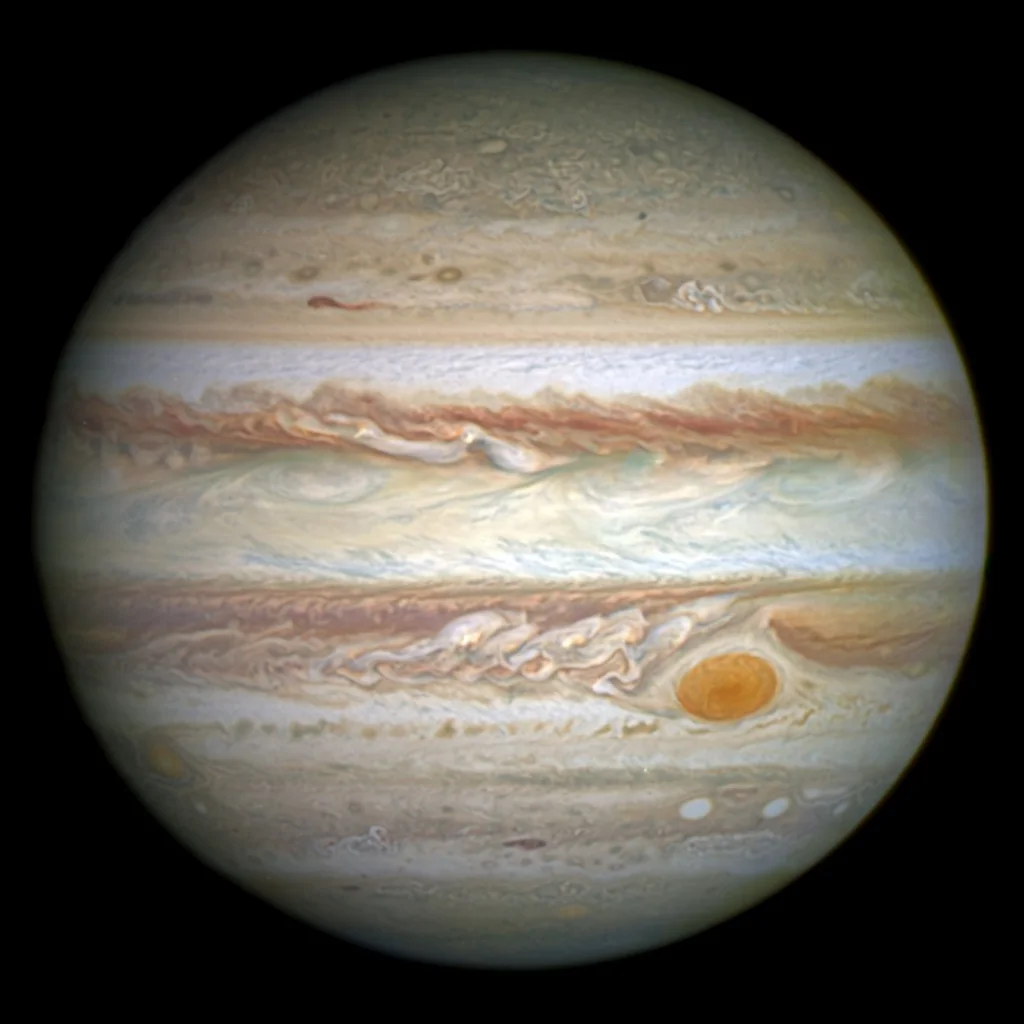
01Size139,820 kmDist779 million kmTemp165 K (-108 °C)
Jupiter
The Solar System's largest planet — a failed star, almost.
PlanetGas giantCosmos
Loading…
The Solar System's signature image — a gas giant with rings.
NASA / JPL / Space Science Institute / Cassini
Saturn Earth
Drawn to true scale.
Saturn Sun Distance from Earth
Saturn is roughly 9.56× farther from Earth than Sun.
Picture this
Drop Saturn into a big enough bathtub and it would float. Of all the planets, it's the only one less dense than water — a gas giant so puffy that, gram for gram, you weigh more than it does.
If you scale the distance
Sunlight takes 80 minutes to reach Saturn — longer than the running time of most movies. From Earth, it's 1.4 billion km on average. Cassini, the spacecraft that orbited Saturn for 13 years, sent each frame back over a 1-hour radio crawl.
Saturn is the second-largest planet in the Solar System, a ball of hydrogen and helium nine times Earth's diameter. Its rings are the largest and brightest of any planet, made almost entirely of water ice — chunks ranging from grains of sand to icebergs — orbiting in a disc only tens of metres thick. Saturn has at least 146 known moons, including Titan, which has a thick atmosphere and lakes of liquid methane, and Enceladus, which fires jets of water into space from a buried ocean.
Glossary
Did you know?
Saturn's rings span 282,000 km across — wide enough to nearly reach the Moon if pinned to Earth — but they're absurdly thin, often only 10 metres top to bottom. Edge-on, they almost disappear.
Last updated 2026-10-04
You are here
Scale
The Solar System's signature image — a gas giant with rings.
Size
116,460 km
Tap a dot to preview it. Use the Open stop link to read its full page. Stops are arranged from smallest on the left to largest on the right.
The Solar System's largest planet — a failed star, almost.
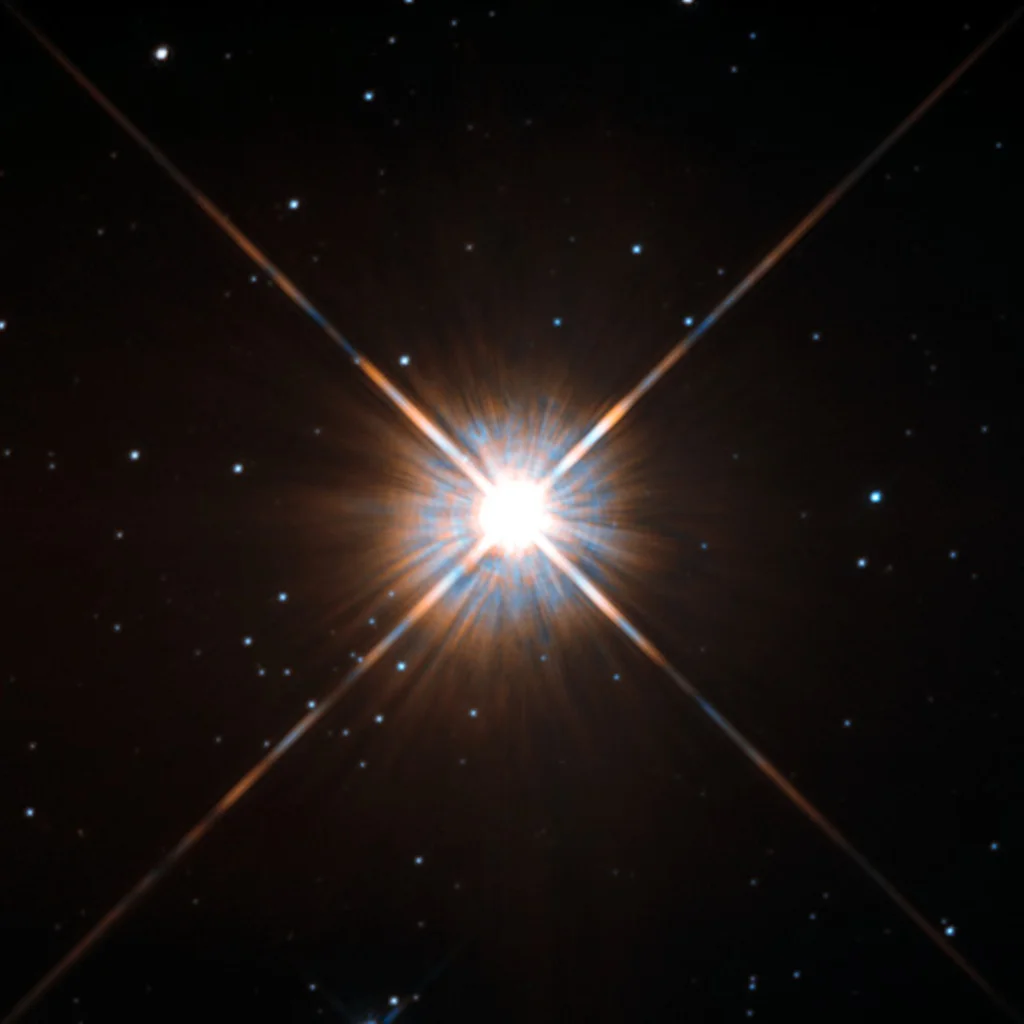
The closest known star to the Sun — and still impossibly far.
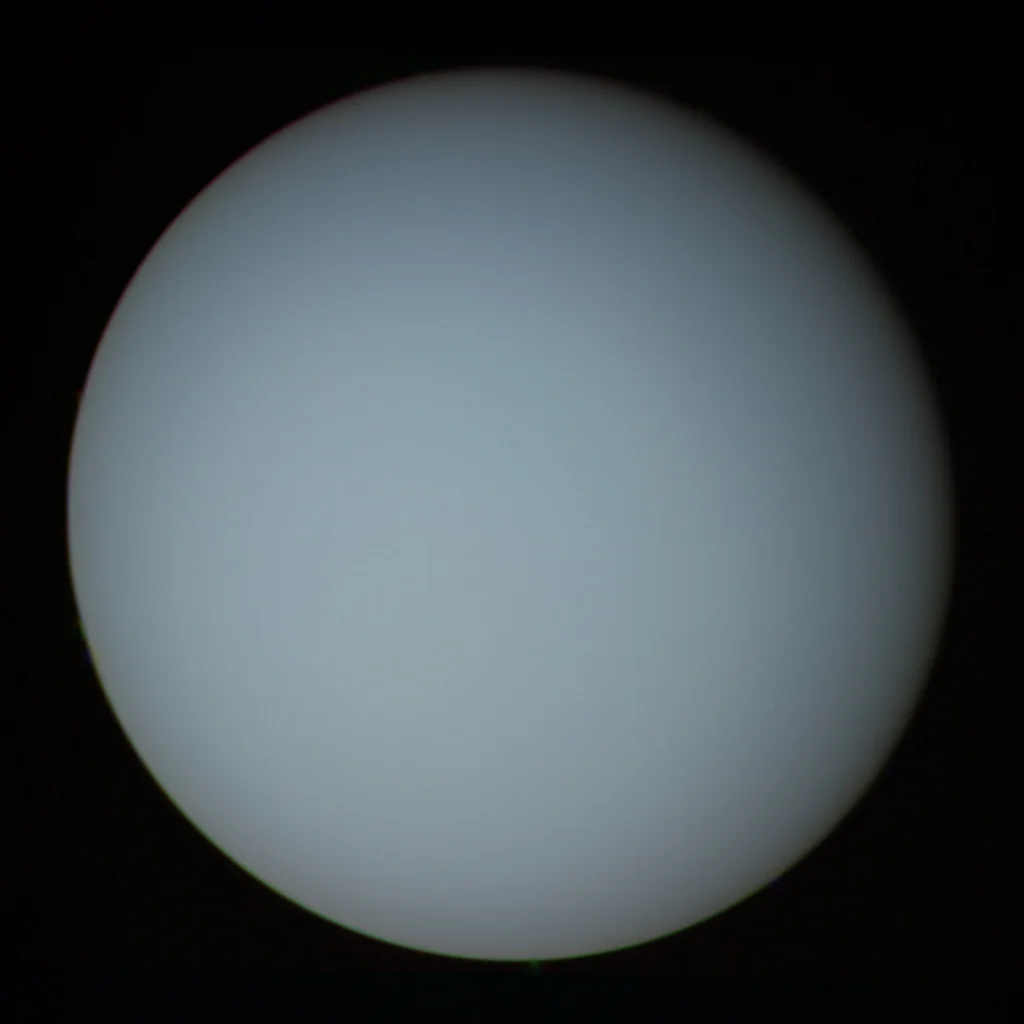
An ice giant tipped on its side.