
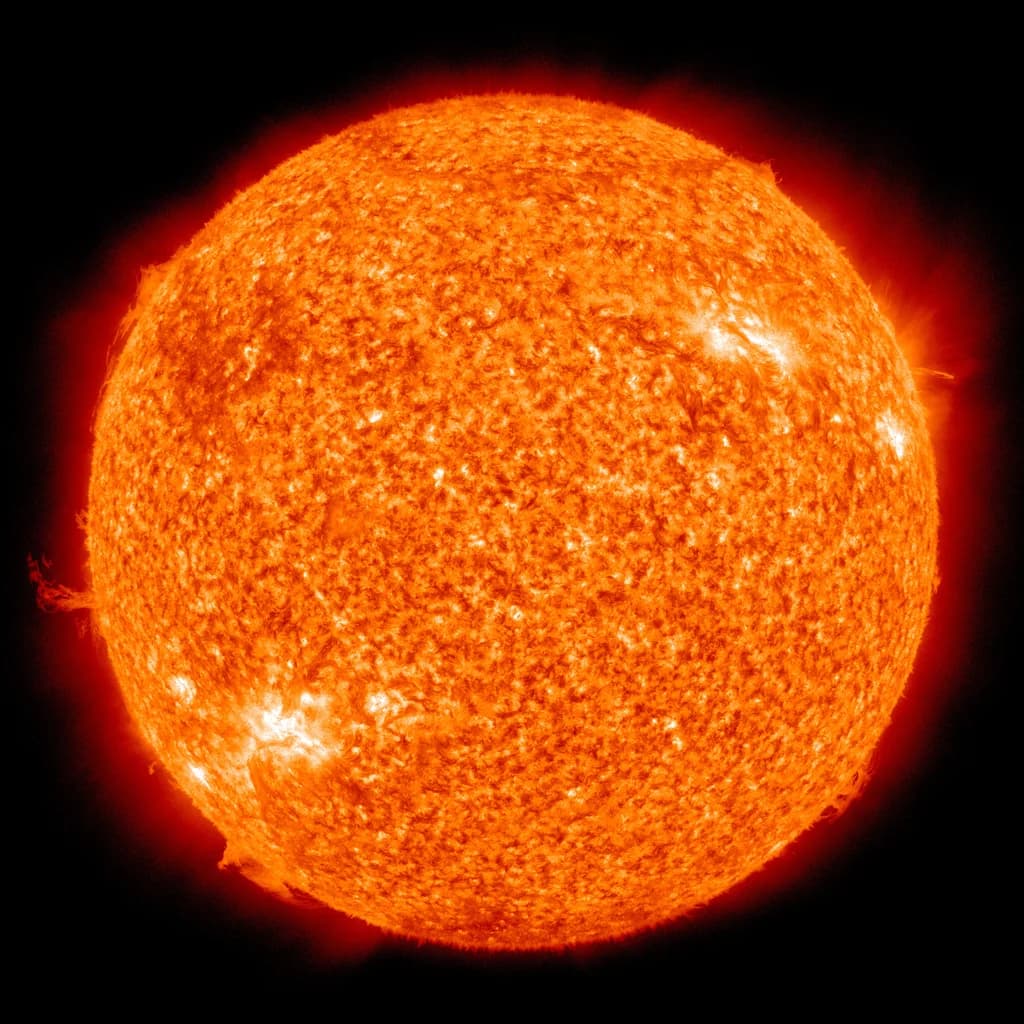
01Size1.39 million kmDist150 million kmTemp5,800 K (≈ 5,500 °C)
The Sun
A self-sustaining fusion engine at the heart of our system.
StarCosmos
Loading…
Topics
The nuclear furnaces of the universe.
Overview
A star is a ball of plasma held together by its own gravity, hot and dense enough in its core to fuse light atomic nuclei into heavier ones — and to release the energy that keeps the rest of it from collapsing. Stars come in a huge range of colours, sizes, and temperatures, but every one is doing the same fundamental thing: burning.
Astronomers classify stars by surface temperature, from O (the hottest, brightest blue stars) through B, A, F, G, K, to M (the coolest red dwarfs). The mnemonic "Oh Be A Fine Girl/Guy, Kiss Me" is older than radio. (Temperatures below are in kelvin. To convert to Celsius, subtract 273 — at these stellar scales the difference is negligible.) O-class stars exceed 30,000 K (≈ 30,000 °C) and are rare and brilliant. B-class are 10,000–30,000 K, blue. A-class (7,500–10,000 K, white) includes Sirius. F-class are yellow-white. G-class (5,200–6,000 K, ≈ 5,000–5,700 °C, yellow) includes our Sun. K-class are orange. M-class (under 3,700 K, ≈ under 3,400 °C, red) are the most common type in the galaxy.
A second classification ladder runs from dwarfs to hypergiants. White dwarfs are stellar corpses smaller than Earth. Brown dwarfs straddle the line between large planets and small stars. Main-sequence stars like the Sun sit in the middle. Red giants and supergiants swell as they age. Hypergiants like UY Scuti and Stephenson 2-18 are so puffy that their surface, placed where the Sun is, would extend past Jupiter — but they are also among the most short-lived stars in the galaxy.
Every star starts as a knot of cold gas inside a molecular cloud, collapsing under its own gravity. As the centre densifies and heats, hydrogen begins fusing into helium and the new star joins the "main sequence" — the steady-burning phase where it spends most of its life. The Sun has been in main-sequence phase for about 4.6 billion years and has roughly another five to go.
What a star becomes when it dies depends on how massive it was. Sun-sized stars puff into red giants, shed their outer layers, and leave behind a slow-cooling white dwarf. Larger stars — 8 to 25 solar masses — end in supernova explosions, collapsing their cores into neutron stars. Truly massive stars (above ~25 solar masses) skip even that — their cores collapse straight into stellar-mass black holes. Black holes are, in this sense, the graveyards of the most massive stars.
There are an estimated 200 billion stars in the Milky Way alone, and roughly 2 trillion galaxies in the observable universe. The smallest known stars are barely larger than Jupiter. The largest, like UY Scuti, would extend past the orbit of Jupiter if placed at the Sun's position. The hottest stars exceed 200,000 K (≈ 200,000 °C) at their surfaces; the coolest red dwarfs are around 2,300 K (≈ 2,000 °C) — cooler than the inside of a forge.
A self-sustaining fusion engine at the heart of our system.
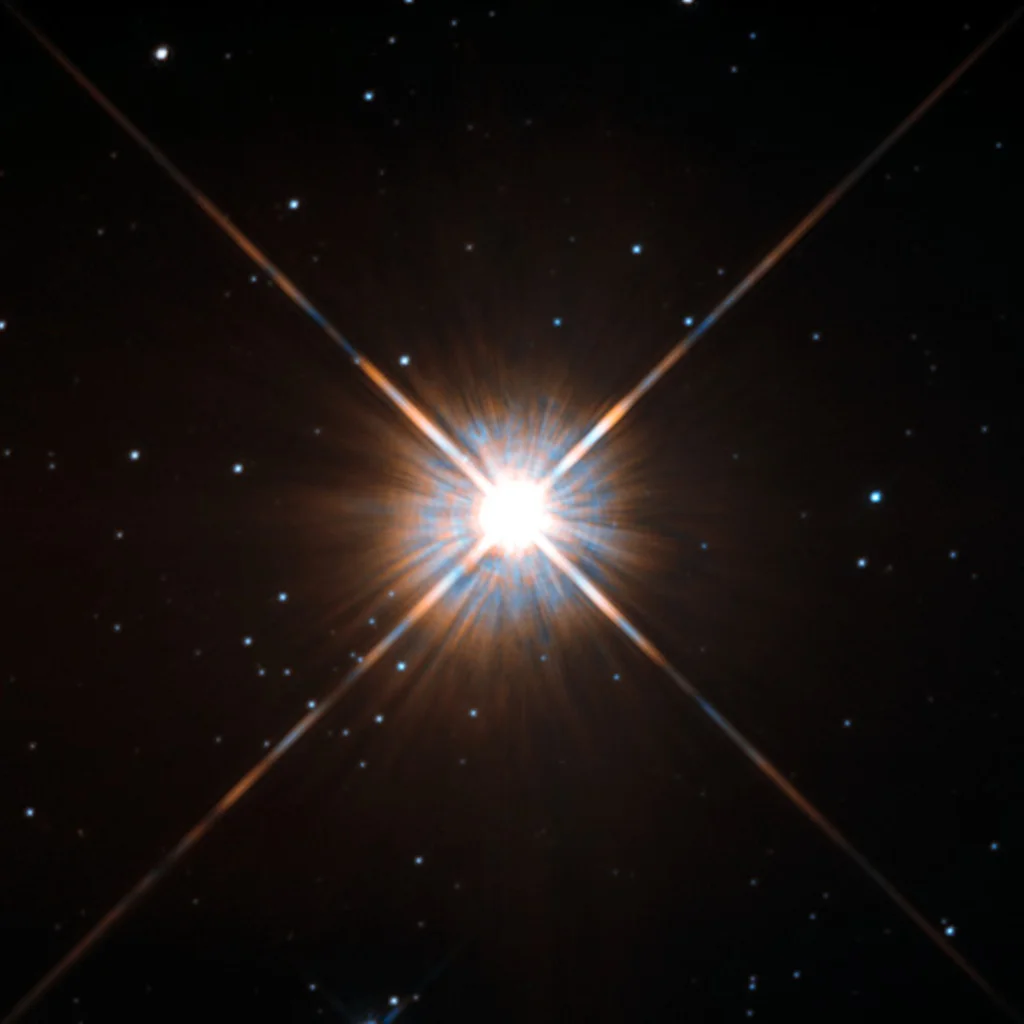
The closest known star to the Sun — and still impossibly far.
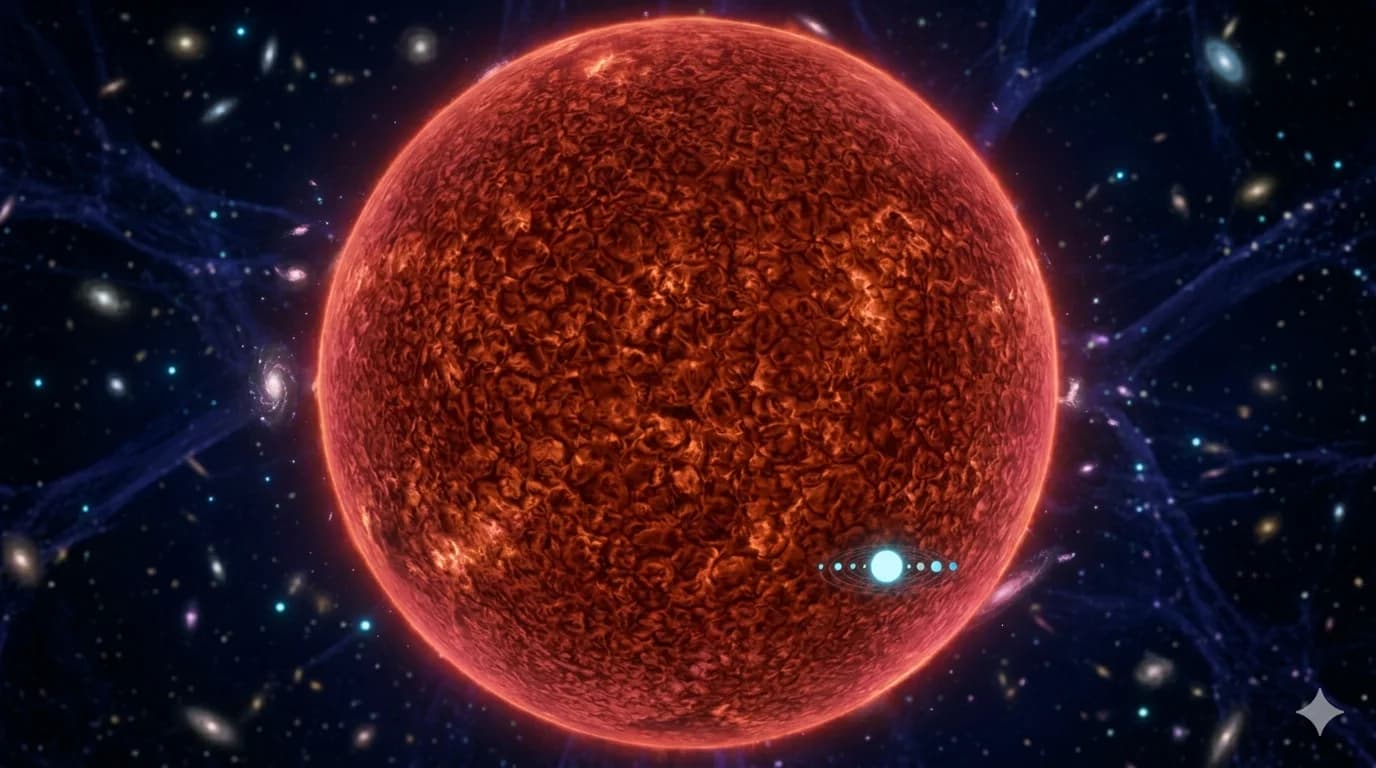
If it replaced the Sun, it would swallow Jupiter.
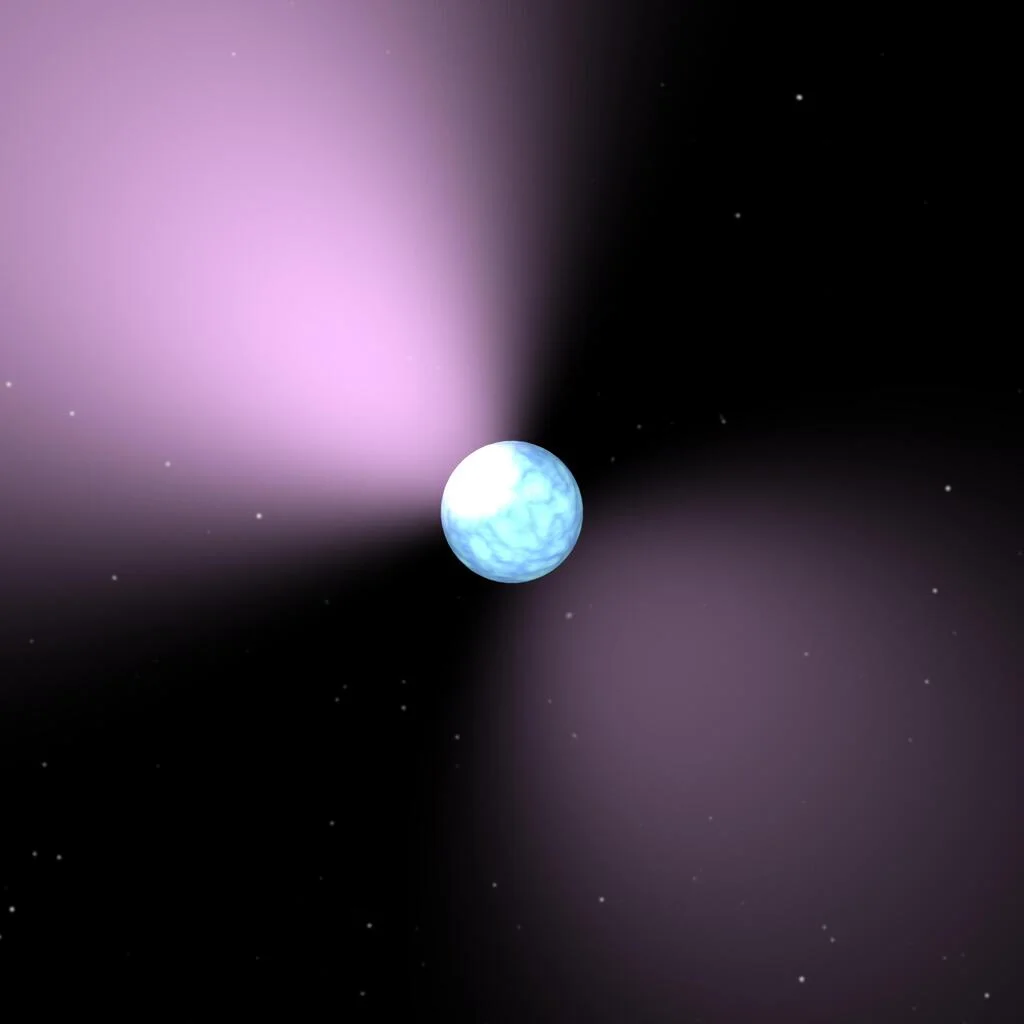
A city-sized star with the mass of a sun.
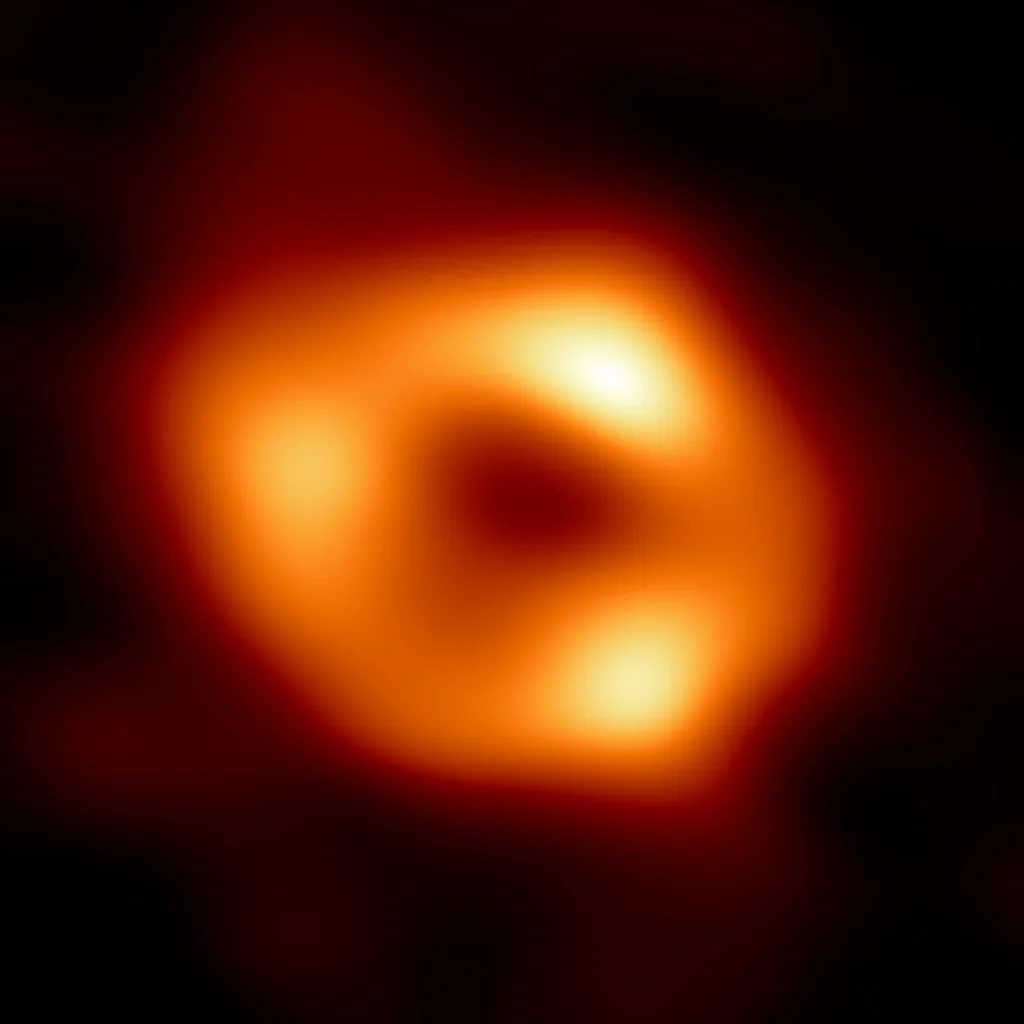
The supermassive black hole at the heart of our galaxy — and its more extreme cousins.