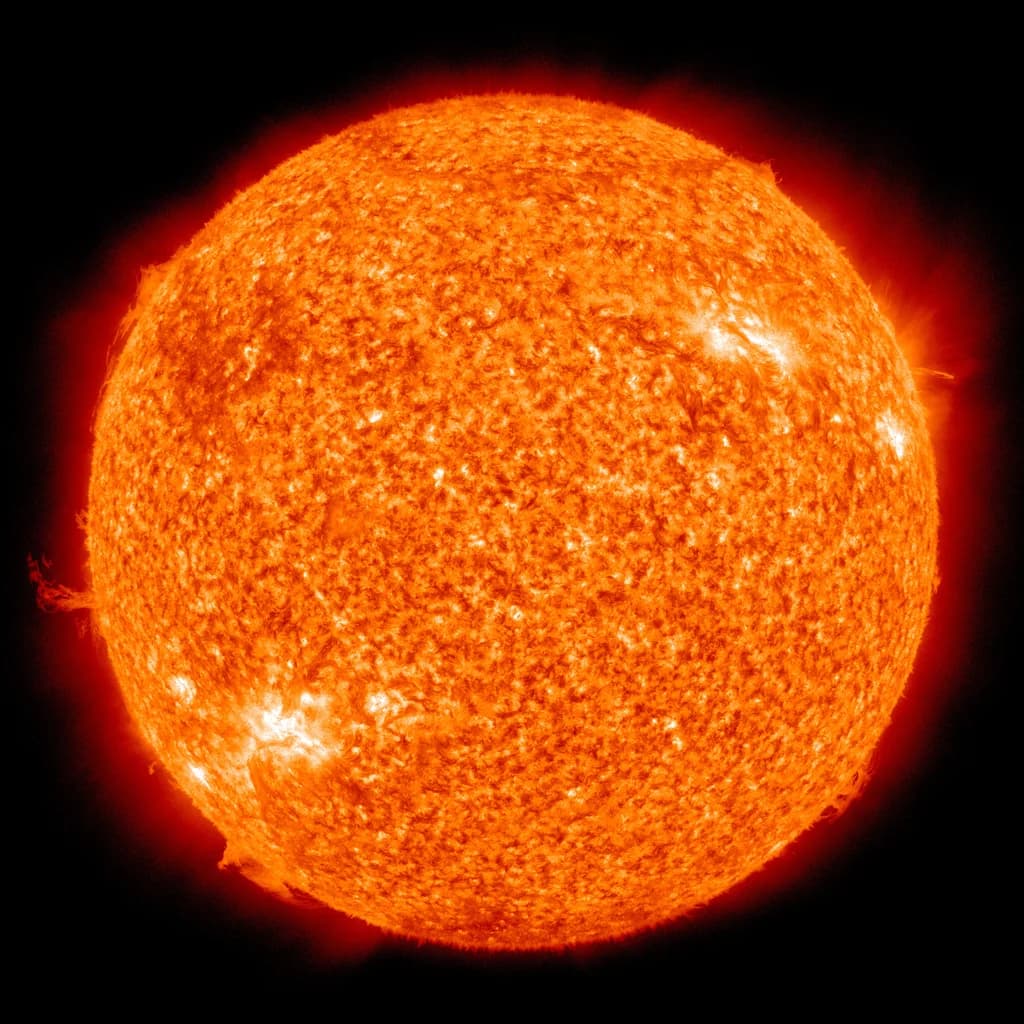
01Size1.39 million kmDist150 million kmTemp5,800 K (≈ 5,500 °C)
The Sun
A self-sustaining fusion engine at the heart of our system.
StarCosmos
Loading…
The supermassive black hole at the heart of our galaxy — and its more extreme cousins.
EHT Collaboration (CC BY 4.0)
Sagittarius A* Sun
Drawn to true scale.
Sagittarius A* Andromeda Distance from Earth
97.6×
closer to Earth
Distance from Earth
26,002 ly
Sagittarius A* is roughly 97.6× closer to Earth than Andromeda.
Picture this
Sagittarius A*'s event horizon is wide enough to swallow 17 Suns lined up edge to edge — yet it would still fit comfortably inside Mercury's orbit around our own Sun.
By weight
Sagittarius A* packs the mass of 4.15 million Suns into that region — and it's a modest example; the largest known supermassive black holes weigh tens of billions of Suns.
Sagittarius A* (Sgr A*) is the supermassive black hole at the centre of the Milky Way, about 4.15 million solar masses packed into a region 24 million km across — comfortably inside Mercury's orbit. It's modest by black-hole standards: TON 618 and Phoenix-A weigh tens of billions of solar masses each. Our nearest known black hole of any kind, Gaia BH1, is a much smaller stellar-mass one only 1,560 light-years away. The first direct images of supermassive black holes came in 2019 (M87*) and 2022 (Sgr A* itself).
Did you know?
The largest known supermassive black holes — like TON 618 and Phoenix-A — weigh tens of billions of Suns each, making our own Sagittarius A* look modest by comparison. The nearest known black hole of any kind, Gaia BH1, is a much smaller stellar-mass one only 1,560 light-years away — practically next door, cosmically speaking.
Last updated 2026-10-04
You are here
Scale
The supermassive black hole at the heart of our galaxy — and its more extreme cousins.
Size
24.0 million km
Tap a dot to preview it. Use the Open stop link to read its full page. Stops are arranged from smallest on the left to largest on the right.
A self-sustaining fusion engine at the heart of our system.
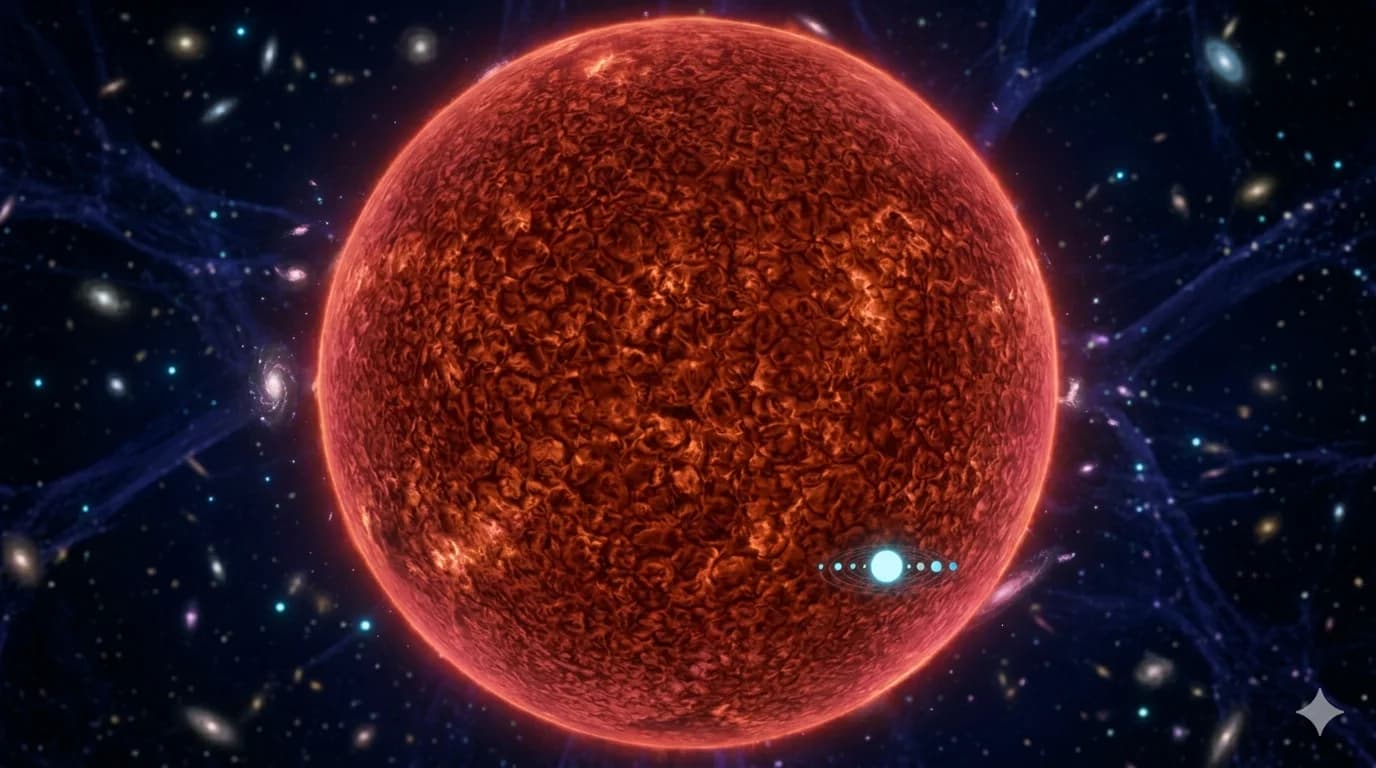
If it replaced the Sun, it would swallow Jupiter.
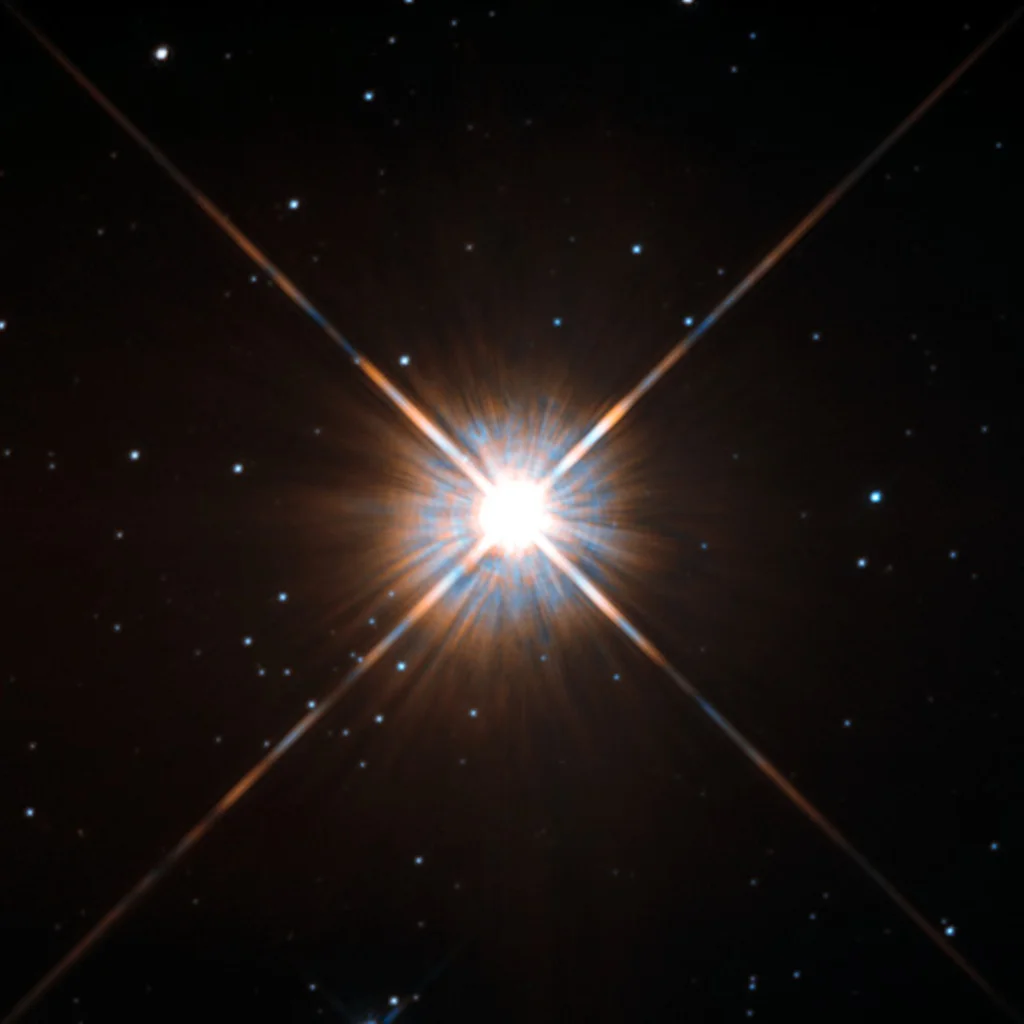
The closest known star to the Sun — and still impossibly far.