
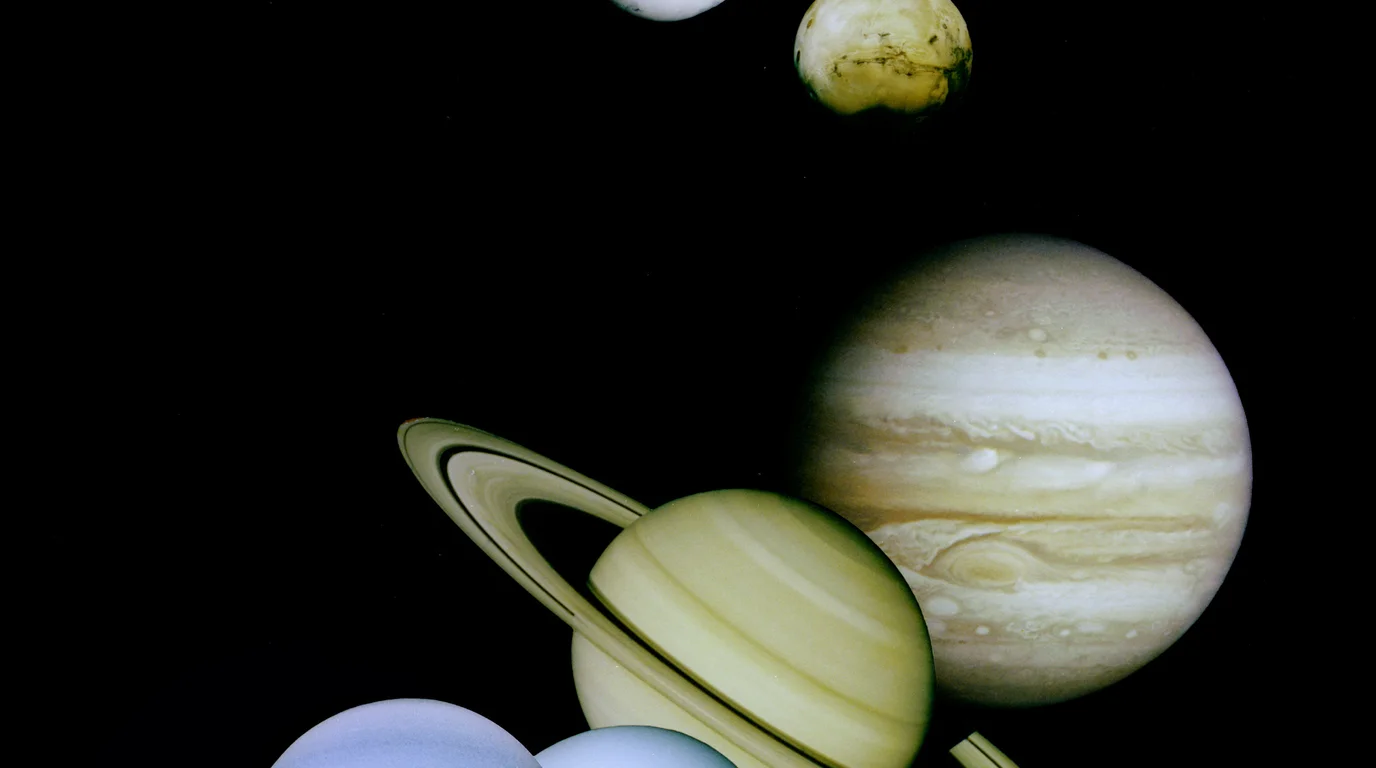
01Size15.0 billion kmDist1.59 ly
The Solar System
One star and everything held in its gravity.
Star systemCosmos
Loading…
UY Scuti Galactic centre Distance from Earth
Distance from Earth
26,002 ly
4.99×
closer to Earth
Distance from Earth
5,211 ly
UY Scuti is roughly 4.99× closer to Earth than Galactic centre.
Picture this
Hypergiants like UY Scuti live only a moment by cosmic standards — under ten million years from birth to supernova. Our Sun, ten times less massive, is already five billion years old and only halfway done.
If you scale the distance
The light we see from UY Scuti tonight left it about 5,200 years ago — around the time the first Sumerian cities were rising. Light leaving UY Scuti now won't reach Earth until generations of our descendants have come and gone.
By weight
Despite being hundreds of times wider than the Sun, UY Scuti weighs only about ten Suns. Most of its volume is near-vacuum — a giant balloon held up by pressure, not density.
UY Scuti is a red hypergiant so puffed up that its convection cells — single rising bubbles of hot gas on its surface — are wider than entire planetary systems. Its outer layers are thinner than Earth's atmosphere; you could fly through them in a heat-proof ship and barely notice resistance. Stars this massive don't last long; UY Scuti will end by collapsing into a brilliant supernova.
Did you know?
When UY Scuti eventually collapses into a supernova, it will briefly outshine the entire Milky Way put together.
Last updated 2026-10-04
You are here
Scale
If it replaced the Sun, it would swallow Jupiter.
Size
2.40 billion km
Tap a dot to preview it. Use the Open stop link to read its full page. Stops are arranged from smallest on the left to largest on the right.
One star and everything held in its gravity.
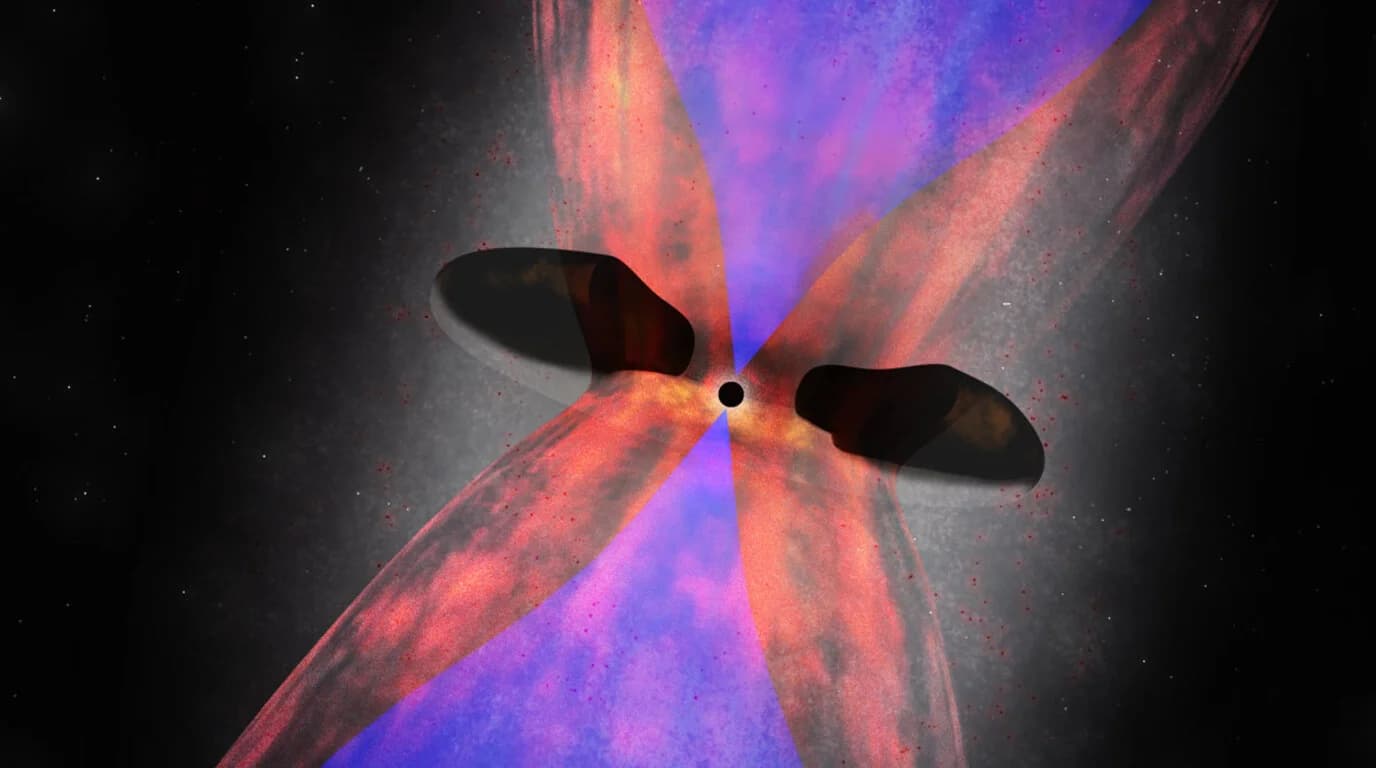
At the heart of the Phoenix Cluster — among the most massive known black holes.
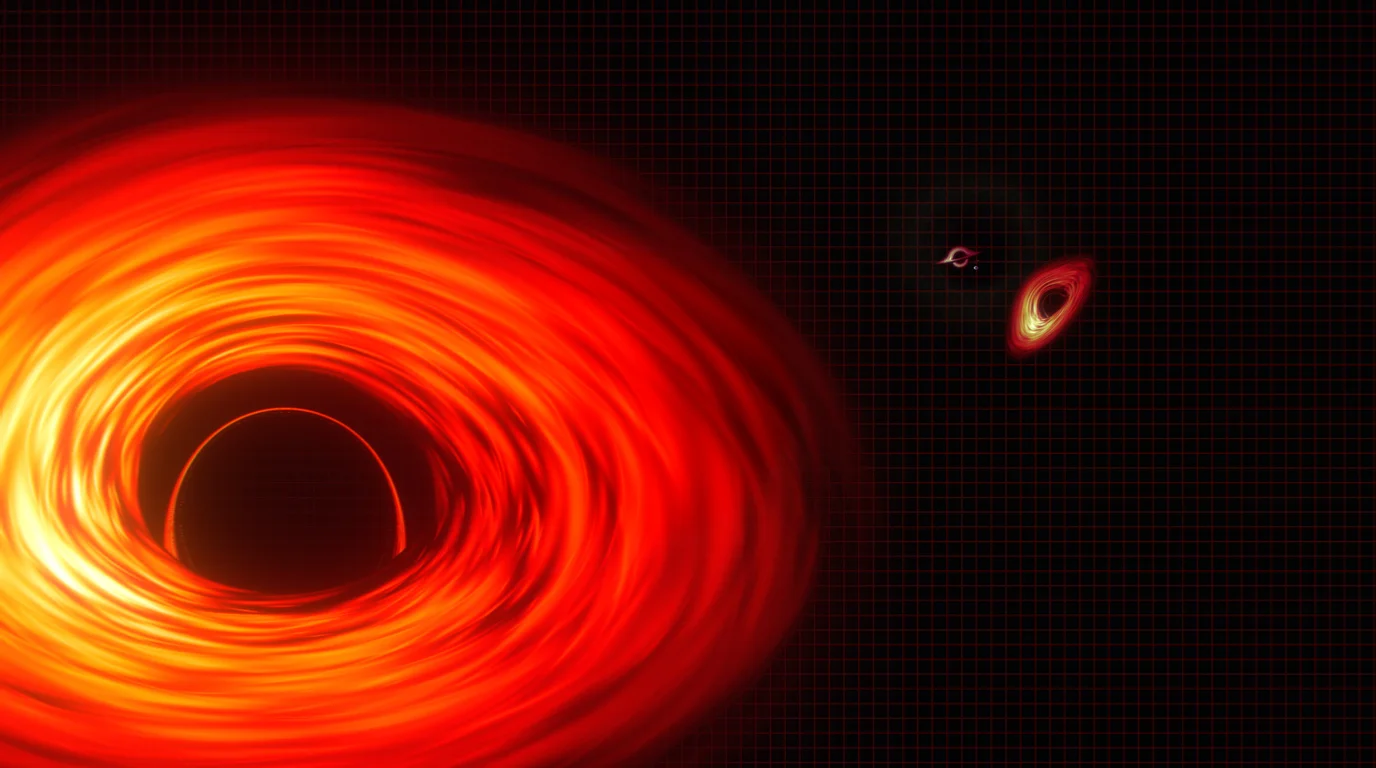
An ultramassive quasar — one of the largest black holes ever measured.