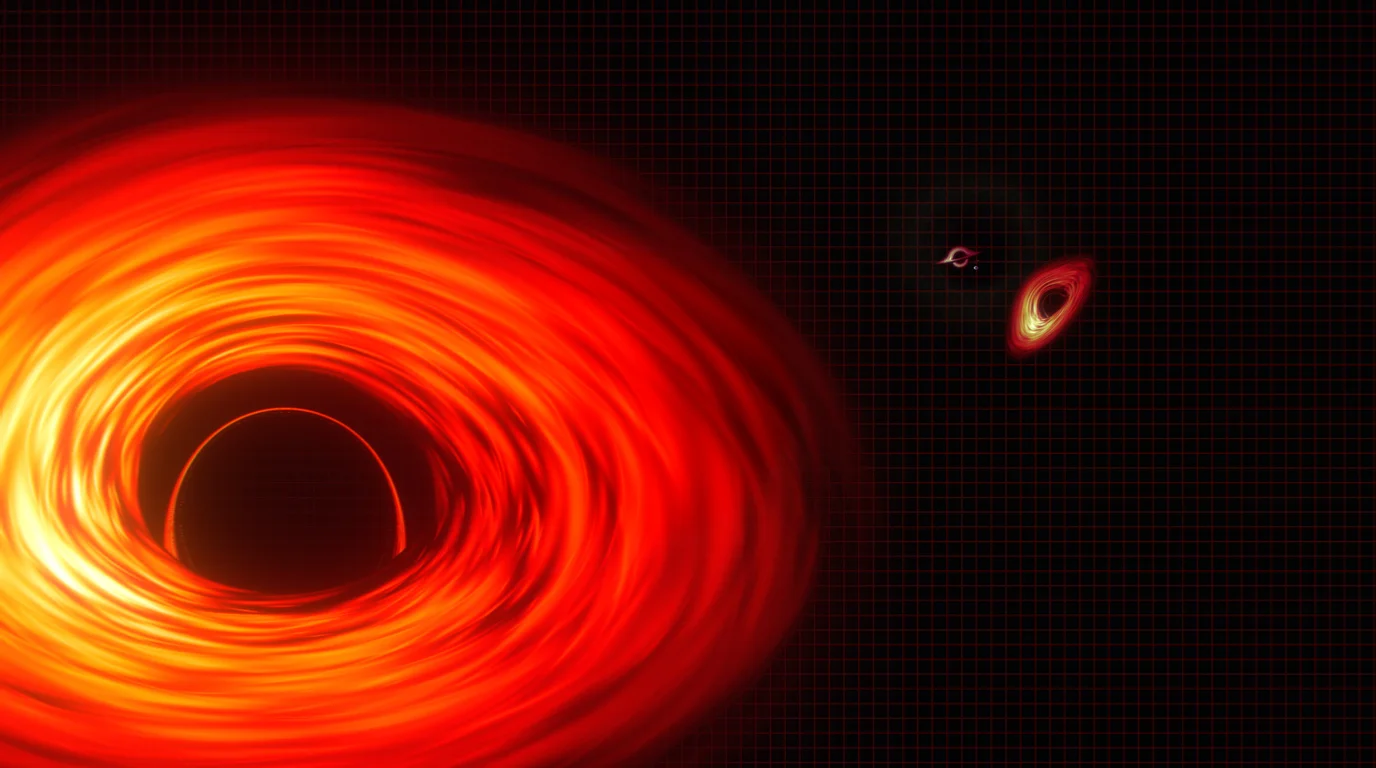
01Size195 billion kmDist10.4 billion ly
TON 618
An ultramassive quasar — one of the largest black holes ever measured.
Black holeQuasarCosmos
Loading…
At the heart of the Phoenix Cluster — among the most massive known black holes.
Artist's depiction (Phoenix Cluster, NASA / CXC)
Phoenix-A Andromeda Distance from Earth
2,246×
farther from Earth
Distance from Earth
5.70 billion ly
Phoenix-A is roughly 2,246× farther from Earth than Andromeda.
Picture this
If our Sun were a marble, Phoenix-A's event horizon at the same scale would dwarf a small house — its surface stretches across more than 100,000 Suns laid edge to edge.
By weight
Around 25 billion solar masses — roughly 6,000 times the mass of Sagittarius A* at the centre of our galaxy. Mass estimates for objects this distant carry wide error bars; published values reach as high as 100 billion solar masses.
Phoenix-A is the supermassive black hole at the centre of the Phoenix Cluster, around 5.7 billion light-years away. Its mass is among the largest ever estimated — published values range from about 10 to 100 billion solar masses, with our current best estimate sitting around 25 billion. The host cluster is famous for its extraordinarily luminous central galaxy and one of the highest star-formation rates ever observed in a brightest-cluster galaxy.
Did you know?
Despite being one of the most massive known objects, Phoenix-A is also one of the *quietest* in its own way — the black hole's growth has stopped quenching star formation in its host galaxy, an unusual situation that astronomers are still trying to explain.
Last updated 2026-10-04
You are here
Scale
At the heart of the Phoenix Cluster — among the most massive known black holes.
Size
150 billion km
Tap a dot to preview it. Use the Open stop link to read its full page. Stops are arranged from smallest on the left to largest on the right.
An ultramassive quasar — one of the largest black holes ever measured.
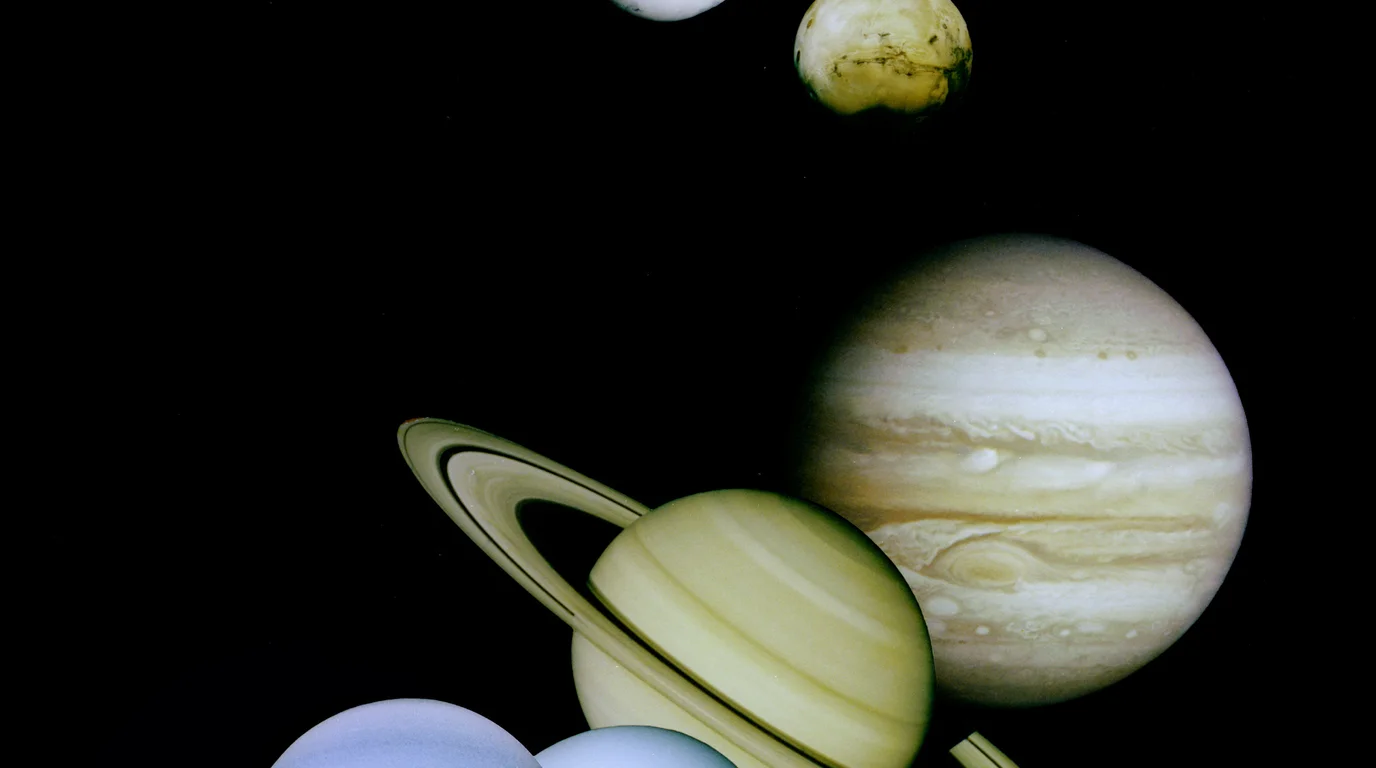
One star and everything held in its gravity.
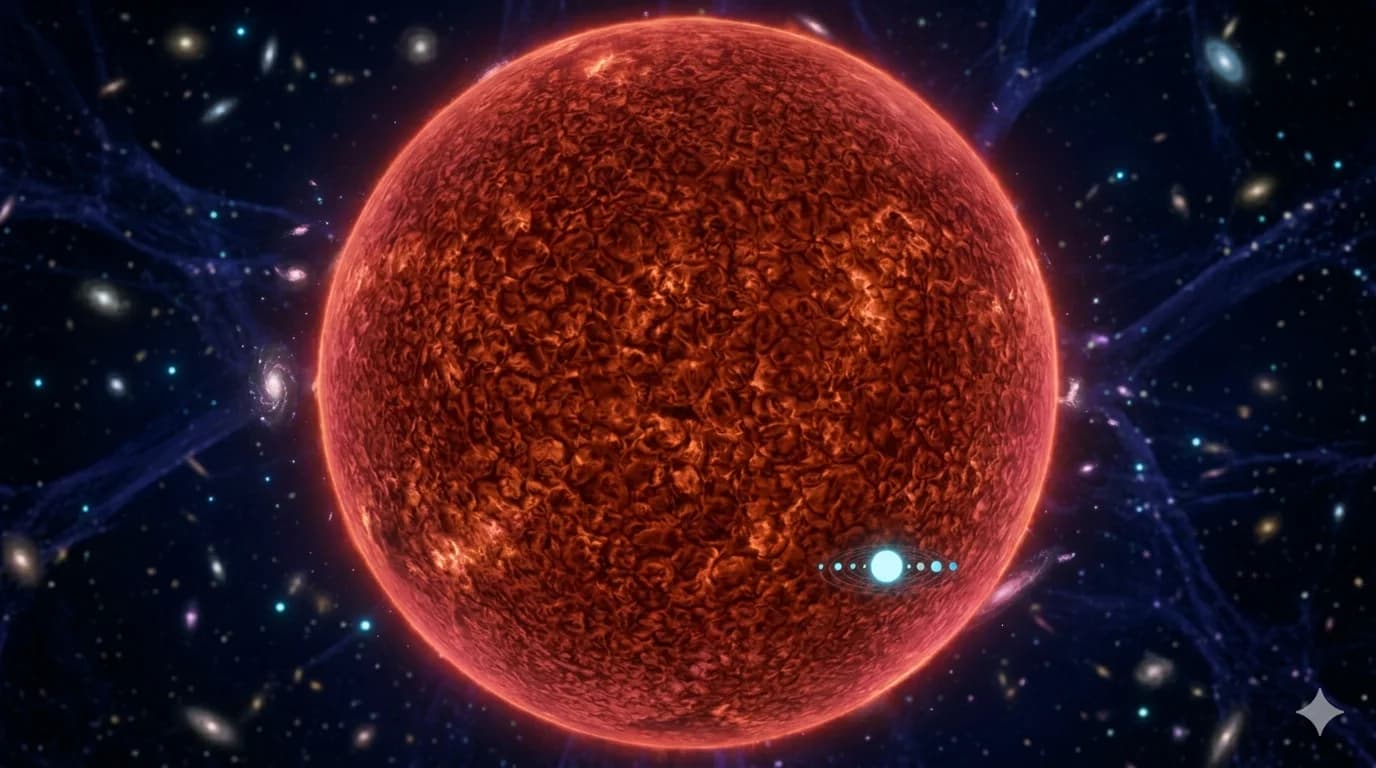
If it replaced the Sun, it would swallow Jupiter.