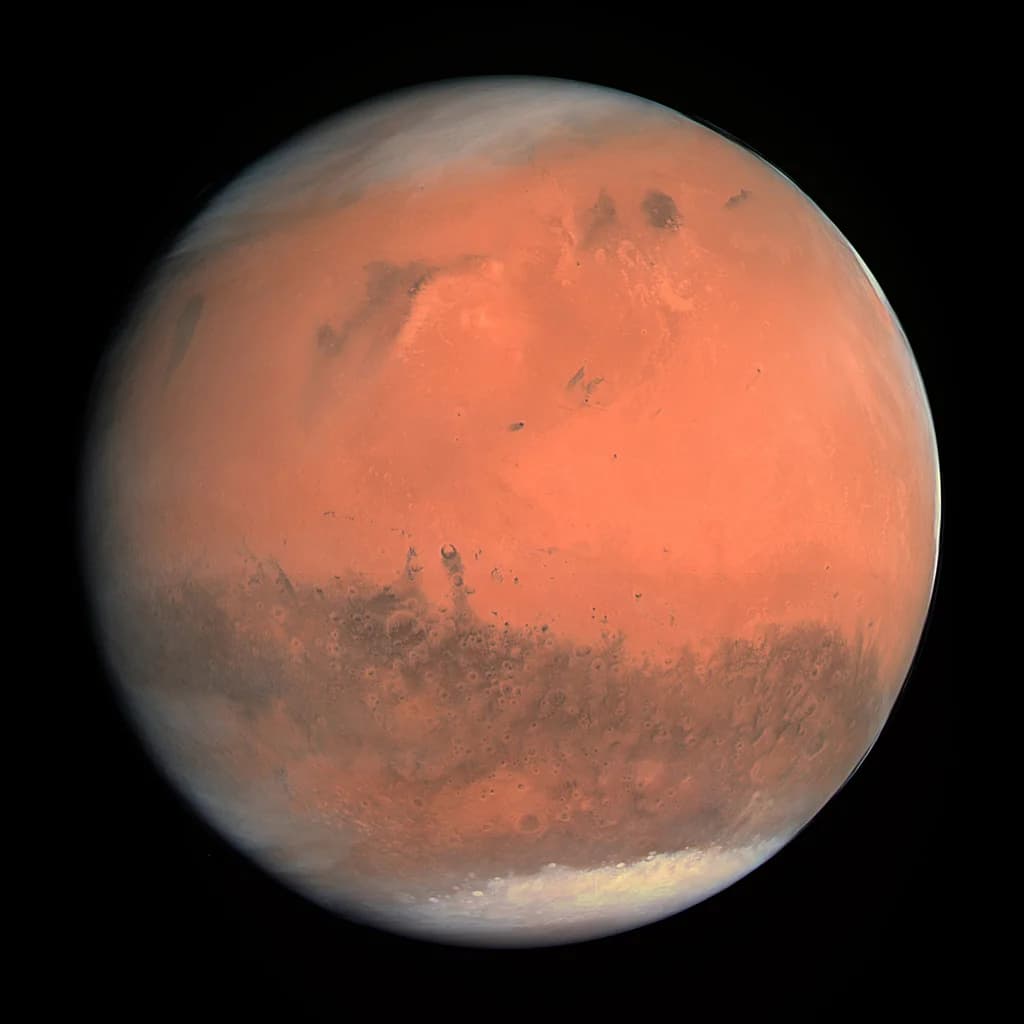
01Size6,779 kmDist225 million kmTemp210 K (-63 °C)
Mars
Earth's red neighbour — and our best shot at a second home.
PlanetCosmos
Loading…
NASA / Johns Hopkins APL / Carnegie / MESSENGER
Mercury Earth
Drawn to true scale.
Mercury Moon Distance from Earth
Mercury is roughly 403× farther from Earth than Moon.
Picture this
Stand on Mercury at noon and the Sun looks three times wider than from Earth, painting the rocks white-hot. Walk into shadow and the temperature drops 600 °C in minutes — the most violent climate change you can experience without leaving the inner Solar System.
If you scale the distance
Light takes about 8 minutes to reach Mercury from the Sun. From Earth, even at closest approach, Mercury is 77 million km away — a radio signal still takes more than four minutes to get there.
Mercury is the smallest planet in the Solar System and the closest to the Sun. Its surface looks remarkably like our Moon's: heavily cratered, airless, and grey. But the days swing between extremes a moon never sees — over 400 °C in direct sunlight, then dropping below -170 °C on the night side, because there's no atmosphere to hold the heat. A year on Mercury (88 Earth days) is shorter than two of its own days (176 Earth days each).
Glossary
Did you know?
Despite being closest to the Sun, Mercury isn't the hottest planet — Venus is, because of its runaway greenhouse atmosphere. Mercury's polar craters even hold water ice, kept frozen in permanent shadow.
Last updated 2026-10-04
You are here
Scale
The innermost planet — a cratered world of impossible extremes.
Size
4,879 km
Tap a dot to preview it. Use the Open stop link to read its full page. Stops are arranged from smallest on the left to largest on the right.
Earth's red neighbour — and our best shot at a second home.
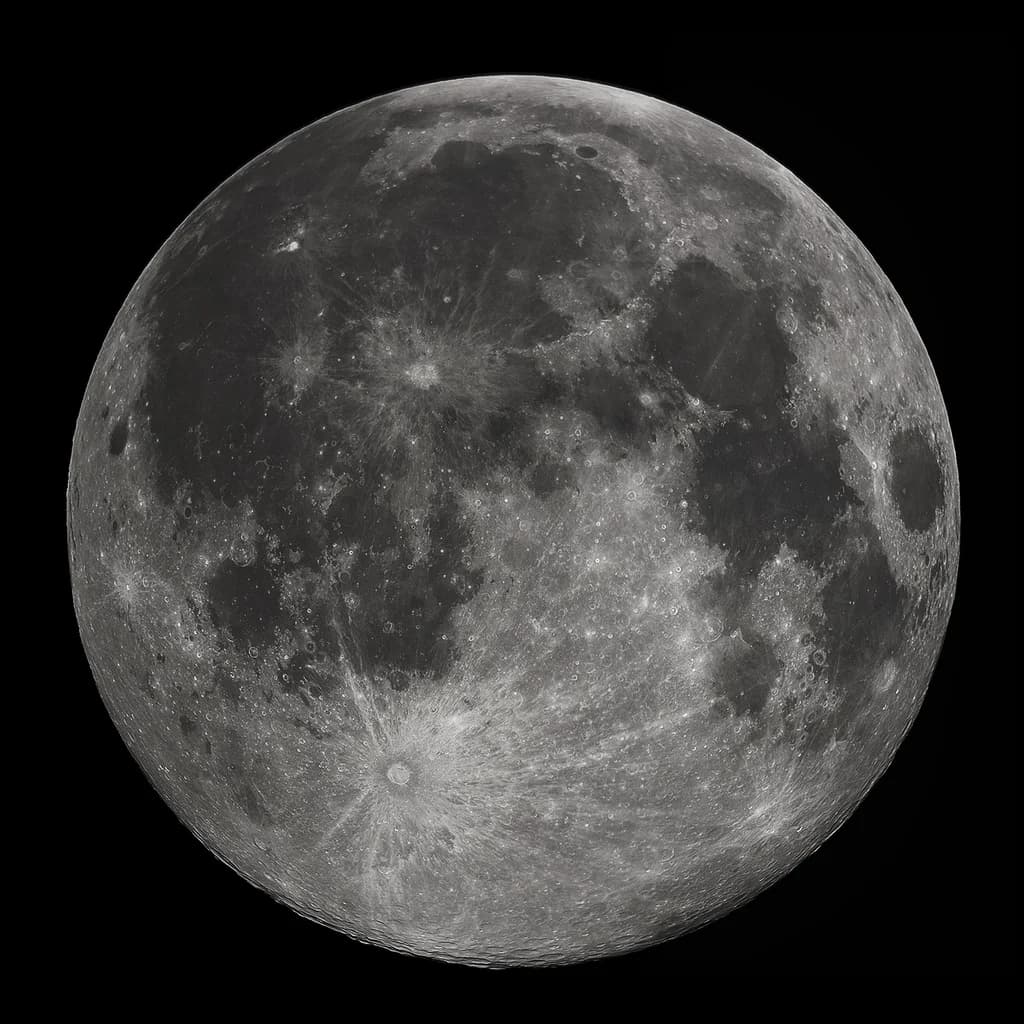
Earth's only natural satellite — locked to us forever.
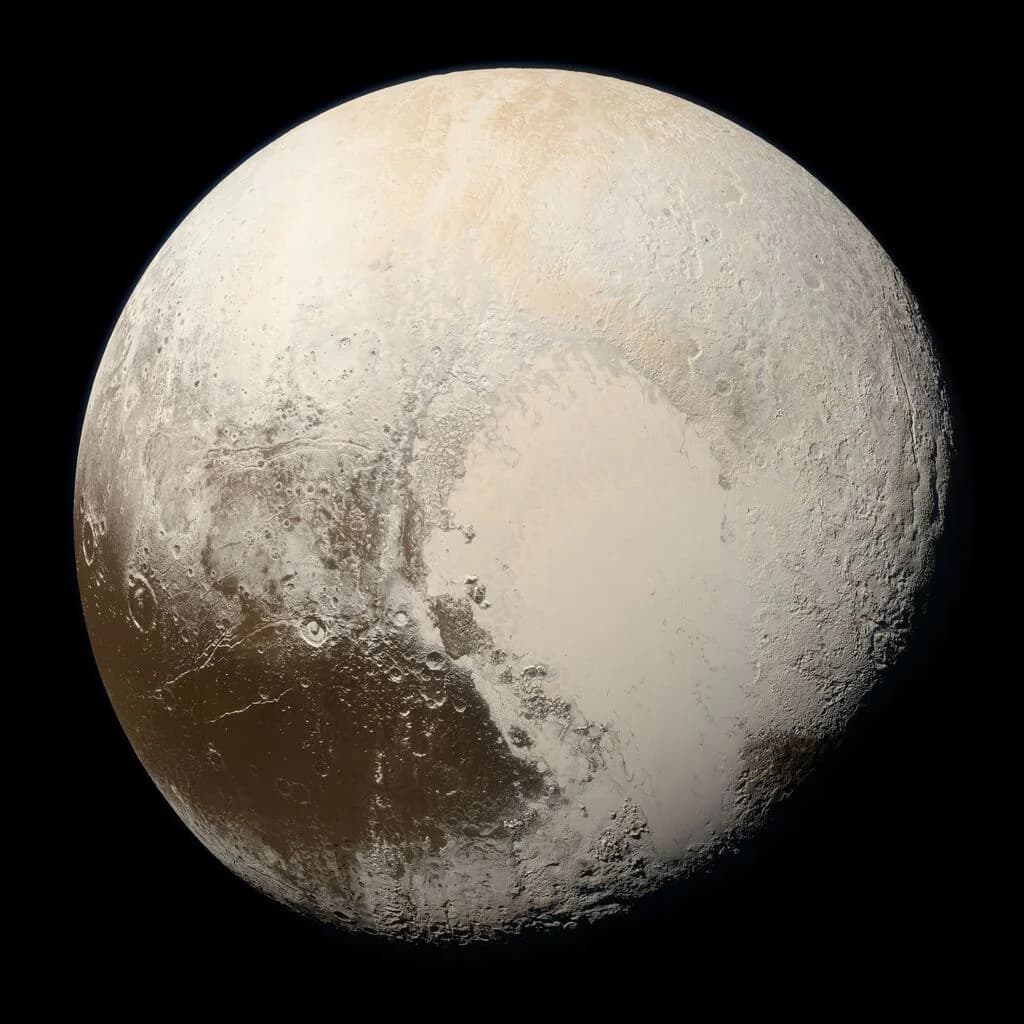
The dwarf planet that taught the Solar System has an outer layer we'd missed.